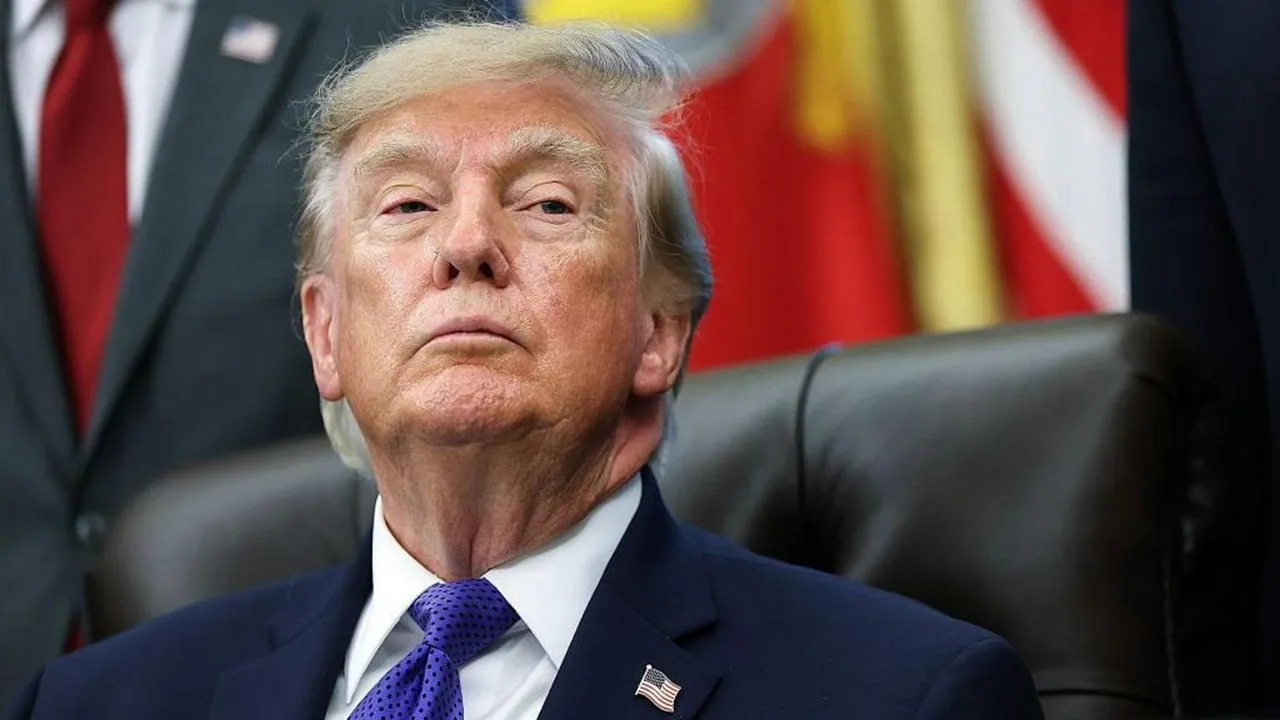
President Donald Trump has said he will stop using federal funds to pay for television advertisements featuring him, following bipartisan criticism of the campaign-style spots. He declined, however, to commit to reimbursing the government for ads already aired.
In a post on his social media platform on Monday, Trump defended the advertisements, describing them as "a positive promotion for our Great U.S.A." He said future ads would be funded personally and through his political organisation.
"I have decided to do the Patriotic Ads, among others, and pay for them myself, and with money I raised for MAGA, Inc," Trump wrote.
MAGA Inc is Trump's political fundraising vehicle, which had amassed more than $400 million by the end of July.
On Tuesday, Trump appeared to walk back his commitment when reporters pressed him on whether he would reimburse the government for funds already spent. "The ads were really good. They were promotion for the country, done by many presidents before. So we'll decide," he said.
The advertisements, which cost at least $1.5 million in federal funds, have aired during football games and other programming. Democratic lawmakers said last month that the White House transferred $20 million in Homeland Security Department funds to broadcast the spots.
More than a dozen ads have run in recent weeks. Some reference Trump's tax cuts, US manufacturing and law and order. In one, Trump declares that "America will never be a communist country" as a chorus repeats the word "love me." Another combines images of Mount Rushmore with footage of Trump praising a "golden age of America." Each ends with a disclaimer stating it was paid for by the US government.
In one ad, Trump says: "We will cast out the communists, Marxists, and fascists. We will throw off the sick political class that hates our country. We will rout the fake news media, and we will liberate America from these villains once and for all."
The ads have drawn criticism from both parties. Republican Senate Majority Leader John Thune told reporters on Monday that while "I like the message ... it shouldn't be paid for with taxpayer dollars."
Republican Senator John Kennedy of Louisiana said politicians should not spend public money on promotional material. "I don't think any public official, including President Trump or Kristi Noem or John Kennedy, should spend public money on private ads for themselves," he said.
Democratic Senator Maggie Hassan of New Hampshire introduced a Senate measure denouncing the use of government funds for the ads. It was blocked by a Republican. The measure stated that the advertisements, which included the disclaimer "paid for by the U.S. Government," "should not be paid for by the United States government."
Senate Democratic Leader Chuck Schumer called on Trump to return the money. "Trump must return this money to the American people and there must be a full investigation into this gross waste and abuse of taxpayer dollars," he said.
California Attorney General Rob Bonta called for an independent investigation on Monday, describing the spending as a "staggering misuse of public funding and breach of public trust."
Ethics experts have also raised concerns. "It's difficult to see what legitimate government purpose is served by spending taxpayer dollars on ads whose only apparent purpose is to promote the president," legal ethics expert Margaret Dylus-Yukins said.
The White House has pushed back, calling the ads "educational" and describing them as public service announcements rather than propaganda. Officials pointed to advertisements run by previous administrations, including spots promoting healthcare policy under former President Barack Obama and Covid-19 vaccination under former President Joe Biden. Legal experts, however, noted that past government advertising has typically focused on public health or national emergencies.
Federal Communications Commission Chair Brendan Carr, a Republican appointed by Trump, last week said the advertisements were appropriate and rejected a request to investigate them.
The ads are airing ahead of the midterm elections on November 3, when Democrats are seeking to take control of one or both chambers of Congress.