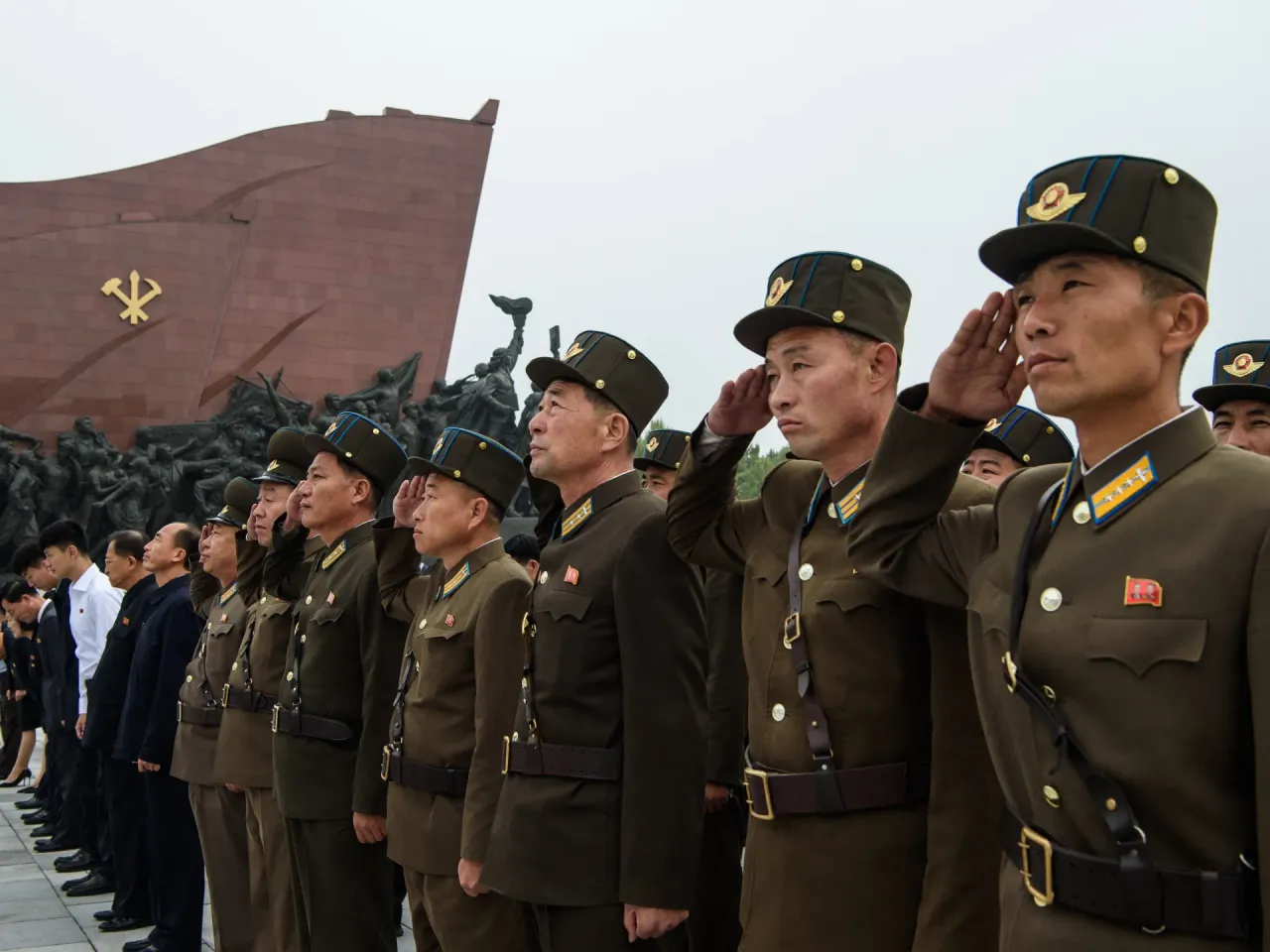
North Korea fired multiple ballistic missiles toward the sea off its east coast on Monday, South Korea's military confirmed.
South Korea's Joint Chiefs of Staff (JCS) said one of the missiles flew more than 900 kilometres (559 miles) from the Pyongyang area. The JCS did not specify the total number of missiles detected. Japan's coastguard said North Korea had fired two unidentified projectiles believed to be ballistic missiles, which appeared to have already fallen into the sea.
South Korea's presidential office condemned the launches as a violation of United Nations Security Council resolutions and urged Pyongyang to stop immediately. Seoul said it had increased surveillance following the launches.
JCS spokesperson Jang Do-young said the latest launch appeared to be a show of force in response to South Korea's recent hypersonic missile test.
On Thursday, South Korean President Lee Jae Myung oversaw the country's first test-firing of a hypersonic missile, a rare public display of such a test by a sitting South Korean president. Lee's office said the weapon, once fully developed, would enhance South Korea's ability to strike key targets by surprise in the "Korean Peninsula theatre of operations."
On October 3, North Korea had also tested a hypersonic intermediate-range missile designed to evade missile defences in South Korea and Japan.
Tensions on the peninsula have been further inflamed by a landmine incident in the Demilitarized Zone. Last month, three South Korean soldiers were wounded in a blast. A joint South Korean-UN investigation concluded that two landmines had been planted by North Korean forces approximately one year ago. Pyongyang dismissed the finding and accused Seoul of provocation. South Korea subsequently demanded an apology.
Prior to the border incident, Seoul had said it was conducting preliminary coordination efforts to facilitate dialogue between Pyongyang and Washington. President Lee had pledged to reopen dialogue with North Korea in his first speech after taking office in 2025.
North Korean leader Kim Jong Un has continued to develop his country's nuclear weapons programme while rejecting diplomatic overtures from both the United States and South Korea. Talks between Kim and US President Donald Trump collapsed in 2019. Kim's government has since demanded that Washington abandon what it describes as a "hostile" policy toward Pyongyang and drop calls for denuclearisation as a precondition for any resumption of talks.