The U.S. Department of Justice has opened a formal antitrust investigation into five major television networks over their decision to suspend White House pool coverage last month, following the Trump administration's move to revoke press credentials from three news organizations.
The networks under investigation are ABC, CBS, CNN, NBC and Fox News. None of the five has commented on the announcement.
The Justice Department said the networks' coordinated decision not to cover White House events may have violated the Sherman Act, a federal law barring anti-competitive practices among commercial competitors.
"Group boycotts among commercial competitors can violate the Sherman Act," the department said in a statement. "The Antitrust Division is simply investigating to determine whether these news organizations have violated the antitrust laws."
The department has asked the five networks to hand over communications related to the pool arrangement.
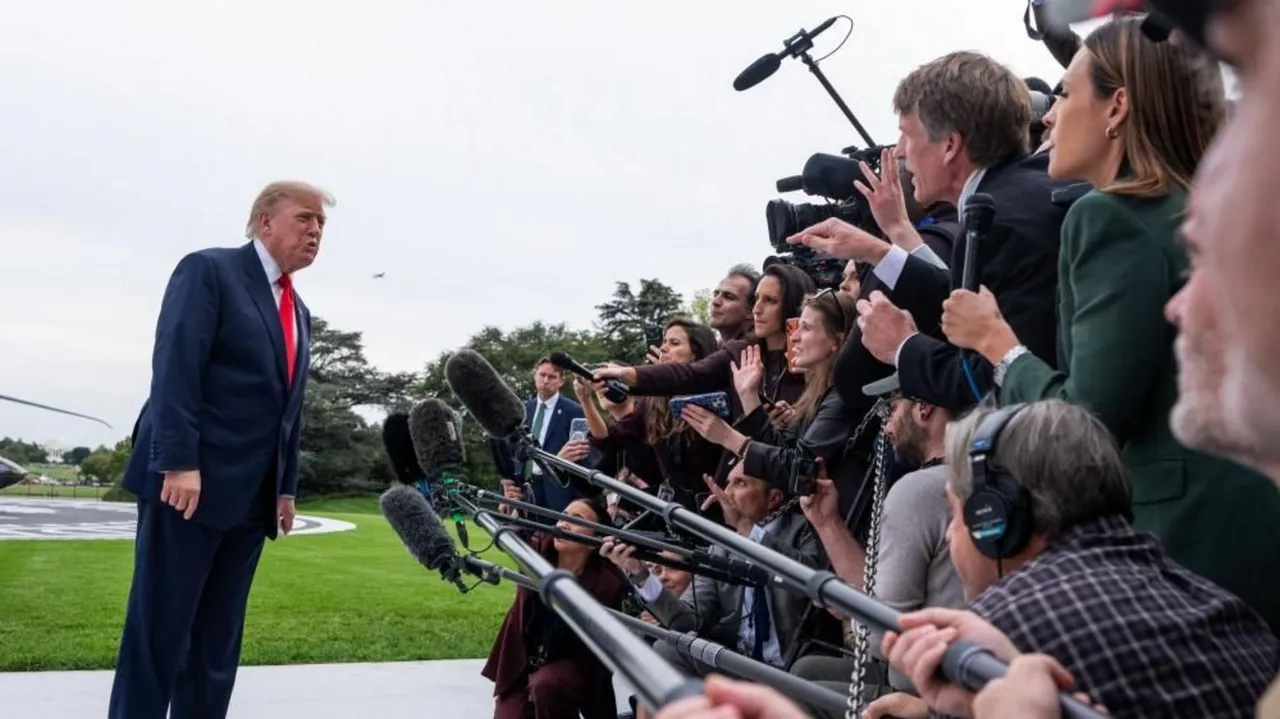
The boycott began after the Trump administration barred CNN, MSNOW and Politico from the White House, accusing the organizations of publishing what the president characterized as unfairly negative coverage. The administration also stripped White House press passes from more than 70 journalists.
The White House said on September 19 that covering the president was a "privilege, not a right."
CNN is one of the five networks that make up the primary White House television pool. Pool members share the costs of covering the president, take turns organizing coverage, and distribute footage to outlets across the country. The other four networks agreed not to substitute for CNN on days when the administration blocked the network from fulfilling its pool duties.
As a result of the arrangement, the networks did not cover a White House event involving Trump and Chinese President Xi Jinping.
The three excluded outlets — CNN, MSNOW and Politico — sued the Trump administration in federal court, arguing the credential revocations violated their First Amendment rights. The First Amendment bars the government from abridging freedom of the press, language courts have traditionally interpreted as preventing the government from discriminating against media organizations based on the content of their coverage.
U.S. District Judge Timothy Kelly ruled the ban was likely unconstitutional and ordered the administration to "immediately return, reinstate, and restore" their access. The White House reinstated the credentials on September 24. However, disputes over access to specific presidential events and pool assignments continued.
Press freedom groups condemned the Justice Department's investigation.
"Summoning antitrust authority, on top of the retaliatory actions the White House has already taken to bar certain outlets, is another and even more brazen attempt to try to intimidate journalists," said Bruce Brown, president of the Reporters Committee for Freedom of the Press.
Jose Zamora, the Committee to Protect Journalists' Americas director, also criticized the move. "The government should not use antitrust investigations to intimidate news outlets defending press access," Zamora said. "The public's right to know depends on that access."
Legal experts have raised questions about the investigation's basis. Michael Dorfman, a professor of constitutional law at Cornell University's law school, said that political motivation on the part of the president or the Justice Department would not automatically shield the networks from legal repercussions. However, he said the networks' actions would be subject to a review of reasonableness — and that he considers them reasonable.
Dorfman also raised a broader question about the legal logic of the investigation. "If the networks agreeing not to cover the White House is illegal, why isn't the press pool itself illegal? Presumably the answer is that the kind of cooperation involved in the press pool is necessitated by the limited space in particular venues," he wrote. "But if that's a sufficient justification for the cooperation in coverage, why isn't standing up to protect the free press at least as important a justification?"
The investigation is the latest development in an ongoing series of clashes between the Trump administration and major news organizations.
In February, the White House announced it was taking control of the presidential press pool, which had for more than a century been managed by the White House Correspondents' Association. That same month, the administration moved to bar reporters and photographers from one outlet from restricted-access spaces, including the Oval Office and Air Force One, over the organization's use of the term "Gulf of Mexico" rather than "Gulf of America." That outlet filed a lawsuit, and the case remains ongoing.