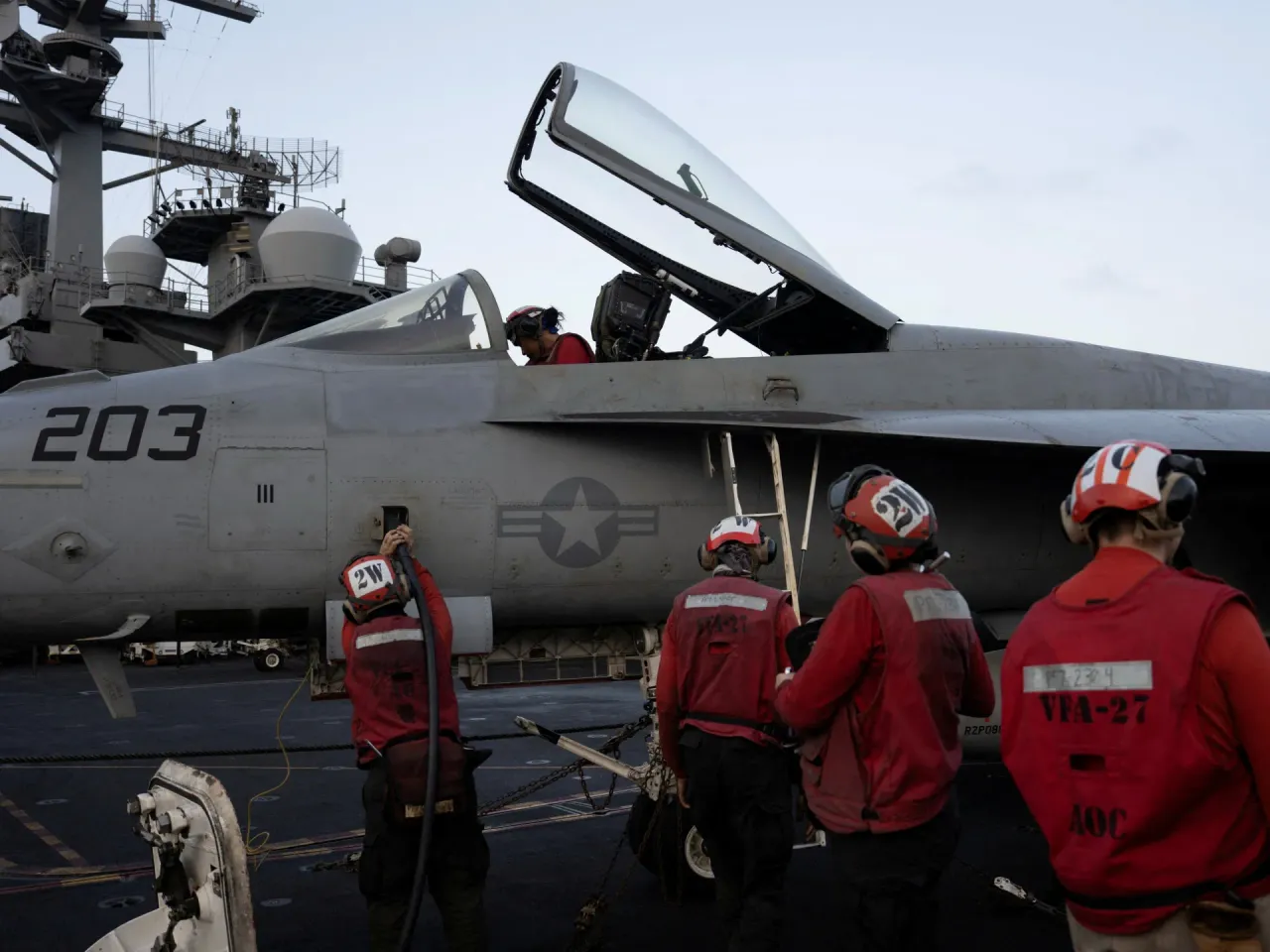
The United States is sending a third aircraft carrier strike group to the Middle East as the war with Iran enters its eighth month, a US official has confirmed. The deployment comes as both sides weigh escalation and diplomatic engagement, and just one month before November midterm elections that could be shaped by public opinion on the conflict.
The USS Theodore Roosevelt carrier strike group departed its San Diego base on Sunday, bound for the region. It was followed a day later by the Makin Island Marine Expeditionary Unit, carrying more than 2,000 Marines.
According to reports, the full naval deployment could involve an additional 9,000 to 10,000 US troops in total, including sailors and Marines assigned to the carrier strike group and other vessels.
By the end of November, a US official said, three aircraft carriers and two amphibious landing groups will be positioned near Iran. The official said the concentration of force would give President Donald Trump a wider range of military options should he choose to act.
The new deployment includes F-35 fighter jets and will add to the roughly 50,000 US service members already stationed in the region, according to a correspondent reporting from Washington, citing sources inside the Pentagon and White House. The goal, those sources said, is to keep military options "on the table" for Trump regardless of how diplomacy unfolds.
The Pentagon is not currently planning to withdraw any assets even if an agreement with Iran is reached. Defense Secretary Pete Hegseth has said forces are "ready to go" should Trump order new strikes.
The US has maintained troops and military assets in the Middle East for decades, operating from a broad network of sites across at least 19 locations in the region, including eight permanent bases in Bahrain, Egypt, Iraq, Jordan, Kuwait, Qatar, Saudi Arabia, and the United Arab Emirates.
As of mid-2025, between 40,000 and 50,000 US soldiers were stationed across the region, spread across both large permanent bases and smaller forward sites.
Trump began reinforcing the US military presence in the Middle East at the start of this year, initially dispatching warships including the USS Abraham Lincoln aircraft carrier to the Arabian Sea.
According to open-source intelligence analysts and military flight-tracking data, the US has deployed more than 120 aircraft to the region since early February. Military analysts have described this as the largest surge in US airpower in the Middle East since the 2003 Iraq War.
Reported deployments include E-3 Sentry Airborne Warning and Control System aircraft, F-35 stealth strike fighters, F-22 air superiority jets, and F-15 and F-16 fighter aircraft. Flight-tracking data showed many of these planes departing bases in the United States and Europe, supported by cargo aircraft and aerial refuelling tankers — a pattern analysts said indicates sustained operational planning rather than routine rotations.
In March, the Pentagon ordered additional forces to the Gulf. Those reinforcements consisted of three distinct formations, each with a different origin, route, and timeline. They included the Tripoli Amphibious Ready Group, centred on the America-class assault ship USS Tripoli and the 31st Marine Expeditionary Unit, and the Boxer Amphibious Ready Group, built around the Wasp-class assault ship USS Boxer.
The deployments come as Trump faces record-low approval ratings and prepares for a midterm campaign. The war with Iran has been described as deeply unpopular in the United States, with the Republican Party potentially facing significant losses in November.