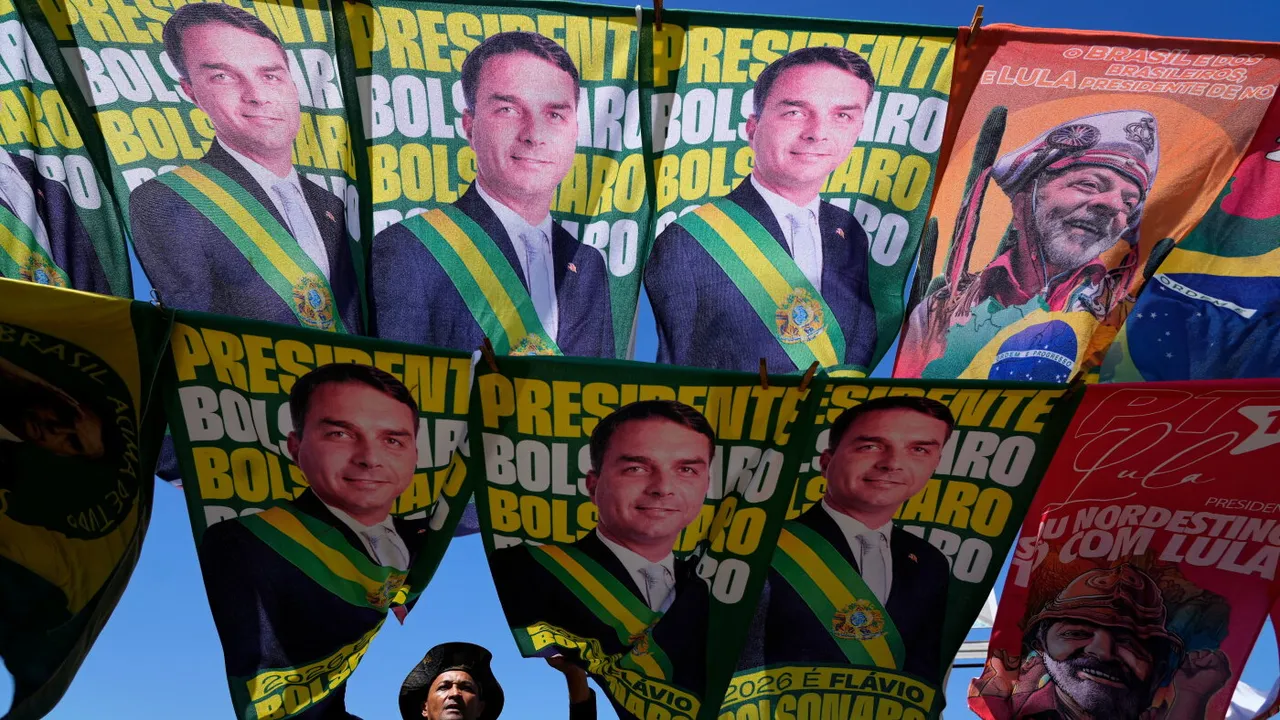
Brazil heads to the polls Sunday for the first round of its presidential election, with artificial intelligence disinformation and economic anxiety emerging as defining issues of the campaign.
The race pits incumbent left-wing President Luiz Inacio Lula da Silva against Senator Flavio Bolsonaro, son of former far-right President Jair Bolsonaro, in what polls suggest is a tight contest.
Artificial intelligence is playing an unprecedented role in the campaign. A deepfake avatar of former President Jair Bolsonaro has been deployed to support his son's candidacy, while an AI-generated image of a working-class female voter has been circulated criticising President Lula. Brazil's intelligence agency has identified disinformation as one of the main challenges of this election.
Economic concerns are running equally deep. A recent survey found that only 10% of Brazilians feel their income has grown faster than the cost of living over the past year. By June, Brazilian households were spending 26.6% of their income on non-mortgage debt payments, according to the country's central bank.
The affordability of picanha, Brazil's prized cut of beef and a traditional marker of prosperity, has become a symbol of the economic debate. When Lula campaigned four years ago, he promised voters they would be able to afford picanha again under his leadership. That promise is now being scrutinised.
Marcella Pirozzi, 44, co-owner of a Rio de Janeiro barbecue company, says she now only tries to sell picanha in wealthy parts of the city. In poorer areas, people are "more conservative" about their spending, she says. "We don't get hired to cater events very often due to meat prices."
At his butcher shop on Rio's working-class north side, 37-year-old Arthur Guedes says he has scaled back how much picanha he expects to sell. He is now focusing on a more accessible product: hamburger patties.
After Lula took office, a surge in public spending accelerated economic growth, though growth has since slowed. In the first three years of his term, average wages grew faster than inflation. However, household indebtedness also rose sharply, driven by factors including a boom in sports gambling, easy access to credit, and high interest rates.
Some analysts say Brazil is now experiencing what has been called a "vibecession" — a term first used during the Biden administration in the United States to describe an economy that is not technically in recession but feels unaffordable to ordinary people.
University of Sao Paulo economist Laura Carvalho argues the term applies to Brazil. She says the gap between economic data and public perception may stem from Brazilians comparing today's conditions with the boom years of Lula's earlier presidency in the 2000s, when many families could afford major purchases for the first time.
Carvalho points to a series of external shocks that have driven up prices since then: the COVID-19 pandemic, the war in Ukraine, and more recently the conflict involving Iran. Trump's tariffs on Brazil have also added economic pressure, she said.
"You have incumbents everywhere that are suffering the effects of the price increases of the different shocks," Carvalho said. "People look at the price increase and they blame whoever is in government."
Flavio Bolsonaro has sought to capitalise on those frustrations. He published a video of himself denouncing supermarket prices, making a point of naming picanha. However, he has offered limited detail on his own economic proposals, broadly arguing that cutting taxes and government spending will boost growth. One of his top advisers has praised the policies of Argentine President Javier Milei, whose libertarian economic programme has reduced inflation in Argentina but also seen poverty rise in recent months.
Lula, for his part, has downplayed concerns about the sustainability of Brazil's national debt and announced new economic measures in the final days of the campaign.