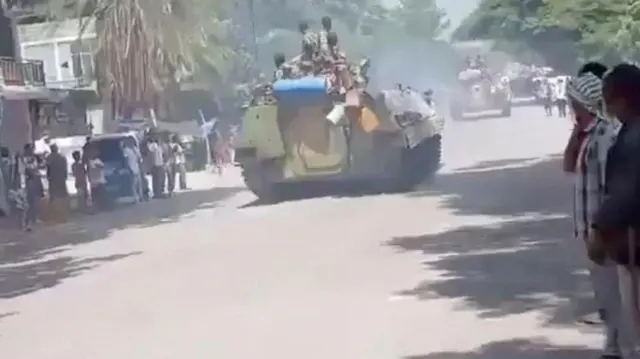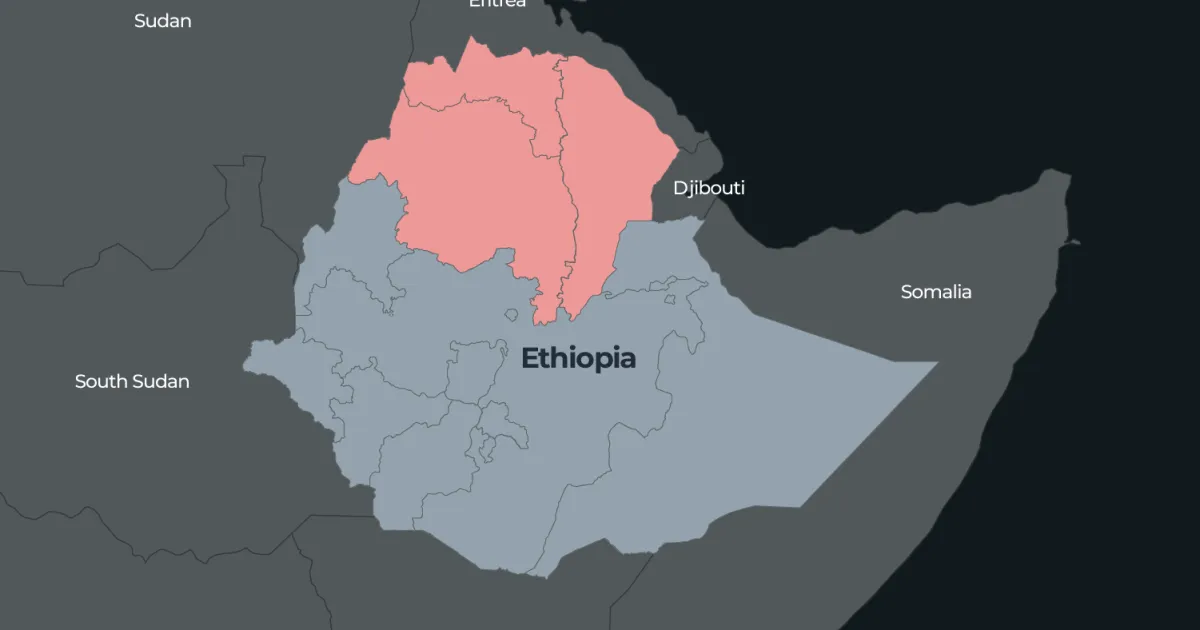
Fighting is intensifying across northern Ethiopia, nearly four years after a peace deal ended a devastating two-year war in the Tigray region. The conflict has since spread into the neighbouring Amhara and Afar regions, raising fears of a wider regional war.
Government-aligned forces say they captured the strategic town of Alamata, in southern Tigray, on September 28. The town lies approximately 120 kilometres south of the regional capital, Mekelle, and serves as a key supply hub for troops, fuel and food near Tigray's border with Amhara.
On September 22, between 15 and 17 drone strikes hit Alamata, including several schools and a hospital, according to the conflict monitor ACLED.
A separate front has opened near the Tekeze River in western Tigray, an area disputed between Tigray and Amhara. Fighting has also been reported in northern Amhara, around Kobo and Gidan in the North Wello zone and Sekota in the Wag Hemra zone, which government forces retook on September 27.
Further east, Tigrayan forces and the Afar armed group Ugugumo have advanced into Afar, with clashes reported along the Tigray-Afar border and around Erebti and Abala. The advance is considered strategically significant as it could threaten the Semera-Djibouti corridor, Ethiopia's main route for imports, including fuel.
Telecommunications have been cut across much of Tigray and commercial flights have been suspended, separating families and hampering humanitarian operations.
Seven Ethiopian armed and political groups announced a formal alliance on September 20, aimed at removing Prime Minister Abiy Ahmed's government and establishing an inclusive transitional government. The coalition is called the Ethiopian Peoples' Forces Alliance for Survival.
Its core members include the Tigray People's Liberation Front (TPLF), described as the alliance's main military force. The TPLF dominated Ethiopian politics for nearly three decades before Abiy took office in 2018. War broke out between the TPLF and federal forces in November 2020.
Also among the founding members is the Amhara Fano National Movement, a coalition of Fano factions that turned against Abiy's government in 2023 after previously fighting alongside federal forces during the Tigray war. The Oromo Liberation Army (OLA), which has fought federal forces in Oromia since 2018 seeking greater self-determination for the Oromo people, is also listed as a member.
Other groups named in the alliance include the Ogaden National Liberation Front (ONLF), Ugugumo, the Benishangul Peoples' Liberation Movement and the Gumuz Peoples' Democratic Movement. On September 25, the Sidama National Liberation Front announced it would also join.
The alliance's membership remains contested. According to Jalale Getachew Birru, senior East Africa analyst at ACLED, the Gumuz Peoples' Democratic Movement has denied joining, stating it has no armed wing. The ONLF is also split, with one faction backing the alliance and another saying it is not part of it. The OLA has indicated its primary interest is removing the government rather than participating in coordinated military operations.
ACLED reported that as of September 26, only three members were actively fighting federal forces: the TPLF, the Amhara Fano National Movement and Ugugumo.
In its founding statement, the alliance accused the government of "dictatorial rule" and said a transitional government would end the country's wars, protect rights and open a national dialogue.
Ethiopia's army chief has accused Eritrea, Sudan's army and Egypt of backing the armed groups. All three countries have denied the allegations. Egypt added that it strictly respects the sovereignty of neighbouring states.
Ethiopia is a landlocked country in the Horn of Africa, bordered by Eritrea, Sudan, South Sudan, Kenya, Somalia and Djibouti. With approximately 139 million people, it is Africa's second-most populous country after Nigeria and one of the world's most ethnically diverse nations, with more than 80 ethnic groups.