President Donald Trump said Thursday that the United States may ask European countries to release some of their diesel reserves, as his administration weighs a potential ban on US diesel exports amid a global fuel shortage driven by the war on Iran.
Trump told reporters his administration "may" make such a request, shortly after Treasury Secretary Scott Bessent urged European allies to act immediately.
"Our European partners should accelerate delivery on their existing commitments and make additional supplies immediately available to address ongoing disruptions," Bessent said in a social media post.
US Energy Secretary Chris Wright said he was "highly confident" Europe could help ease soaring global prices by releasing emergency diesel inventories. US Trade Representative Jamieson Greer said he believed France, Germany and Italy "would love to have a cooperative path forward with the United States on how we get more diesel to market."
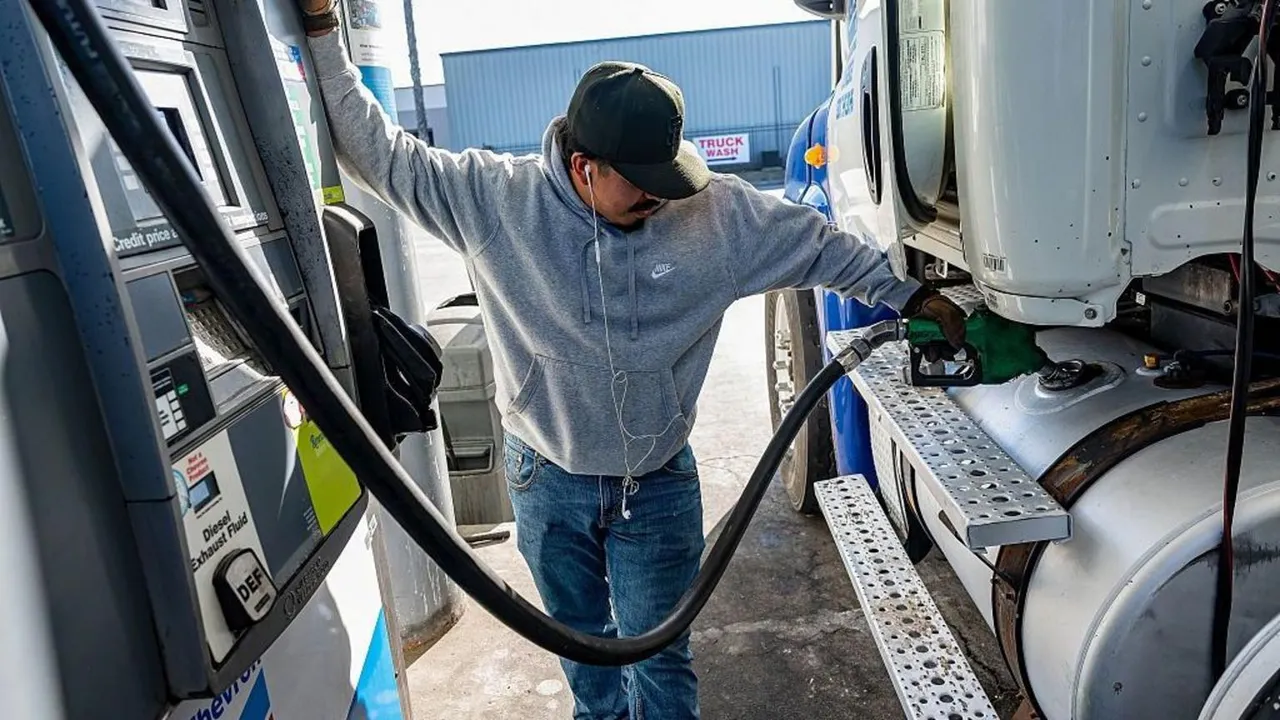
US diesel prices have surged to a record of $6.53 per gallon, while data from the European Commission showed 12 EU member states had recorded new all-time highs, including Italy, Belgium, Romania and Poland.
Global diesel prices have risen sharply since the outbreak of the US-Israel war on Iran in February. The closure of the Strait of Hormuz, which typically transports around a fifth of the world's oil and gas, has pushed up the cost of oil-derived products. A Russian export ban on diesel has added further pressure.
Trump has argued that restricting diesel exports would keep surplus barrels within the United States, lowering domestic pump prices and offering relief to drivers, truckers, and businesses. "We're thinking about it very seriously," he said of an export ban at the weekend.
However, David Fyfe, chief economist at Argus Media, warned that cutting off American supply would likely cause international prices to skyrocket. The US exports between 1.2 and 1.5 million barrels of diesel per day, making it a vital supplier to global markets.
European capitals spent Thursday coordinating their response. EU trade chief Maros Sefcovic said a US export ban would be "unexpected" but would have detrimental effects on Europe's economy. France and Germany together hold more than a third of the EU's strategic diesel reserves, according to reports.
EU member states were expected to discuss a coordinated response on Friday.
In the United Kingdom, Energy Minister Martin McCluskey held a call with European counterparts Thursday to discuss the potential ban. A source familiar with the discussions said it was prudent to prepare a coordinated response with other countries, including those across the EU, but noted that European reserves remained from a coordinated release of strategic fuel stocks earlier in the year.
"We have a diverse and resilient supply. We continue to engage with our international partners and the UK fuel industry," a UK government spokesperson said. The government stressed there was no cause for concern about potential diesel shortages, though prices were expected to rise further.
UK diesel prices hit record highs this week. The latest figures from motoring organisation the RAC showed average pump prices at 199.79p per litre, up from 142.38p previously.
The UK is heavily reliant on diesel imports. Its four refineries produce more than enough petrol to meet domestic demand but do not produce sufficient diesel. There were 15.1 million diesel vehicles on UK roads at the end of June, according to the Department for Transport, down from 15.7 million a year earlier.
A European Commission spokesperson said Thursday that "lots of calls, lots of meetings" were taking place on the diesel situation, including with "high level contacts" in the US administration.
Adding to pressure on global diesel markets, Chinese refiners have reportedly halted October exports of some fuel products as Beijing prioritises domestic supplies.
The issue carries significant political weight in the United States, with midterm elections approaching in November. Control of Congress will be at stake, and Trump is expected to campaign across the country in support of Republican candidates seeking to retain the House and Senate.