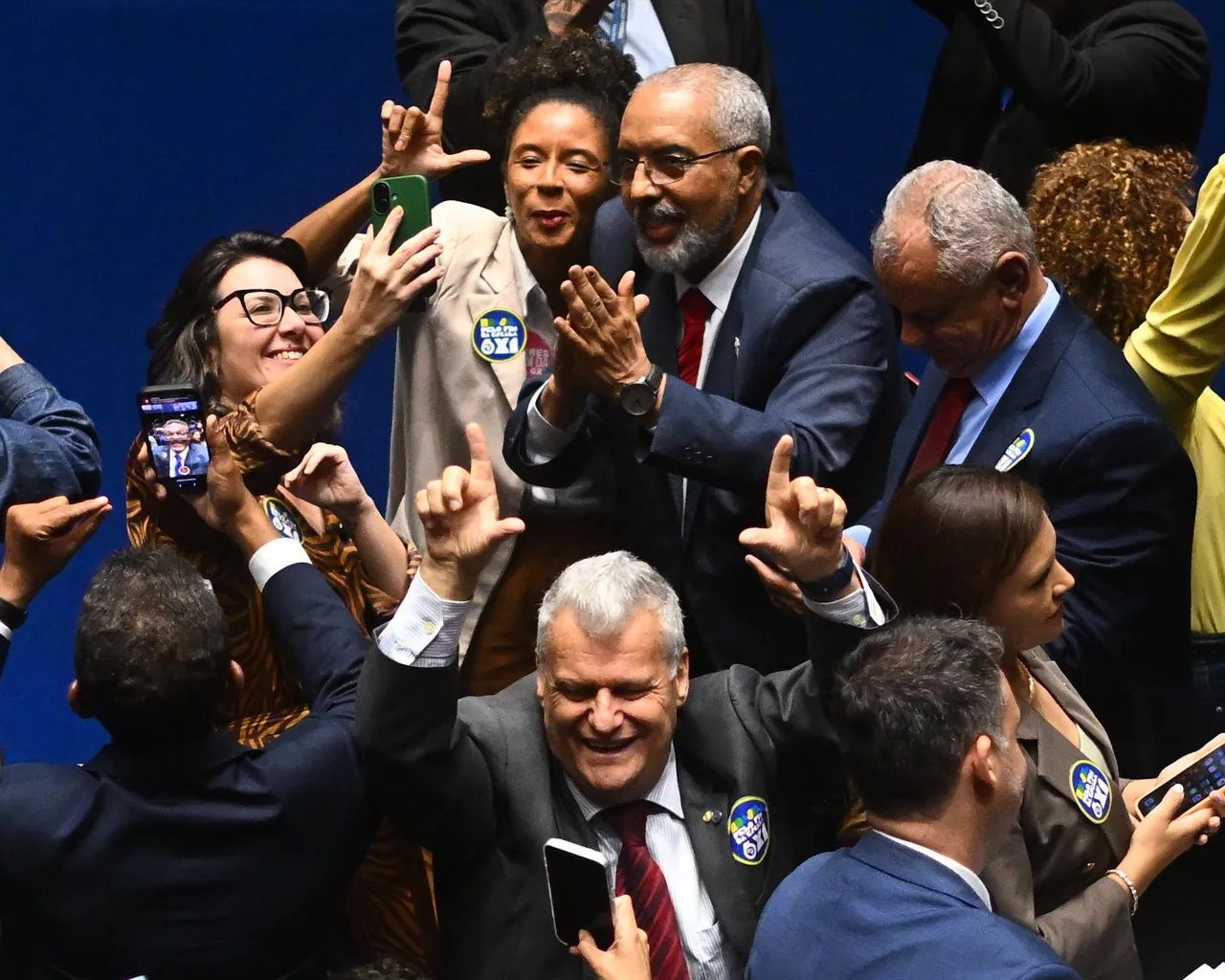
Brazil's Senate has approved a constitutional amendment reducing the maximum working week from 44 to 40 hours, a move that could affect more than 30 million workers and deliver a significant political boost to President Luiz Inacio Lula da Silva less than two weeks before the presidential runoff.
The amendment passed the Senate on Wednesday, with 75 senators voting in favour. Only one senator voted against it: Hamilton Mourao, former vice-president under Jair Bolsonaro. The lower house had already approved the measure in May.
The reform bans six-day workweeks, a schedule currently worked by an estimated 16 million people, and reduces the maximum weekly hours for more than 30 million workers. The change is expected to affect mainly employees in retail, restaurants and hotels, most of them low-paid.
Despite its approval, none of the changes will take effect before the runoff on 25 October. After the Senate president promulgates the amendment, a 60-day period will follow before six-day workweeks are abolished and the maximum working week is reduced from 44 to 42 hours. A further 14 months must pass before the limit drops to 40 hours.
Lula has strongly championed the amendment, framing it as a quality-of-life issue. "Ending the 6x1 schedule is about more than changing working hours. It means more time to live, rest, be with family, watch your children grow up, look after yourself and enjoy life," he wrote on social media following the vote.
The proposal originated as a TikTok movement called Life Beyond Work, founded by a pharmacy assistant who later entered politics following its success. Lula's party subsequently embraced the initiative and spent months pushing the Senate to bring it to a vote.
Many observers had believed the Senate would not vote on the measure after the far right secured a sweeping congressional majority in last week's first-round elections, which would take effect in 2027. Senate president Davi Alcolumbre, whose relationship with Lula has at times been difficult, ultimately put it to a vote.
Lula's opponent, far-right Senator Flavio Bolsonaro, spent months opposing the change before reversing course on Tuesday, saying "the majority of Brazilian workers" supported it. He voted remotely on Wednesday while campaigning in the country's south.
Even after changing his position, Bolsonaro said he "supports something even better," referring to an alternative proposal in which pay would be based on hours actually worked. According to reports, he told business leaders that, if elected, he would review parts of the new amendment — a point several allied senators also raised during Wednesday's vote. In May, Bolsonaro had warned the proposal could cause "mass unemployment," an argument also made by employers' associations opposed to the change.
Polls showed the reform had the support of more than 70 percent of the general population, and more than half of Bolsonaro's own voters. His party had considered blocking the vote but ultimately did not.
Victor Escobar, a researcher at the Laboratory of Parties, Elections and Comparative Politics, said the change "could indeed benefit Lula's re-election campaign," adding: "It will speak to how voters feel economically when they cast their ballot; they can feel more relieved with a change in their working schedule."
Marilane Oliveira Teixeira, a professor and researcher at the University of Campinas who has studied the potential impacts of the reform, said evidence clearly showed the harm of having only one day off per week. "People who work a 6x1 schedule are practically prevented from having even a minimum level of social life," she said, noting that negative effects could include illness, workplace risks and exhaustion, "especially for women, who still carry the burden of unpaid domestic work."
Separately, Lula's party announced it plans to file a complaint against Meta with the Organisation of American States, alleging election interference. The party accuses Meta of restricting Lula's online content ahead of the 25 October runoff against Bolsonaro. Meta has denied the allegations.