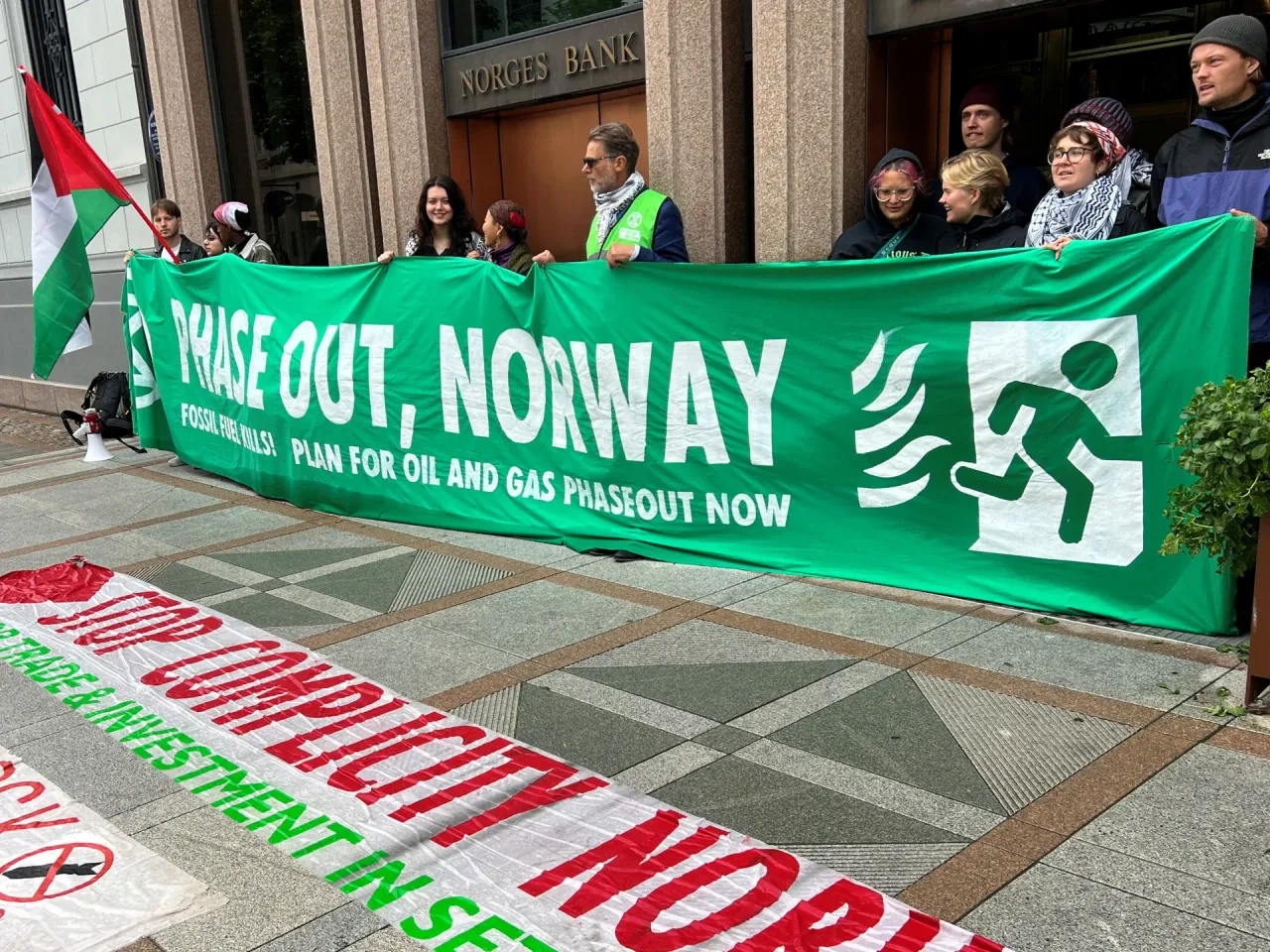
A government-appointed committee has recommended that Norway's sovereign wealth fund lift its ethical investment restrictions, including its ban on investing in nuclear weapons producers and its policy of excluding companies linked to Israel's military operations in Gaza.
The report, released on Thursday and submitted to the Ministry of Finance, was led by former Central Bank Governor Svein Gjedrem. It calls for a broad overhaul of the fund's ethical framework, giving its manager, the Central Bank, greater discretion over how ethical risks are handled.
The fund, the world's largest sovereign wealth fund, controls assets totalling nearly $2.3 trillion.
The review was prompted in part by controversy over the fund's decision last year to divest from US construction giant Caterpillar. The fund cited Caterpillar's alleged involvement in rights violations committed by Israel in Gaza and the occupied West Bank. Washington subsequently pressured Oslo over the move.
"Parts of the rationale for the appointment of the Committee was the Fund's management related to the war in Gaza," the committee said in the report.
The committee argued that decisions regarding "another state's conduct" should not be made by the fund, but "reserved for the ordinary diplomatic channels of the Norwegian authorities."
On nuclear weapons, the report recommended lifting the fund's existing ban on investing in companies involved in their production. It specifically cited Norway's reliance on NATO's nuclear deterrent and a worsening global security environment as justification.
The report suggested that investments in companies based in the United States, the United Kingdom, and France that produce nuclear weapons should be permitted.
"The global security situation has changed. Norway is building up its defence capabilities, and the protection provided by NATO's nuclear umbrella has become increasingly important. The companies that would be reincluded produce weapons that Norway needs for its own defence," the report stated.
The proposals also include reshaping the role of the fund's independent ethics watchdog, with a number of assessments of potential investments to be kept confidential.
The recommendations have already drawn sharp criticism in Norway, with opposition politicians condemning the proposed changes.
Analysts warned the shift could have far-reaching consequences for global investment standards. Lawrence Loh, director of the Centre for Governance and Sustainability at the National University of Singapore Business School, said: "If the Norwegian sovereign wealth fund — often considered a global gold standard — changes its posture towards nuclear weapons, it will open Pandora's box for many global investors to follow suit."
Loh also cautioned that easing the fund's conditions could encourage investment by others in nuclear companies in circumstances different from those the Norwegian committee envisioned.
Former Australian Foreign Minister Gareth Evans offered a different perspective, describing the report as "an encouraging initiative in a world that has become alarmingly complacent about the risks of nuclear war, with every major nuclear arms control agreement dead, dying or on life support, and the longstanding taboo against threat or use eroding."
The report comes amid broader shifts in European security thinking. European countries are increasingly exploring alignment with France's nuclear deterrent umbrella, partly in response to uncertainty over US commitments to NATO under President Donald Trump.
Trump said on Thursday that Washington is holding talks with Russia and China aimed at reducing the nuclear arsenals of the countries with the largest stockpiles.