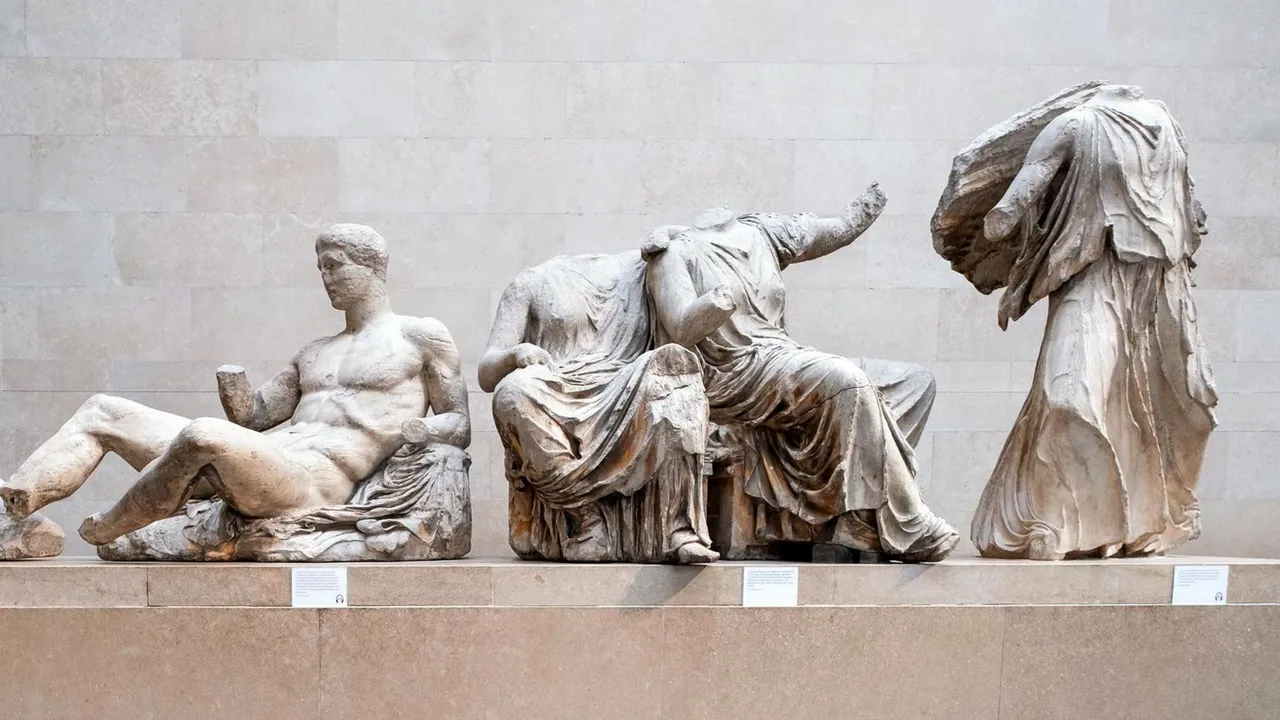
Greek Prime Minister Kyriakos Mitsotakis has called on UK Prime Minister Andy Burnham to find the "political will" to permanently return the Parthenon sculptures to Greece, rejecting any loan-based arrangement as an acceptable solution.
Writing in a British newspaper, Mitsotakis said returning the classical treasures, also known as the Elgin Marbles, would "send a powerful signal" but would require "courage". He urged Burnham to stand by his earlier public position on the issue.
The Greek prime minister used the recent loan of the Bayeux Tapestry from France to the British Museum as a point of contrast. British Museum director Nicholas Cullinan had suggested the arrangement could serve as a model for a deal with Greece.
Mitsotakis rejected that comparison directly. "Nobody would seriously contemplate cutting what survives of the tapestry in two and displaying half in London and half in Bayeux, and claiming this was an adequate way to understand it," he wrote. "Yet that is exactly what happened to the Parthenon sculptures."
He said he was "surprised at the recent suggestion from the museum that the Bayeux Tapestry loan might provide a template for an agreement over the Parthenon sculptures", adding: "I do not believe it does."
"Greece cannot accept any arrangement that would require it to recognise the British Museum's ownership of the sculptures, or a scheme that would mean we 'borrow' parts of our own monument," he wrote.
Mitsotakis said a permanent return would be a "decisive step" that would "reunite the sculptures and transform a historic dispute into a unique act of cultural friendship". He added that reunification could become "the foundation of a broad and enduring cultural partnership between our countries, creating new opportunities for exhibitions, scholarship, conservation and exchanges between Greek and British museums".
The sculptures were carved between 447BC and 432BC to decorate the Parthenon on the Acropolis in Athens. Lord Elgin, Britain's ambassador to the Ottoman Empire, which governed Athens at the time, removed them in the early 19th century. Bankrupted by the endeavour, Elgin sold them to the British government in 1816. A parliamentary select committee that year deemed his actions legal, and the sculptures entered the British Museum's collection by an act of Parliament.
Greece has long disputed the legality of their removal. The Parthenon gallery at the Acropolis Museum in Athens was deliberately designed with spaces left for the sculptures currently held in London.
Burnham previously stated, in 2023, that the sculptures should be returned to Greece with "no strings attached" and supported a change in the law to allow for this. More recently, however, he told a financial newspaper that "ultimately it's an issue for the British Museum", adding that "legally that's where that issue rests".
Talks between the British Museum and the Greek government have been ongoing, though no agreement has been reached. Reports suggested the negotiations were on the brink of collapse, though sources close to the talks disputed that characterisation while acknowledging a significant gap remained.
George Osborne, chair of the British Museum, confirmed in 2023 that talks with Greece were under way, though he stated he was not seeking to change the law. At the time, proposals included a rotating arrangement in which the sculptures would be displayed in both London and Athens at different times, with Britain receiving Greek cultural artefacts in return.
The British Museum said its position and openness to a deal remained unchanged.
The British Museum Act 1963 prohibits the museum from permanently removing objects from its collection. Both the museum and the UK government have maintained that this legal constraint prevents a permanent return, though loan agreements are permitted. Campaigners have argued the Act could be amended, but the government has not indicated this is a priority.
Last month, Greece's health minister was reported to have said he would like to see US President Donald Trump pressure Britain to return the sculptures.