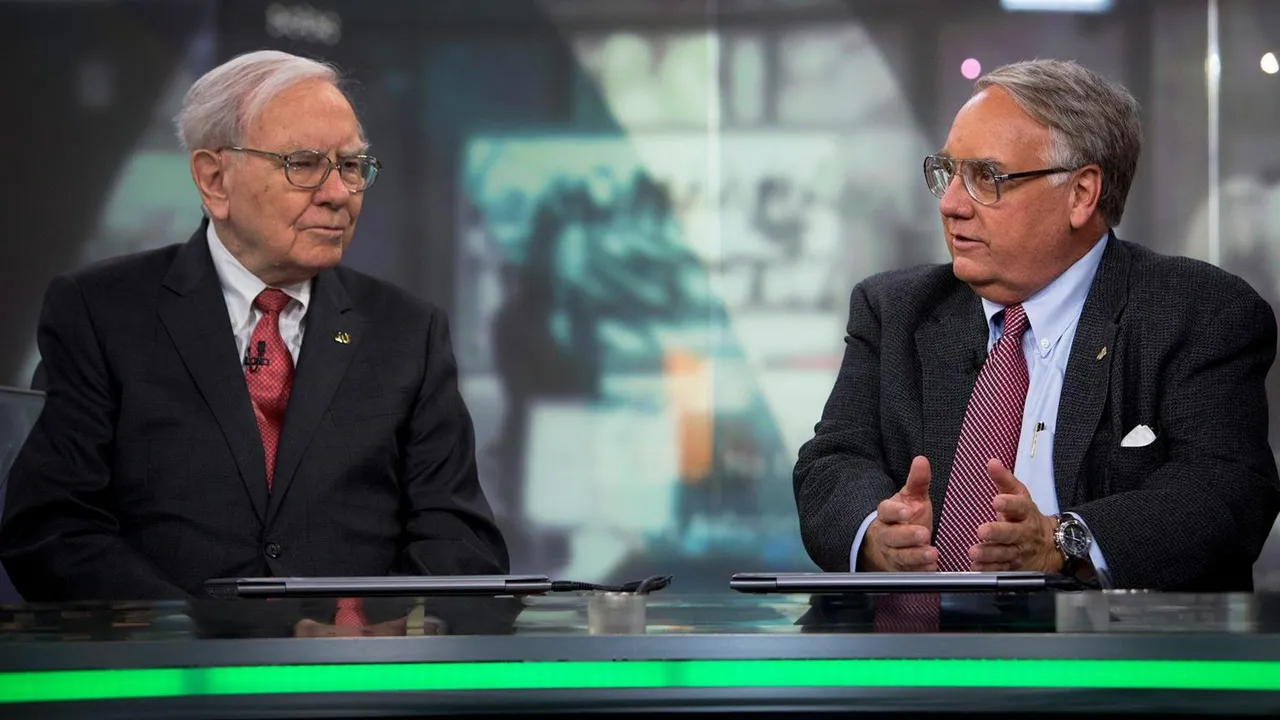
Warren Buffett has stepped down as chairman of Berkshire Hathaway, handing the role to his son Howard in the final stage of a long-planned leadership transition at the $1.1 trillion conglomerate.
The company announced Friday that Buffett, 96, will become chairman emeritus, taking on his new role immediately. He will remain a member of the board of directors and continue to offer his "valued judgment and perspective," Berkshire said in a statement.
The move comes nine months after Buffett handed the chief executive role to Greg Abel, his longtime lieutenant. Howard Buffett, who has served on the Berkshire board since 1993, will now assume non-executive chairman duties.
Buffett first announced plans to step back from the conglomerate in May 2025, a decision that surprised shareholders and analysts despite his age. His succession had been one of the most closely watched in US corporate history.
In a letter to shareholders, Buffett wrote that "the timing is right to complete the transition," noting he had recently celebrated his 96th birthday. He concluded by saying it had been the "privilege of a lifetime" to serve as chairman, but acknowledged that in the end, "Father Time always wins. He has, however, been generous with me."
Buffett took control of Berkshire Hathaway in 1965, when it was a struggling New England textile mill. Over six decades, he transformed it into a global conglomerate and one of the only non-technology firms in the trillion-dollar market-value club.
Berkshire's holdings include GEICO car insurance, the BNSF railroad, Dairy Queen, and significant stakes in companies such as Apple and Coca-Cola. In the second quarter, the company's operating profit rose 16 percent to $12.98 billion, topping analyst forecasts. Net income more than doubled to $25.67 billion, including unrealised gains and losses on stocks.
Berkshire's Class B shares were down 0.3 percent in premarket trading following the announcement.
Known as the "Oracle of Omaha," Buffett built one of the most successful investment track records in modern history through a philosophy of value investing — identifying companies with solid fundamentals, buying them at fair prices, and holding them for decades. His approach shaped generations of corporate leaders and investors.
Under the new structure, Abel will continue to manage corporate strategy and capital decisions, while Howard Buffett's primary responsibility will be preserving the firm's culture and values. Howard Buffett is not expected to hold a management role.
"Greg runs the company; Howard will guard its culture and values — both worth more than anything on our balance sheet," Buffett wrote. "Think of Howard as a policy the shareholders own and hope never to claim against."
Abel echoed that sentiment. "Warren's impact on Berkshire and its owners is without parallel in the history of American business," he said. "The culture Warren built and the values he championed will remain at the heart of Berkshire, and Howard will be their guardian."
Market analysts described the transition as orderly and well-prepared. "It was always a matter of when, not if. Buffett has made a graceful exit," said Brian Jacobsen, chief economic strategist at Annex Wealth Management. "Berkshire has had years to prepare for this transition, so this feels more like the completion of a carefully planned succession than a sudden changing of the guard."