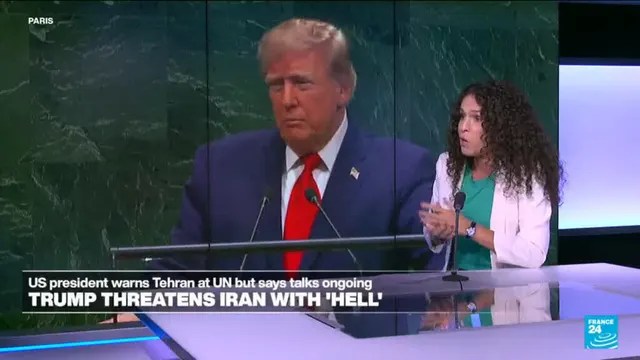
The United States Senate has failed to advance comprehensive cryptocurrency legislation backed by President Donald Trump, dealing a major blow to digital-asset companies and Republicans who had championed the bill for months.
The Digital Asset Market Clarity Act fell short on Tuesday of the 60 votes needed to proceed to a Senate debate. The final tally was 50 to 49 in favour — well below the threshold required to advance.
Four Republican senators — Jerry Moran, Rand Paul, Josh Hawley, and Thom Tillis — joined all Democrats in voting against the measure. Tillis switched his vote from yes to no in a procedural move that preserves his ability to bring the bill back for reconsideration at a later date.
The vote effectively puts the legislation on ice. Congress is set to depart Washington this month ahead of the November midterm elections, in which Trump's fellow Republicans are fighting to retain control of both the House of Representatives and the Senate.
The defeat dealt a major blow to efforts to establish the first comprehensive federal framework for digital-asset markets.
The dispute was not purely partisan. Community banks fiercely opposed provisions that would allow rewards on stablecoin holdings, arguing such measures could pull deposits away from traditional lenders and reduce funding available for farmers and small businesses. Several Republican senators also raised concerns about those provisions, complicating party leaders' efforts to build sufficient support.
Safeguards governing Trump's extensive crypto interests were among the biggest obstacles to reaching a deal.
Massachusetts Senator Elizabeth Warren, the top Democrat on the Senate Banking Committee, said the bill posed "massive risks to families, our national security, and our economy."
"And if that's not bad enough, while Americans across the country suffer from an affordability crisis, this bill will turbocharge President Donald Trump's ability to rake in billions and billions of dollars from crypto," she said.
Trump, who has earned more than $1.4 billion from his family's crypto ventures, had urged Congress to pass the bill. He courted support from the crypto industry during the 2024 campaign trail, calling himself a "crypto president." The deep-pocketed crypto industry spent hundreds of millions of dollars campaigning to advance the legislation.
Without a legislative framework in place, regulators — particularly the US Securities and Exchange Commission and the US Commodity Futures Trading Commission — will now be positioned to fill the policy void. However, efforts to write favourable rules for the digital-asset industry through regulation alone could prove challenging.
Industry experts have said that only Congress can create a lasting regulatory framework. Without legislation, regulations remain vulnerable to a shifting political climate and court challenges, creating lingering hazards for the crypto industry, according to executives and analysts.
The Trump administration's own extensive rollback of dozens of SEC and consumer watchdog policies introduced under former President Joe Biden has underscored that risk.
Markets reacted sharply to the outcome. Bitcoin, the world's largest cryptocurrency, fell more than 5 percent as the vote appeared set to fail — its biggest single-day percentage decline since June. Shares of crypto exchange Coinbase and stablecoin issuer Circle fell by as much as 10 percent.