As the United States and Israel's war on Iran enters its seventh month with no clear end in sight, President Donald Trump has become the latest US official to downplay the conflict.
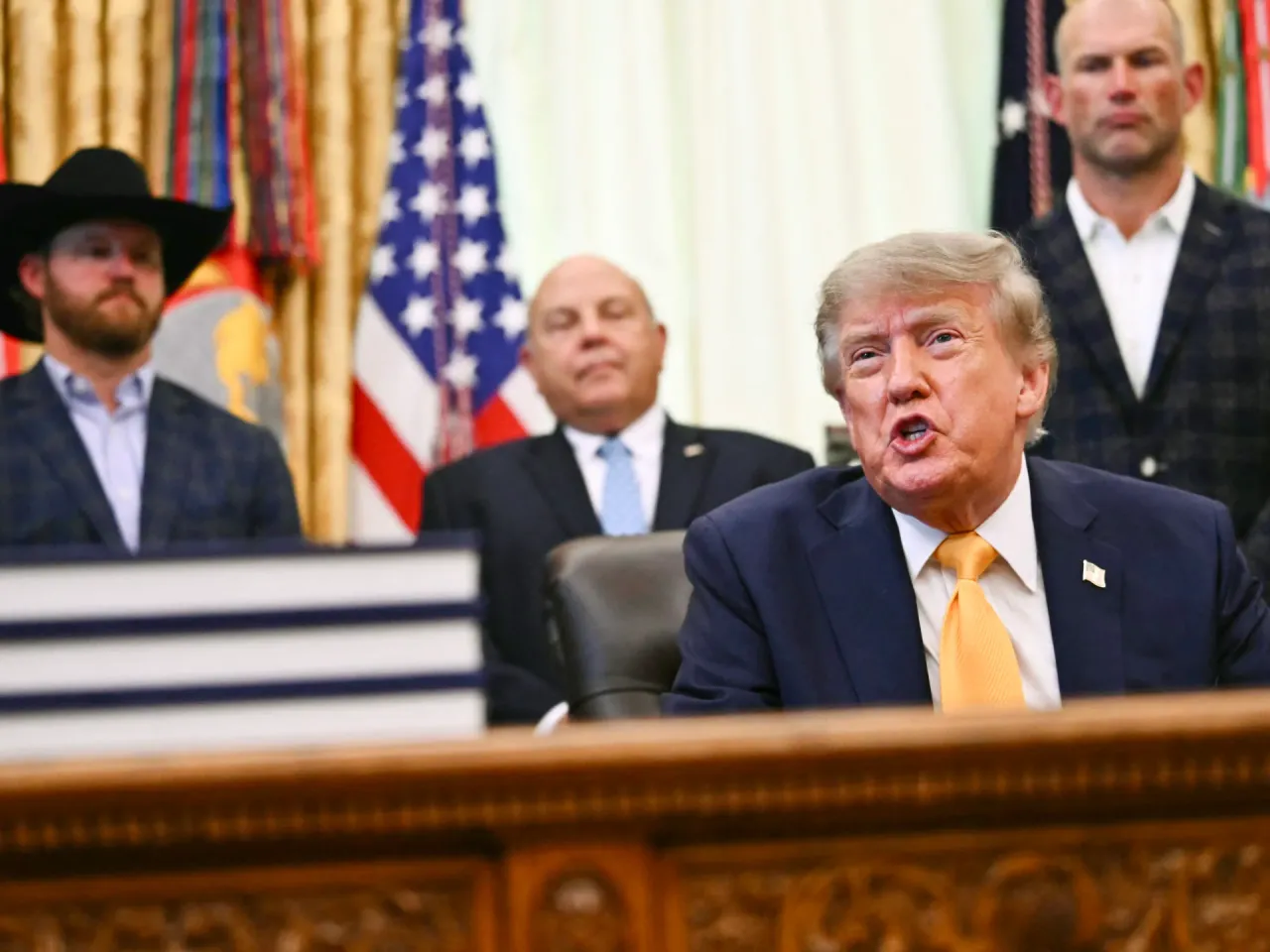
Speaking at an Oval Office signing event on Friday, Trump described the fighting as "small potatoes" and "not a big thing," comparing it to other recent US military operations, including the January 3 operation to abduct Venezuelan President Nicolas Maduro.
"We did Venezuela, and we did this. In Venezuela, we lost nobody. In this, we lost 18 people," Trump said.
The conflict, which began on February 28, has resulted in the deaths of 18 US service members and a sharp rise in global energy prices. Trump chose to label the fighting a "military conflict" rather than a war.
"We do intermittent strikes," Trump said. "We're not fighting right now. There's no fighting. We're taking out a lot of oil. We control the Hormuz Strait. We control it very strongly."
Trump's remarks followed comments made a day earlier by Vice President JD Vance, who appeared to suggest the conflict had cooled despite a recent exchange of intense fire between US and Iranian forces.
"I wouldn't call it a war. Right now, there is no active shooting," Vance said, arguing that major combat operations lasted only six weeks. He added: "I recognise there have been places where this has flared up."
Trump told reporters on Friday there was "a lot of truth" to what Vance said.
Since the war began, Trump has used various phrases to avoid calling the conflict a war. He has previously referred to the fighting as a "little skirmish," a "little detour," and a "little excursion, a couple of weeks, few weeks of excursion."
"It's an excursion that will keep us out of a war," Trump said in March.
Experts say such terminology is likely strategic. The Trump administration has faced significant pushback for not seeking congressional approval before launching strikes on Iran. The US Constitution grants Congress the exclusive power to declare war, though successive administrations have taken unilateral military action without legislative approval. Legal scholars have repeatedly questioned the legality of those manoeuvres.
In June, both chambers of Congress passed a war powers resolution calling on Trump to either halt the military campaign against Iran or seek congressional authorisation. The resolution was largely symbolic but signalled growing bipartisan opposition to the conflict.
The war remains widely unpopular in the United States. A poll released on Monday by a major news agency and the research firm Ipsos found that nearly six in ten US adults disapproved of the military strikes on Iran.
With midterm elections approaching in November and peace talks deadlocked, Trump's remarks appear designed to minimise the conflict's perceived scale and impact.
The war has fuelled attacks across the Middle East and kept fuel prices elevated. The American Automobile Association reports the average fuel price in the US stands at $4.15 per gallon, up nearly a dollar from the same period last year.
The Trump administration has long argued the war's effects would be short-term. It has also signalled its intention to intensify economic pressure on Iran, which has long faced US sanctions. In August, Trump pledged on Truth Social to pursue the "MOST CRUSHING ECONOMIC OPERATION EVER TAKEN AGAINST ANY COUNTRY." This week, his administration announced new sanctions aimed at cutting off Iran's access to the international financial system.
On Friday, Trump did not rule out further military action, suggesting the US may "very soon" strike Iran's Pickaxe Mountain, a military site near the Natanz uranium enrichment facility. Natanz was bombed in June 2025 and again during the current conflict.
A recent exchange of strikes this month saw Iran fire on US military bases across the Middle East. The Iranian government also accused the US of bombing a wedding celebration in the coastal city of Sirik, killing at least four people.