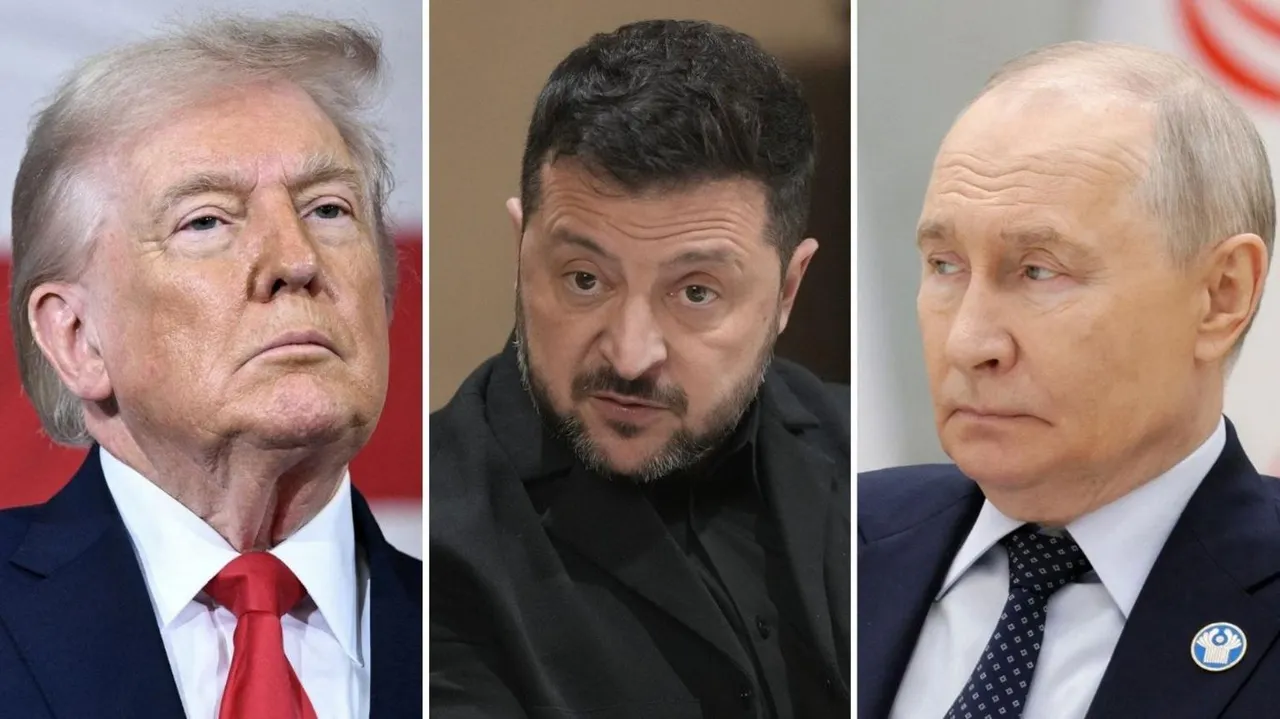
U.S. President Donald Trump declared Sunday that Russia and Ukraine had agreed to an immediate "energy ceasefire," but offered no details, while Ukraine reported fresh Russian strikes on its energy infrastructure within hours of the announcement.
"Effective immediately, there is an ENERGY CEASEFIRE in the War between Russia and Ukraine," Trump wrote on his Truth Social network. "Both parties have agreed. Do not break it!"
Moscow did not comment. Ukrainian President Volodymyr Zelensky said the announcement came as a surprise, telling one outlet within minutes of Trump's post: "The ceasefire announcement was news for me. But if Russians agree to an energy ceasefire, Ukraine will agree. If President Trump negotiated it with Putin, please tell us when the ceasefire begins; we are ready and we will accept it."
Zelensky later posted on social media that his officials "look forward to clear details of America's dialogue with Russia," adding: "Ukraine is ready not to strike at Russian energy and we count on Russia's similar readiness and on the agreement of the president of the United States of America on this."
Despite the announcement, Zelensky reported that Russia struck a power plant in Kyiv with a drone, causing power outages in the capital, and also hit energy facilities in the northeastern Kharkiv region. "All of this happened after the president of the United States made his statement about an energy ceasefire," he said. A power plant in Kharkiv was also attacked on Sunday evening, he confirmed. Ukraine's presidential office said the Kharkiv attack came after Trump's ceasefire post.
"Unfortunately, Ukrainian skies have been infested with Russian 'shaheds' all day today," Zelensky said in an evening address, referring to drones launched by Moscow. "There have been glide bomb strikes and strikes on our energy infrastructure too."
For months, Russia and Ukraine have exchanged strikes on each other's energy infrastructure. Russia has repeatedly targeted Ukrainian power plants and transmission lines, a strategy Ukrainian officials describe as "weaponizing winter." Ukraine, in turn, has stepped up long-range strikes on Russian oil refineries and facilities to reduce Moscow's refining capacity. On Sunday, a Ukrainian drone attack shut down a data center in the city of Vladimir, east of Moscow, run by technology giant Yandex. It was the third strike on the company's facilities in four days.
The energy ceasefire announcement is linked to a broader dispute over a deal Trump struck on Friday with Russian President Vladimir Putin to purchase diesel from Russia. The move, which temporarily undoes sanctions on Russian energy imports, is intended to lower domestic fuel prices ahead of U.S. midterm elections next month. Trump has spent months grappling with the political consequences of the war with Iran, which has pushed up global fuel prices, particularly for diesel, souring his standing with American voters.
The diesel deal has drawn sharp criticism from both sides of the aisle. A bipartisan group of senators — including Democrats Jeanne Shaheen and Richard Blumenthal, and Republicans Susan Collins, Lisa Murkowski, Thom Tillis and John Curtis — called on the Trump administration to "immediately reverse course." They said the deal "runs directly counter" to a law explicitly banning Russian energy imports. "Congress was clear: the US should not import oil from Russia until it ends its aggression against Ukraine and ceases threats against our NATO Allies," they said. Republican Senator Thom Tillis said the deal "absolutely will" put American lives at risk. "The United States should not provide Putin with a financial lifeline while Russia continues to kill Ukrainian civilians," the senators said in a joint statement.
Zelensky called the diesel deal a gift to Putin. European Commission President Ursula von der Leyen said she "fully supported" a ceasefire that protects energy infrastructure on both sides, and added her "full support for President Zelenskyy as he leads the fight for his people's freedom." French President Emmanuel Macron said France backs a "real energy ceasefire," but noted that "Russia continues to refuse that." UK Prime Minister Andy Burnham said Britain "strongly supports President Trump's call today for a sustained energy ceasefire to start now." Canadian Prime Minister Mark Carney, who had earlier criticized the diesel deal, said he supported the energy ceasefire following a phone call with Trump.
The announcement also reignited tensions between Trump and Zelensky. On Saturday, Trump said it was "time for Ukraine to get a new president," accusing Zelensky of wanting to "make problems for the world" by continuing strikes on Russian refineries. Zelensky responded by saying Ukraine could hold elections if Russia agreed to a 60-day total ceasefire. "Give us two months, 60 days off. Total ceasefire, 60 days, and we will organize elections," he said. He noted, however, that holding elections during wartime would be unlawful under Ukraine's constitution, which bars votes while martial law is in force, and that a nationwide vote would be logistically impossible with roughly a fifth of the country under Russian occupation and millions of Ukrainians displaced abroad.
This is not the first time Trump has made such a claim without follow-through. On September 14, he posted on social media that both countries had agreed "not to hit" each other's energy infrastructure, but offered no details and nothing came of the proposal.