United States President Donald Trump has described his talks with Chinese President Xi Jinping as "very productive," following a three-day state visit to Washington that covered artificial intelligence, trade, and the war in Iran.
Trump confirmed he will meet Xi twice more before the year is out. "We will be meeting again in November, in China, and then at the G20 in December, in Miami, Florida," he wrote on Truth Social. Xi also extended a formal invitation during a White House tea ceremony on Friday, saying: "We invite the president and his wife to visit China."
Trump described the week's summit as "one of Friendship, Strength, and Success, for both China and the USA."
Xi, making his first visit to the United States in more than a decade and his second state visit overall, opened the summit by calling for deeper cooperation to avoid what he termed the "Thucydides trap" — the historical tendency for conflict to arise when a rising power challenges an established one.
"China and the United States, as two major countries, stand to gain from cooperation and will both lose in confrontation," Xi said. "Our two militaries should maintain regular dialogue and improve mechanisms for crisis communication and prevention."
Xi said the bilateral relationship had developed into one of "strategic stability on the basis of respect, fairness and reciprocity," and urged both sides to "seek common ground while shelving differences."
Trump welcomed Xi as the first Chinese leader to make a second state visit to the US, noting the occasion coincided with America's 250th anniversary. He said the two leaders had made "tremendous strides" and described their personal bond as "a truly great friendship."
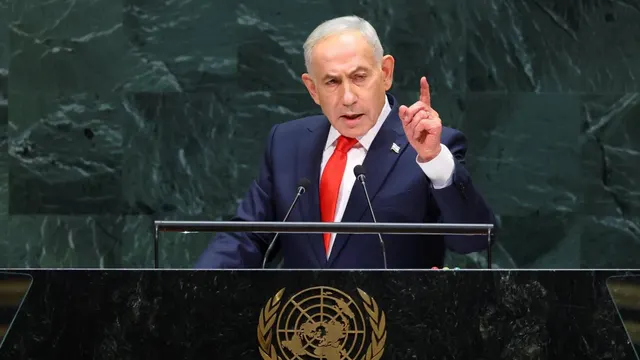
On artificial intelligence, Trump promoted a rebranding of the technology, referring to it as "super intelligence" — a term he had introduced earlier in the week in an address to the United Nations General Assembly. He said Xi appeared receptive to the new terminology.
"[Xi] seemed to like calling the poorly and inaccurately named Artificial Intelligence to a far more accurate and important name, SUPER INTELLIGENCE. That would be 'SUPER!' Everyone last night agreed, also," Trump wrote on Truth Social.
Despite fierce strategic competition between the two countries in the AI sector, both leaders pushed back against calls from within the US technology industry to slow the pace of development.
US Trade Representative Jamieson Greer said establishing communication channels on AI was one of the central challenges both governments were working to address. "I think with every government in the world right now, there isn't a department of AI, and so there can be a question of who do you call when you have an issue," Greer said, comparing the need for such a channel to the Cold War-era hotline between Washington and Moscow.
Greer added that a further meeting on AI between representatives of both countries was planned within the next month. He also said the current talks did not cover the potential sale of high-end US-made chips requiring export licences. "These are the crown jewels of American technology. It's the way we stay ahead in the race for superintelligence, or AI, and so those conversations … [are] not really happening in these negotiations," he said.
On Iran, Trump confirmed the two leaders had discussed the conflict. When asked by reporters whether the topic had come up, he replied simply: "We did," adding: "I think we're going to do great."
US Ambassador to China David Perdue said Trump told Xi that direct or indirect support for Iran was "totally unacceptable." Perdue later said China had already begun moving away from such support, stating: "They assured us yesterday they're not doing that."
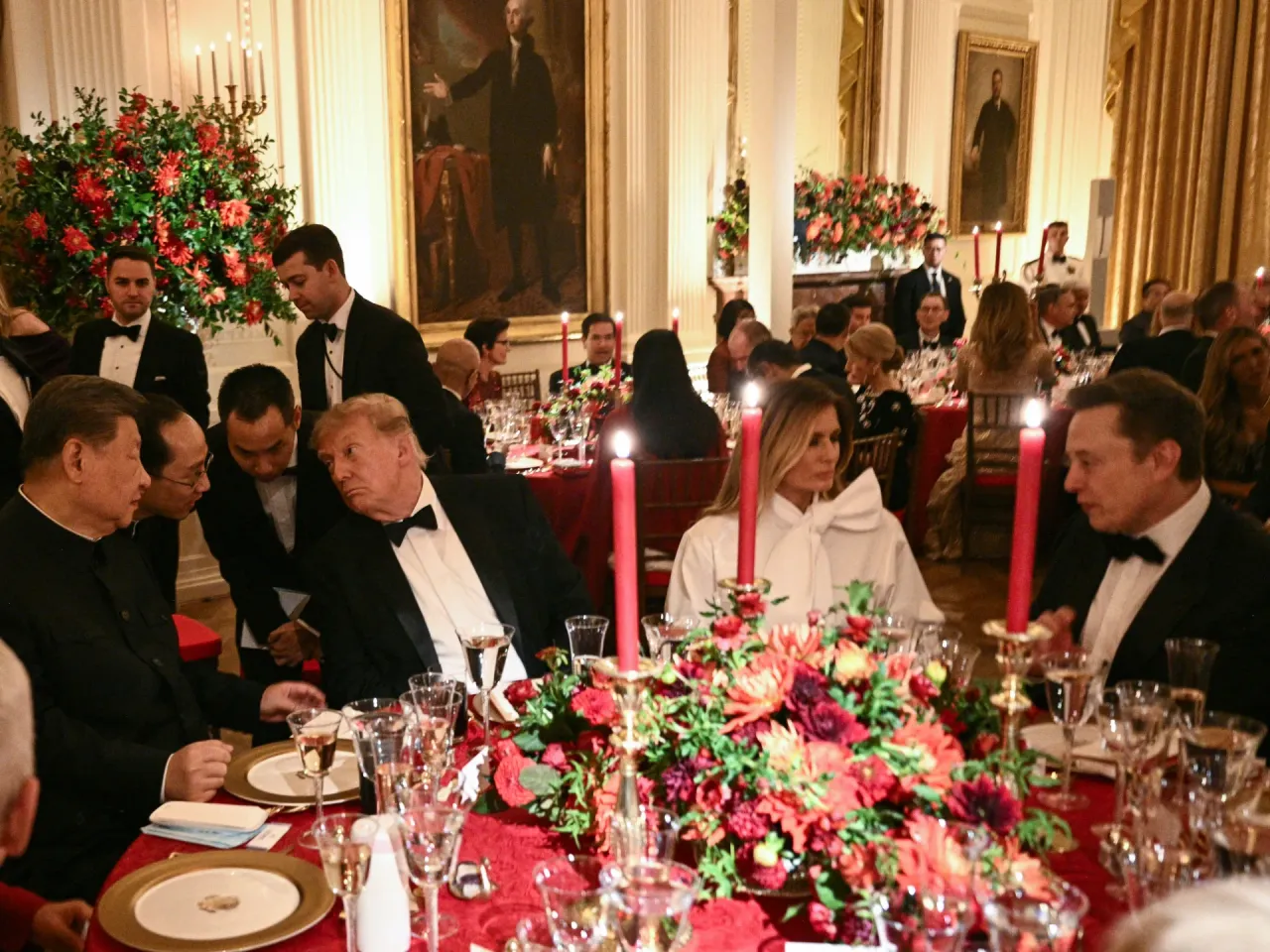
Trump hosted a state dinner for Xi on Thursday evening at the White House. Guests included Nvidia CEO Jensen Huang, Meta CEO Mark Zuckerberg, Apple chair Tim Cook, Tesla and SpaceX CEO Elon Musk, Amazon founder Jeff Bezos, and OpenAI CEO Sam Altman. Musk was seated at the main table alongside both presidents.
Xi also proposed that 100,000 young Americans be invited to visit China on student exchanges, as part of broader efforts to reduce tensions between the two nations.
Despite the display of goodwill, no major breakthroughs were announced on trade, AI safety, or other long-standing points of contention between the world's two largest economies.