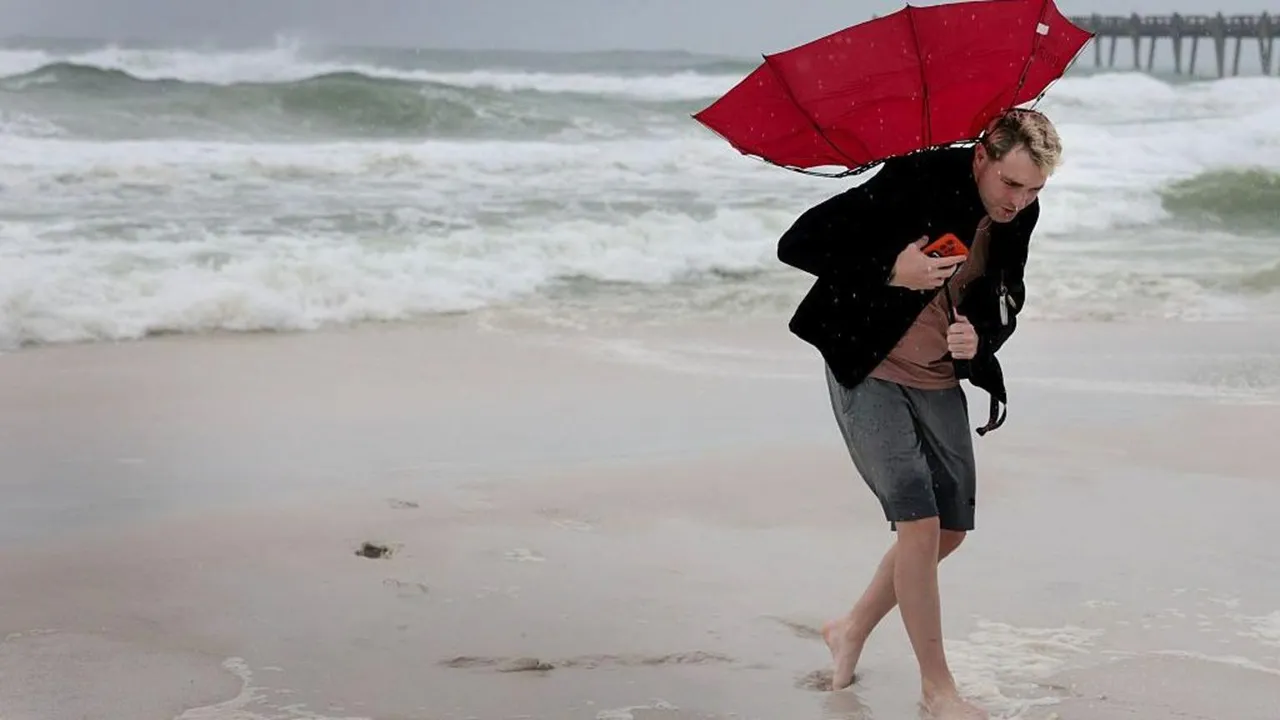
Hurricane Isaias has made landfall along Florida's western panhandle, bringing life-threatening flooding and powerful winds that have forced thousands of residents to evacuate.
The storm weakened slightly before landfall, reaching category 2 strength with winds of 110 mph (175 kph). Florida, Alabama, and Georgia each declared states of emergency ahead of its arrival.
Meteorologists warned of life-threatening storm surge that could cause up to 9 feet (2.7 metres) of flooding in some areas. The National Hurricane Center cautioned that the US Gulf Coast faces a "life-threatening storm surge."
As of Friday evening, hurricane-force winds extended up to 35 miles (55 km) from the storm's centre, while tropical storm-force winds reached as far as 205 miles (335 km) outward.
After striking Florida, the centre of Isaias is forecast to move across Alabama and into the Tennessee Valley on Saturday and Sunday, according to the National Weather Service.
Both Florida and Alabama issued mandatory evacuation orders. In Florida, evacuations targeted coastal communities in the storm's direct path. Florida Senator Rick Scott urged residents in designated areas to leave immediately, writing in a social media post: "DO NOT WAIT! Get out NOW!"
Alabama Governor Kay Ivey issued a mandatory evacuation order for all non-residents, tourists, and visitors in counties expected to be heavily affected.
Hurricane Isaias is the first Atlantic hurricane of the season, which has been largely delayed due to El Nino conditions in the Pacific. It marks the first time in more than 30 years that a hurricane did not form until October.
Not all residents chose to leave. John Guoth, a resident of Navarre, Florida, said he and his wife decided to remain in their home despite the rest of his street having already evacuated.
"It's a hurricane, we get them all the time... we kind of knew that when we moved here," he said.
"Pretty much everything that can fly and will fly is battened down, and everything that cannot fly is really, really secured," he added.
Guoth said he placed his ducks and chickens in the bathroom and secured his boats and trailers to prevent them from overturning.
A few other households also remained in the area, with some describing themselves as long-term locals who intended to protect their homes.
Pensacola resident Brandin Ruth said residents had been turning off gas to buildings, storing supplies on ice, and trying to get workers home safely. He noted that people in the city had "seen bad storms before" but were "bunkering up," adding: "You don't want to underestimate a storm like this."
Isaias is one of three storm systems affecting North America this weekend. Hurricane Simon is bearing down on the Pacific coast of Mexico as a category one hurricane, with forecasts indicating it could strengthen to category four by Saturday before making landfall near Puerto Vallarta on Sunday.
Further north, Tropical Storm Rachel, a downgraded hurricane, is tracking toward the US-Mexico border along the Pacific coast. Rachel is expected to reach the coast late Saturday, though its effects are already being felt in southern California through elevated tides and storm swells.
Video footage and photographs show several streets flooded in Newport Beach, California, caused by a combination of tropical storm swells and high tide. The City of Newport Beach advised residents to avoid the Balboa Peninsula due to street flooding and urged people not to drive through flooded streets. Bulldozers have been deployed along the beach in an effort to prevent further flooding.