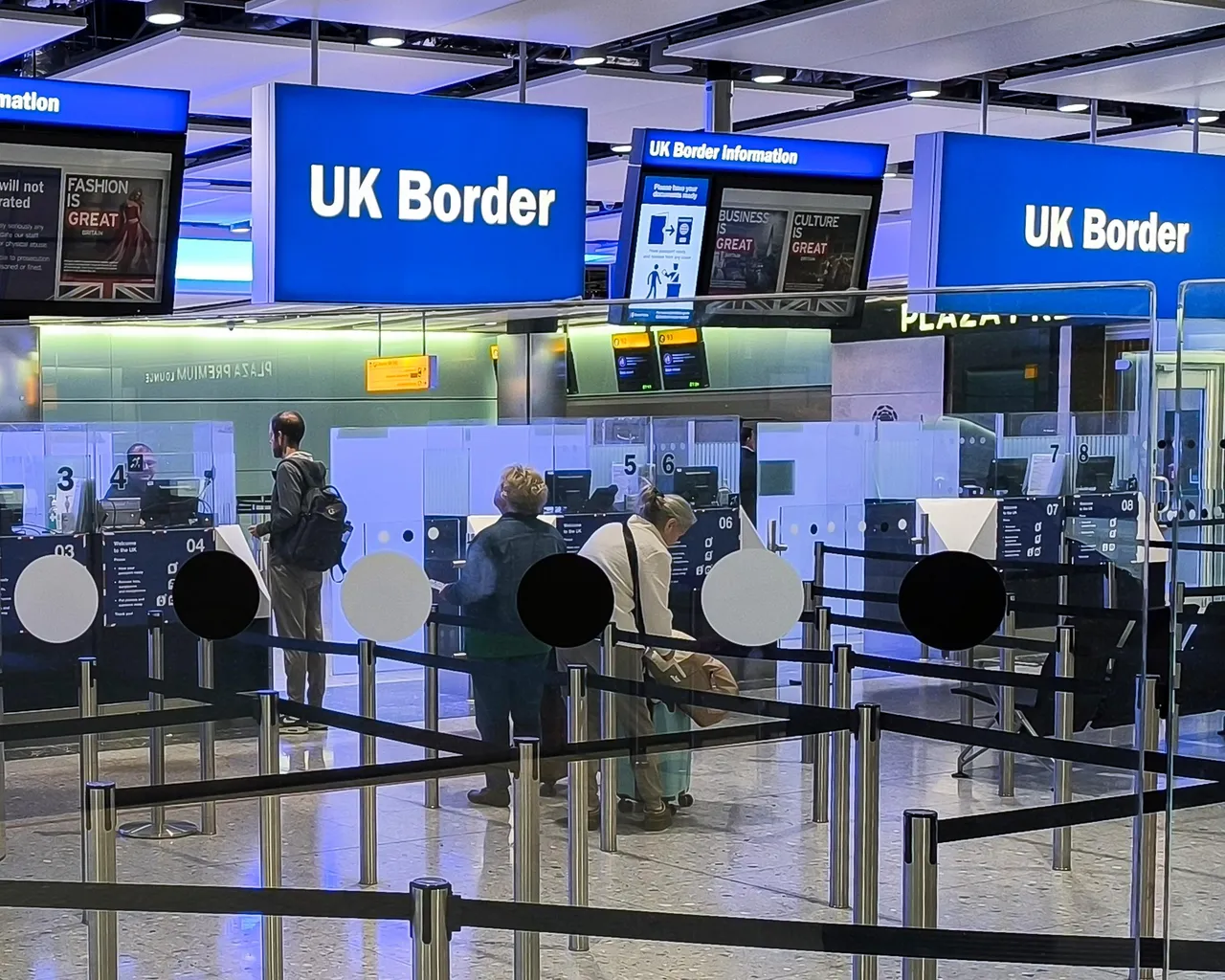
A woman legally settled in the United Kingdom was left stranded at a Spanish airport after the Home Office's post-Brexit visa system confused her with her twin sister.
Nidia Webb, who has lived in the UK for eight years, was told at the departure gate that she would not be able to board her flight home. The eVisa system, introduced as part of the government's drive to digitise the UK's immigration system, had linked her digital settled status to her identical twin's details rather than her own.
"My digital settled status had become linked to my identical twin sister's details rather than my own, meaning my status could not be properly matched to my identity," Webb said.
"I was informed that this is a known technical issue affecting some twins within the Home Office system."
Webb said Home Office staff promised over the phone that the problem would be fixed. However, a confirmation email was then sent to her sister rather than to her, leaving her unaware that the issue had been resolved.
"I had no idea the issue had been corrected until I was allowed to board my flight home," she said. "Had I not spent hours on the phone trying to resolve the matter, I have no idea how long I could have remained stranded abroad."
A Home Office spokesperson said: "Over 10 million people have already successfully used eVisas to prove their immigration status. As we expand our digital system, we are committed to data accuracy and ensuring that the safeguards in place to support eVisa users are accessible to anyone reliant on the digital system."
"In the rare cases where errors are identified, the majority of cases are resolved within 24 hours." The Home Office indicated the problem Webb encountered had since been fixed and that staff would contact her directly.
Concerns about the eVisa system are not new. In July 2025, reports emerged that up to 200,000 people who had lived in the UK legally for decades were at risk of being caught up in a Windrush-style scandal, as the Home Office had been unable to contact them to transfer their old immigration documents to the new digital system.
Monique Hawkins, acting chief executive of immigration campaign group the3million, said her organisation had seen previous cases similar to Webb's. She described the incident as highlighting vulnerabilities in the system and said it was "crucial that people have a genuinely stable means by which to prove their status".
Hawkins said the eVisa rollout had been "rushed", adding: "We regularly see people not only denied boarding, but also compensation, as carriers and the Home Office play a blame game shifting responsibility between each other."