South Korea announced Thursday it will recall its ambassador to Ukraine, escalating a diplomatic dispute over Kyiv's public disclosure of the transfer of two captured North Korean soldiers to Seoul.
The South Korean Foreign Ministry confirmed the decision but did not specify when Ambassador Park Hee-chang would be brought home. "The government has decided to recall its ambassador to Ukraine," the ministry said in a statement. It added that Seoul "hopes that all outstanding issues between the two countries will be resolved amicably" and would "continue consultations with the Ukrainian side to that end."
The dispute stems from a speech Ukrainian President Volodymyr Zelensky delivered at the United Nations General Assembly on September 23, in which he revealed that two captured North Korean soldiers had been transferred to South Korea. Zelensky noted the soldiers had not been "easy to capture alive."
The two soldiers were among thousands of North Korean troops deployed to support Russia in its war against Ukraine. Since their capture in early 2025, both had expressed a desire to resettle in South Korea. South Korea agreed to accept them, as it legally regards North Korea as part of its own territory and has a policy of accepting and financially supporting North Korean defectors.
South Korea accused Ukraine of violating a non-disclosure agreement that had been reached at the time of the transfer in mid-September. Seoul said the agreement was put in place to protect the safety of the soldiers and their relatives still living in North Korea. Kyiv denied that any such agreement existed.
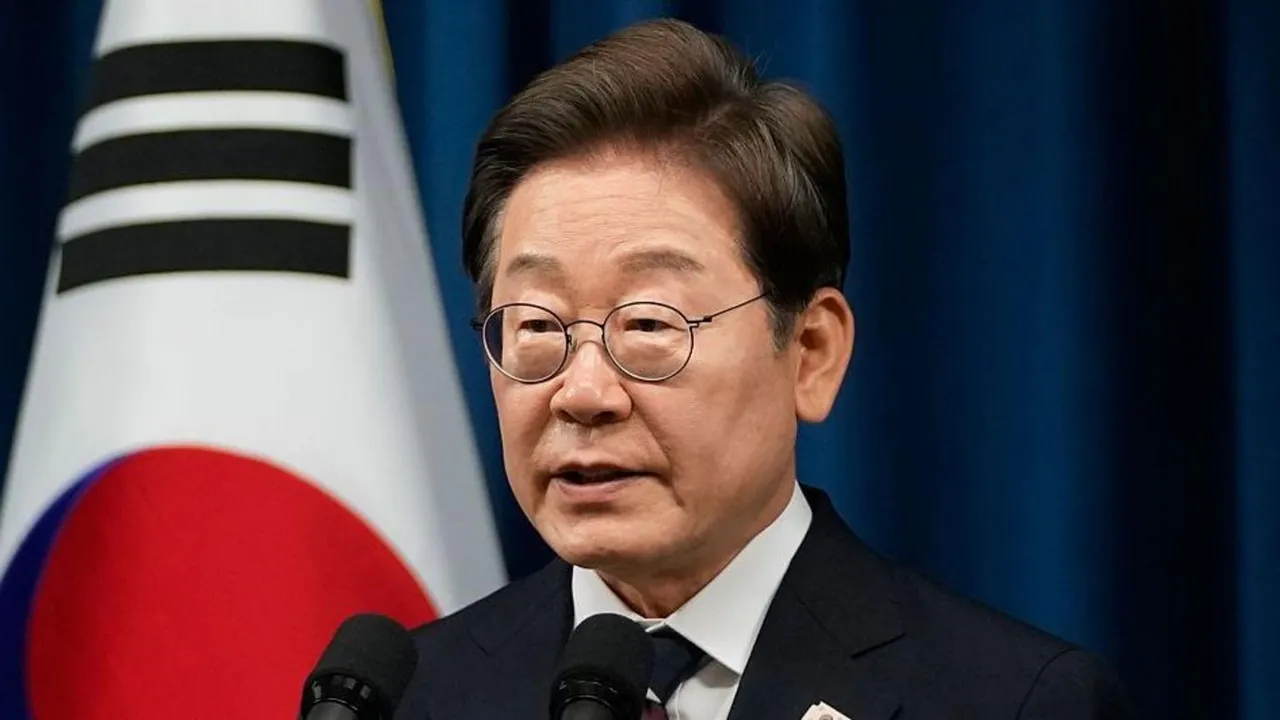
South Korean President Lee Jae Myung condemned the disclosure as "greatly disappointing" and described the transfer as a "highly sensitive issue" affecting national security. Last week, he called for a "public apology" from Kyiv and warned that Seoul would take "additional measures" if one was not forthcoming. Lee said that "the Ukrainian side demanded confidentiality and agreed to it, but unilaterally disclosed it."
Lee's office added that Ukraine had indicated the soldiers would be mentioned in Zelensky's UN address, but not the fact of their transfer to South Korea.
South Korea's Foreign Minister Cho Hyun said earlier this week that he had received an apology from his Ukrainian counterpart, but that it fell short of Seoul's expectations. However, Ukrainian Foreign Ministry spokesperson Heorhii Tykhyi told reporters that Foreign Minister Andrii Sybiha had not apologized. Sybiha had previously described the situation as a "diplomatic misunderstanding" that Ukraine "sincerely hopes to resolve," but stopped short of issuing a formal apology.
President Lee also faced domestic criticism following the disclosure. Opposition figures accused him of having sought to keep the transfer secret in order to avoid straining relations with Pyongyang. His office said the confidentiality was partly intended to protect the North Korean soldiers' families, and that Kyiv had also wanted the transfer kept quiet to avoid criticism that it had passed up an opportunity to exchange the soldiers for Ukrainian prisoners of war.
North Korea's state media has not commented on the transfer. Pyongyang has previously reacted with fury to high-profile defections, accusing South Korea of kidnapping its citizens. North Korea has shunned talks with both South Korea and the United States since 2019 and has focused on expanding its nuclear program.
South Korea has provided a total of $445 million in humanitarian assistance to Ukraine since 2022. In July, President Lee pledged an additional $100 million in aid during a meeting with Zelensky. Seoul has maintained a longstanding policy of not supplying lethal weapons to countries engaged in active conflict, though Kyiv has pressed South Korea to provide advanced air defense systems to help protect Ukrainian energy infrastructure from Russian drone and missile attacks.
Russia's Foreign Ministry has warned it would have "no choice but to retaliate" if South Korea supplied Ukraine with arms, without specifying what action it might take.
South Korea has long sought to maintain cordial relations with both Russia and China, viewing both as key partners in efforts to exert influence over Pyongyang. Since the collapse of the Soviet Union, Seoul has worked to deepen trade and diplomatic ties with Moscow, which shares a border with North Korea.