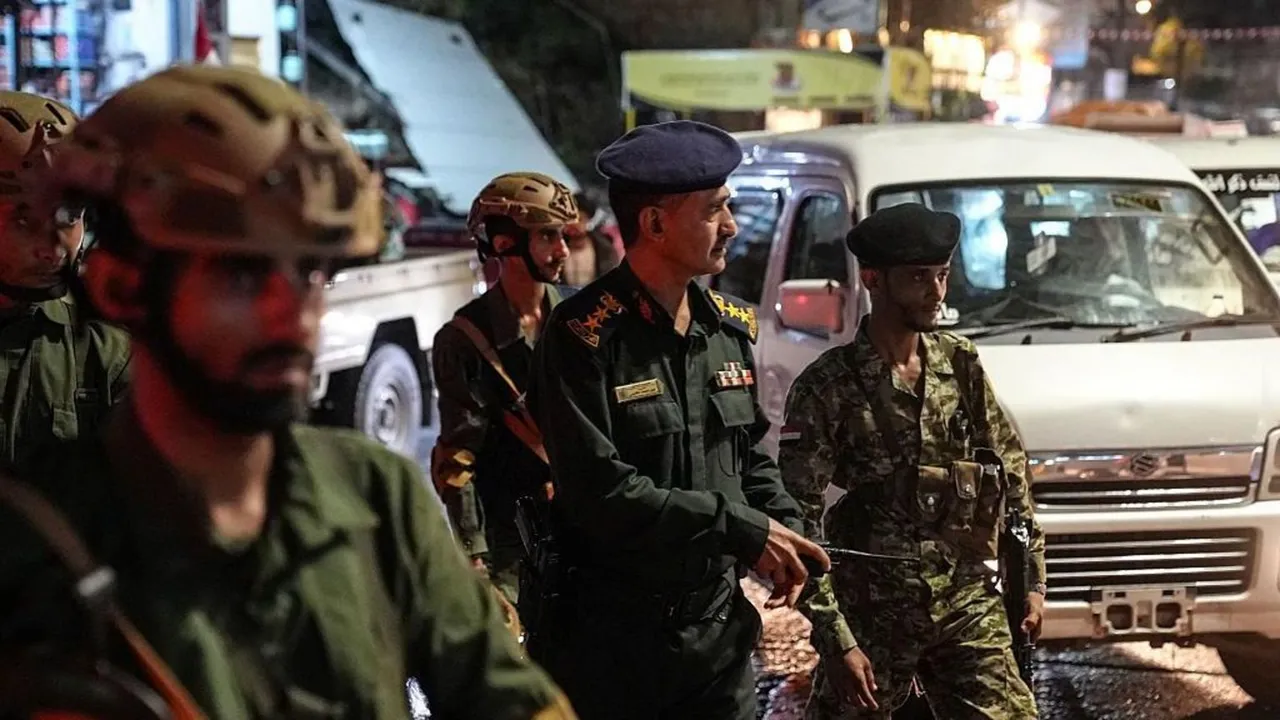
A Houthi ballistic missile strike on a military training camp in Yemen's Shabwa province has killed at least 73 people, with 14 others reported missing, according to local authorities.
The attack targeted al-Alam camp, also known as the Martyr Ahmed al-Sulaimani Training Centre, near Ataq city. The facility was being used to train recruits for Yemen's internal security forces and police, drawn from several provinces.
Shabwa's media office initially reported 53 killed and 200 injured. A subsequent statement said an investigative committee had informed Governor Awad bin al-Wazir that the death toll had risen to 73, with 14 individuals still unaccounted for.
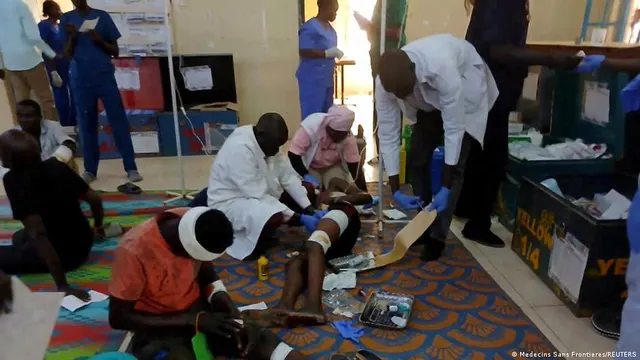
Hospitals in Shabwa were overwhelmed and forced to transfer the most seriously wounded to the neighbouring provinces of Hadramout and Aden, according to the province's deputy governor, Fahad al-Khalifi.
The head of Yemen's Presidential Leadership Council, Rashad al-Alimi, condemned what he called the "criminal attack" and promised a "firm response." He also formally requested the United Nations to designate the Houthis as a terrorist organisation.
Yemen's Information Minister Moammar al-Eryani said the strike constituted a war crime, arguing that an internal security forces training centre was not a legitimate military target. He also accused the Houthis of "attempting to fabricate a false media victory, boost the morale of its collapsing elements, and cover up the defeats and setbacks it is suffering across various combat axes."
The Houthis' military spokesman, Yahya Sarea, said the missiles had targeted a gathering of "Saudi enemy" forces at al-Alam camp, which he claimed was run by Saudi officers. There was no immediate comment from Saudi authorities.
Monday's strike was described as the deadliest single attack since the current escalation began.
In a separate development, Houthi-run media reported that a Saudi air strike on a home in the Sahar district of Saada province on Sunday killed at least 10 people and injured 23 others, many of them women and children. According to the Houthi-run health ministry, a total of 141 people had been killed in Saudi strikes over the preceding seven weeks.
Yemen's internationally recognised government said last week that at least 1,282 people had been killed across the country since 6 August. In Saudi Arabia, at least 19 people have been killed in Houthi attacks on airports since the start of October.
Meanwhile, the siege of the government-controlled city of Taiz is deepening a humanitarian catastrophe. The Houthis have encircled the city after capturing a major road linking it to southern Yemen, cutting off humanitarian supplies and driving up the prices of basic goods.
UN Human Rights Chief Volker Turk warned on Tuesday that the situation was placing civilians at grave risk. "The Houthis' closure of the only supply route linking Taiz to Aden is placing civilians at grave risk, blocking humanitarian aid and cutting off essential supplies," he said.
"Humanitarian aid must be immediately allowed to enter the city and its passage must be facilitated. Civilians wishing to leave must be allowed to do so freely and safely," Turk added.
He also urged all parties to "refrain from the use of explosive weapons with wide-area effects in populated areas and to take all feasible precautions to protect civilians and civilian objects."
Yemen's internationally recognised government has appealed to the UN to intervene and lift the blockade, warning that the Houthi siege threatens more than four million people. The UN World Food Programme has warned that shifting front lines and road closures have cut off 800,000 people from life-saving assistance, the vast majority in Taiz. Nationwide, more than 18 million Yemenis face severe food insecurity.
Continued fighting in Taiz governorate killed at least 32 civilians between 1 August and 19 October, including 14 children.
On Monday, forces aligned with the internationally recognised government launched air strikes in Taiz governorate, destroying Houthi reinforcements in Najd Qasim and a weapons depot in Jabal Habashi. The government said on Tuesday that its forces had also stopped Houthi attempts to advance in al-Shaqab, al-Misrakh, al-Aqroudh, and Jabal Han.
On the broader military front, the Yemeni government launched an offensive dubbed "Dawn of Yemen" on 5 October, aimed at reversing recent Houthi territorial gains. Pro-government forces, backed by a Saudi-led coalition, recaptured territory on the Red Sea coast overlooking the Bab al-Mandab Strait, which the Houthis had seized in a surprise assault in September. Fierce fighting continues there, as well as in Marib and al-Jawf provinces.
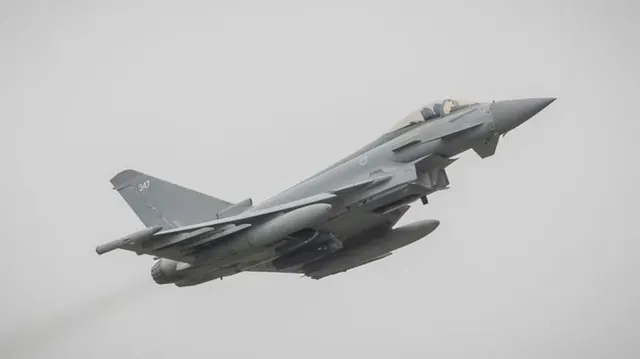
The United Kingdom announced on Tuesday it would deploy Typhoon fighter jets to help protect Saudi Arabia from Houthi attacks. The British Ministry of Defence said the aircraft would play a "defensive role" only and would not carry out strikes in Yemen. Egypt's parliament, meanwhile, delayed a vote on Monday to authorise its military to support Saudi Arabia in the conflict.
Yemen's civil war began in 2014, when the Houthis ousted the government from the capital, Sanaa. The conflict escalated in 2015 after a Saudi-led coalition intervened. A four-year informal ceasefire began to unravel in July, when the Houthis announced a maritime embargo against Saudi Arabia and resumed missile and drone attacks on Saudi airports, oil facilities, and tankers in the Red Sea.