The United States military struck three Iranian oil tankers on Saturday after Navy warships were targeted with ballistic missiles in the region, U.S. Central Command (Centcom) said.
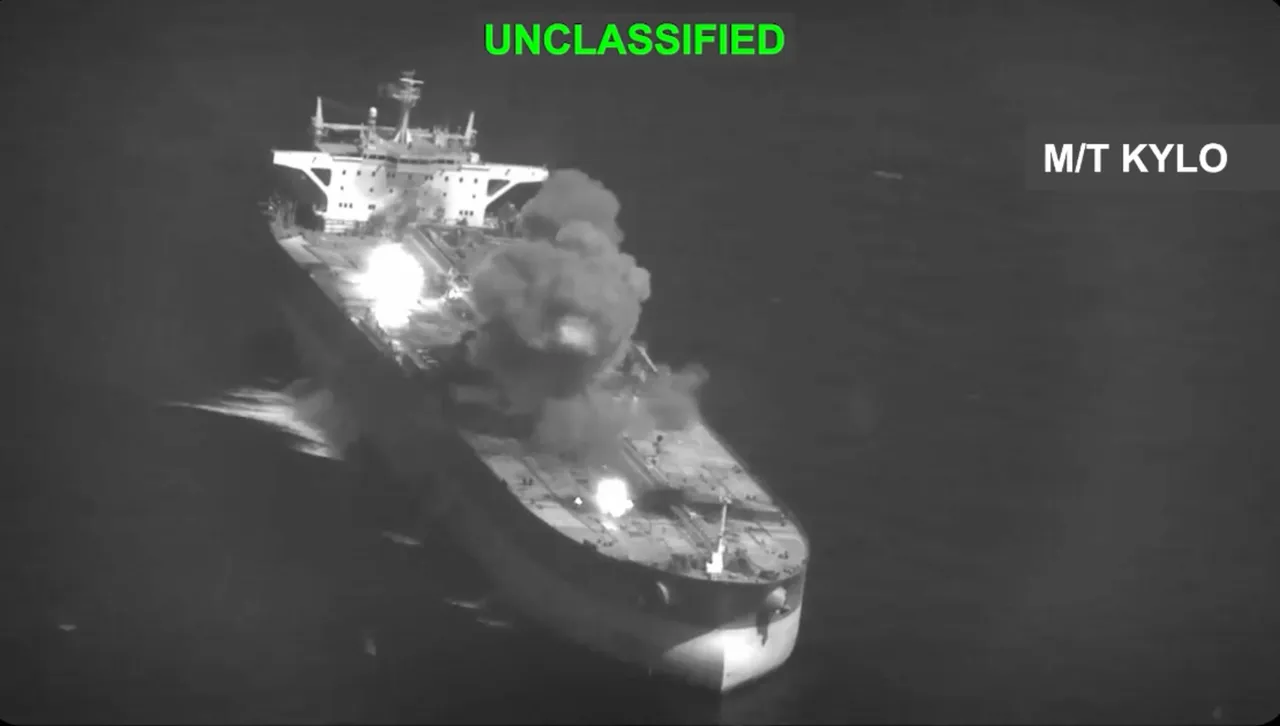
Centcom said it had "permanently disabled" two tankers — one near Kharg Island and another near the Strait of Hormuz — and "completely destroyed" a third, unladen vessel in the Gulf of Oman. The military shared what it described as video footage of the strikes.
According to the U.S. statement, a Navy aircraft carrier and a guided-missile destroyer successfully evaded "multiple unprovoked Iranian attacks" while patrolling in the region. No U.S. personnel were harmed.
Admiral Brad Cooper, Centcom's commander, said in a statement: "Let the message to the IRGC be clear: If you shoot at two of our ships, we will impose an even higher economic cost — taking out three of yours."
"We will not hesitate to defend American forces, and if necessary, destroy Iran's limited and exposed oil fleet," Cooper added.
Centcom said the three tankers were "part of a multibillion-dollar shadow network" that funds Iran's Islamic Revolutionary Guard Corps (IRGC) and its regional proxies.
Iranian state media earlier reported that four U.S. missiles struck a tanker approximately six miles (10 kilometers) from Kharg Island, a terminal through which Iran exports most of its oil. Tehran did not immediately acknowledge any attacks on U.S. ships.
According to the U.S. military, one tanker was struck off Kharg Island, a second near Jask, east of the Strait of Hormuz, and the third in the Gulf of Oman.
The strikes came nearly a week after the U.S. and Iran resumed hostilities following a period of relative calm. At least five people were killed earlier in the week during a U.S. bombardment of southern Iran, with one strike reported to have hit a wedding.
The renewed fighting followed new U.S. efforts to apply economic pressure on Tehran. Negotiations between the two sides collapsed shortly after a memorandum of understanding was signed in mid-June.
The conflict, which began with U.S. and Israeli attacks on February 28, has seen both sides seek to inflict military and economic damage. Iran's nuclear program, one of the issues at the root of the conflict, was to have been addressed in those negotiations.
The Strait of Hormuz, a critical chokepoint for global oil and natural gas shipments, has become a focal point of the confrontation. The U.S. military has been helping guide commercial vessels through the strait as Iran asserts control and targets some ships, though overall traffic through the waterway remains low.