Four soldiers from El Salvador are unaccounted for after armed gangs attacked their armoured vehicle in Haiti on Sunday.
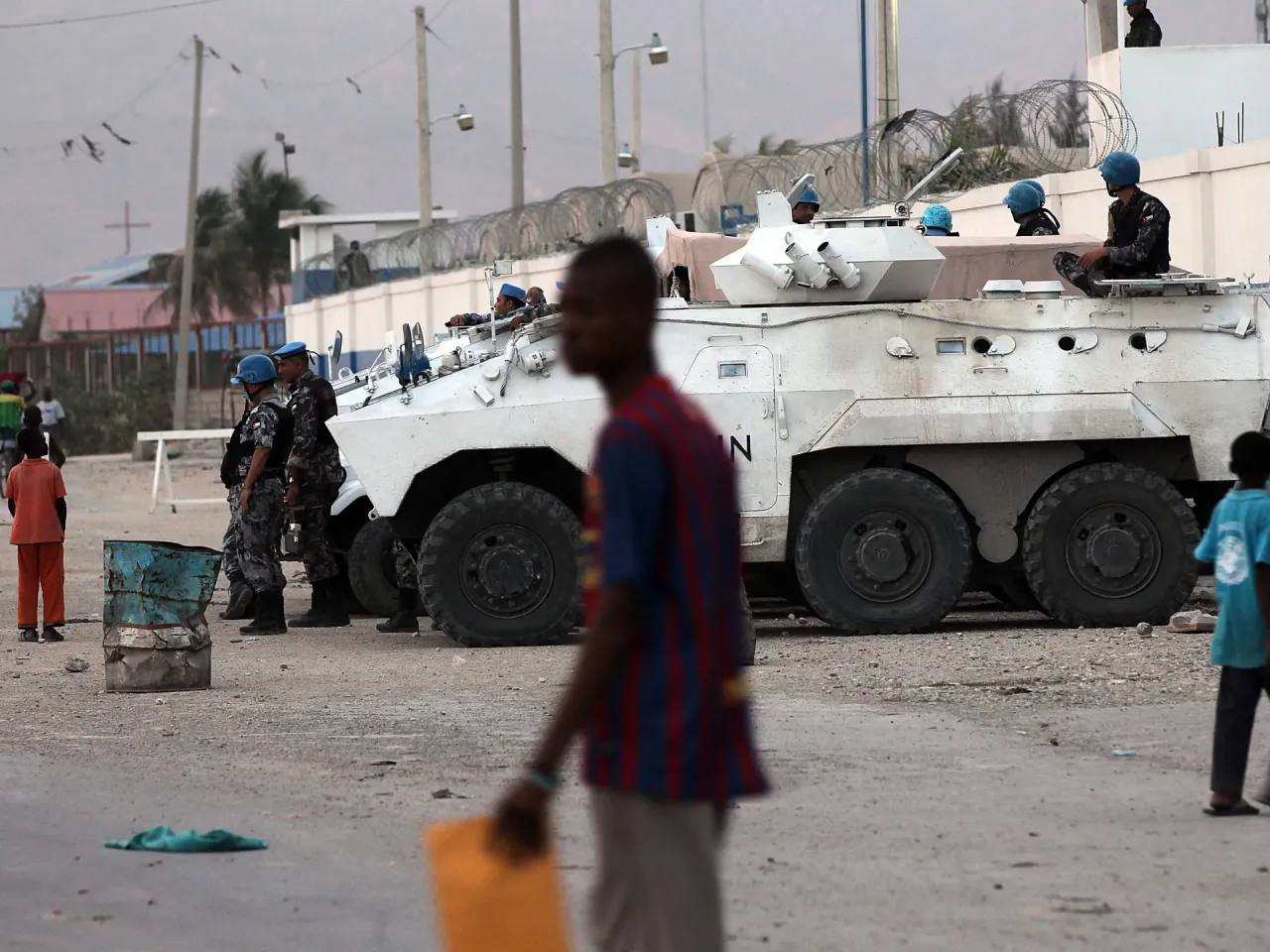
The troops are members of the United Nations-backed Gang Suppression Force (GSF). The attack took place in Croix-des-Bouquets, a commune north of the capital, Port-au-Prince. The soldiers managed to flee the burning vehicle before disappearing.
The Salvadoran ambassador to the UN Security Council, Egriselda Lopez, condemned the ambush at a Security Council meeting on Monday. "During the attack, the criminal groups used firearms and explosive devices, setting the vehicle on fire," she said.
The four missing personnel are described as aviation technicians. It is the first major attack on the international force since it began operations earlier this year.
The area where the vehicle was struck is controlled by gangs, including Kraze Barye, led by Vitelhomme Innocent, and 400 Mawozo, led by Lanmo Sanjou. Both gang leaders have been sanctioned by the UN and the United States.
Following the attack, the GSF said it is assessing the situation and has advised residents to stay indoors.
Carlos Ruiz Massieu, the UN Secretary-General's special representative for Haiti, told the Security Council that the ambush underscored growing risks as gangs retaliate against security operations.
He reported that between July and September, more than a thousand people were killed and over 100 abducted as a result of gang violence. An estimated 70 percent of Port-au-Prince is currently under gang control, as are many major roads across the country.
"Armed gangs have overrun large parts of Port-au-Prince, the capital, employing tactics including murder, kidnapping and sexual violence amid widespread impunity," a UN Security Council report stated last month.
Gangs have fought to expand their influence in Haiti, particularly since the assassination of President Jovenel Moise in 2021 left a leadership vacuum in the government.
The GSF officially began operations on June 1 but has so far functioned only in a limited capacity. Jack Christofides, the GSF's special representative in Haiti, said the force has deployed over 2,000 personnel from six countries. However, it remains well below its authorised strength and requires additional equipment, logistics and funding to expand operations.
Haiti has sought to hold its first round of national elections in nearly a decade in a bid to restore stability. Elections have been repeatedly delayed amid concerns about violence. Earlier this month, the country announced it was postponing the vote indefinitely, after having set a date of December 13 earlier this year.
Massieu cautioned against announcing electoral dates without proper assessment. "The repeated announcement of electoral dates without a true assessment of their credibility, of their feasibility, only serves to weaken credibility with Haitian institutions," he told the Security Council. He also warned that security gains alone cannot deliver lasting peace.