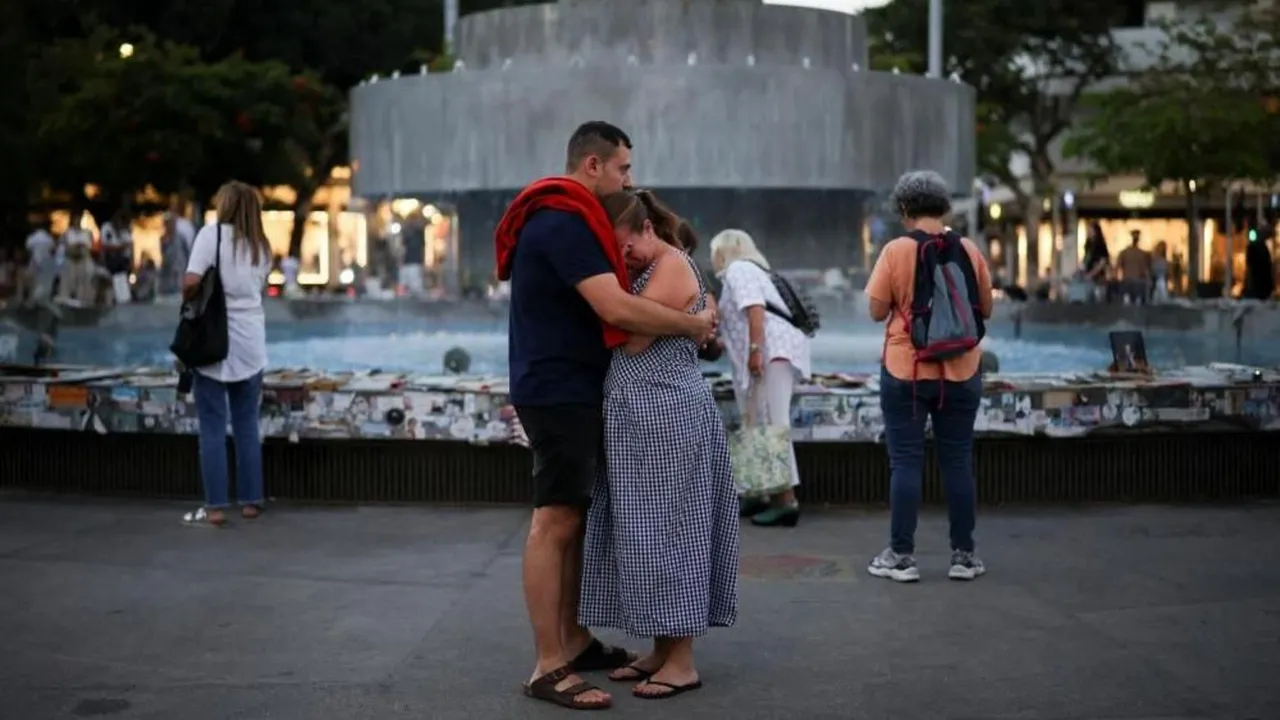
As Israel marks the third anniversary of the Hamas-led attacks of October 7, 2023, the psychological cost of three years of war is becoming increasingly visible across Israeli society, with rising rates of PTSD among children, growing mental health struggles among adults, and an increase in suicides among soldiers.
About 1,200 people died in the attacks on villages and army outposts in southern Israel. Israel's subsequent military campaign in Gaza has killed more than 74,000 Palestinians, according to reports, while more than 1,460 additional people have been killed in Gaza since a US-brokered ceasefire took effect, according to the Gaza health ministry. The Israeli military says at least seven Israeli soldiers have been killed in the strip over the same period.
New research from the National Mental Health Barometer, conducted by Clalit Health Services' Research Institute and the Myers-JDC-Brookdale Institute, found that one in five Israelis reports severe difficulties with daily functioning due to mental health issues. One-third of the Israeli population said they felt they needed mental health treatment. Half reported that their leisure activities had been affected, while 35 percent said they had difficulty forming and maintaining close relationships.
Among children and adolescents, separate Clalit research recorded a 121 percent increase in psychiatric emergency visits compared with the period before the war. Drawing on records from approximately five million members, Clalit Health Services confirmed that psychiatric emergency visits among children and teenagers more than doubled during this period.
Behind those figures are families living with bereavement and deep uncertainty. During a webinar for journalists organised by Clalit Health Services to mark the anniversary, Irit Ben Arye recounted how her husband, Haim Ben Arye, a 52-year-old bus driver, drove south on October 7 to help evacuate survivors from Kibbutz Be'eri. He returned home crying. About two weeks later, he died by suicide. The couple had been married for 30 years and had eight children.
Recounting what she told her children following her husband's death, Irit Ben Arye said: "You have to ask for help, if something is bothering you, if you're in pain, in the dark, you feel that you are alone." "Cry, ask, break something. Make yourself noticed, make us notice that you are in pain."
Experts say the cumulative effect of missile strikes, warning sirens and repeated displacement has compounded the psychological strain. Eric Vermetten, a professor of psychiatry at Leiden University Medical Center in the Netherlands, said that repeated exposure to danger can lead to long-lasting psychological damage. "Repeated attacks, warning sirens and displacement turn ordinary decisions — where to sleep, whether to send children to school, how to plan tomorrow — into questions of safety," he said. "Maintaining that vigilance is exhausting: sleep becomes deeply fragmented, concentration falters and anxiety, irritability or withdrawal can seriously strain relationships."
Edgar Jones, professor at King's College London's Institute of Psychiatry, Psychology and Neuroscience, noted that people respond differently to prolonged conflict. Some adapt and develop coping mechanisms, he said, but those who experience the destruction of their home or the death of a relative may develop post-traumatic illness or depression. "Many of those in this group will become war-weary should their daily lives continue to be disrupted and threatened," he said.
Memorial events were held across Israel and internationally. Crowds gathered at Kibbutz Kfar Aza, where 64 residents were killed and 19 were taken hostage on October 7. Zion Regev, a community leader, said most surviving residents had yet to return to their homes because of the trauma. "This is the first time we are doing all the things here in the kibbutz," he said. "It's a very emotional day, it's a very difficult day for our community, three years after 7 October."
At the national memorial event at Tel Aviv's Yarkon Park, Ido Yakir, a man who reportedly helped fend off Hamas attackers at Kibbutz Magen, praised IDF troops who "fought so bravely" and said Israel would remember everyone "who knew that they had to give their lives in order to save others."
In Tel Aviv's Dizengoff Square, anti-government protesters dyed the fountain red to mark the anniversary. Demonstrators briefly blocked a main highway for a moment of silence and held banners reading "the people will remember their sons and daughters," "a complete failure," and "guilty" alongside an image of Prime Minister Benjamin Netanyahu. No independent commission of inquiry into the October 7 security failure has been established. Netanyahu has rejected personal responsibility and refused to establish a state inquiry led by Israel's Supreme Court.
Einav Zangauker, who became an outspoken critic of the Netanyahu government while her son Matan was held hostage in Gaza — he was released last October as part of the ceasefire agreement — said: "They're trying to make us forget what happened on 7 October. We won't forget, we will demand the truth."
In a statement, Netanyahu said he had lit a memorial candle for every victim. "We will complete the mission: we have settled the score and will continue settling the score with all the murderers," he said. At a ceremony earlier in the week, he stated that Israel had killed 4,000 of the 6,000 Palestinians who infiltrated Israel from Gaza on October 7.
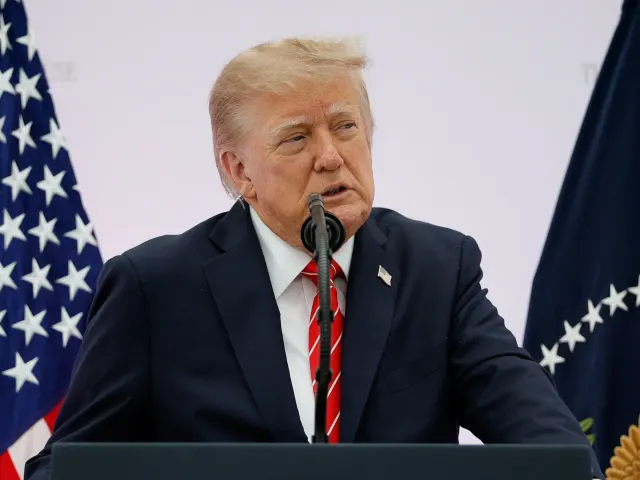
International leaders also marked the anniversary. German Chancellor Friedrich Merz called the attack a "profound rupture" and said antisemitism must be confronted with "even greater resolve." European Commission President Ursula von der Leyen said "the unspeakable savagery and terror of 7 October must never happen again" and stated that the EU "remains ready to help turn today's fragile ceasefire into a durable peace, based on a two-state solution." Speaking outside the White House, US President Donald Trump said he had spoken with Netanyahu and called October 7 "a horrible day, a horrible tragedy." UK Prime Minister Andy Burnham told Britain's Jewish community: "We stand with you."
This is the first anniversary of the October 7 attack with no hostages remaining in Gaza. Most of Gaza is in ruins, with nearly all of its 2.1 million population still displaced amid a dire humanitarian situation.