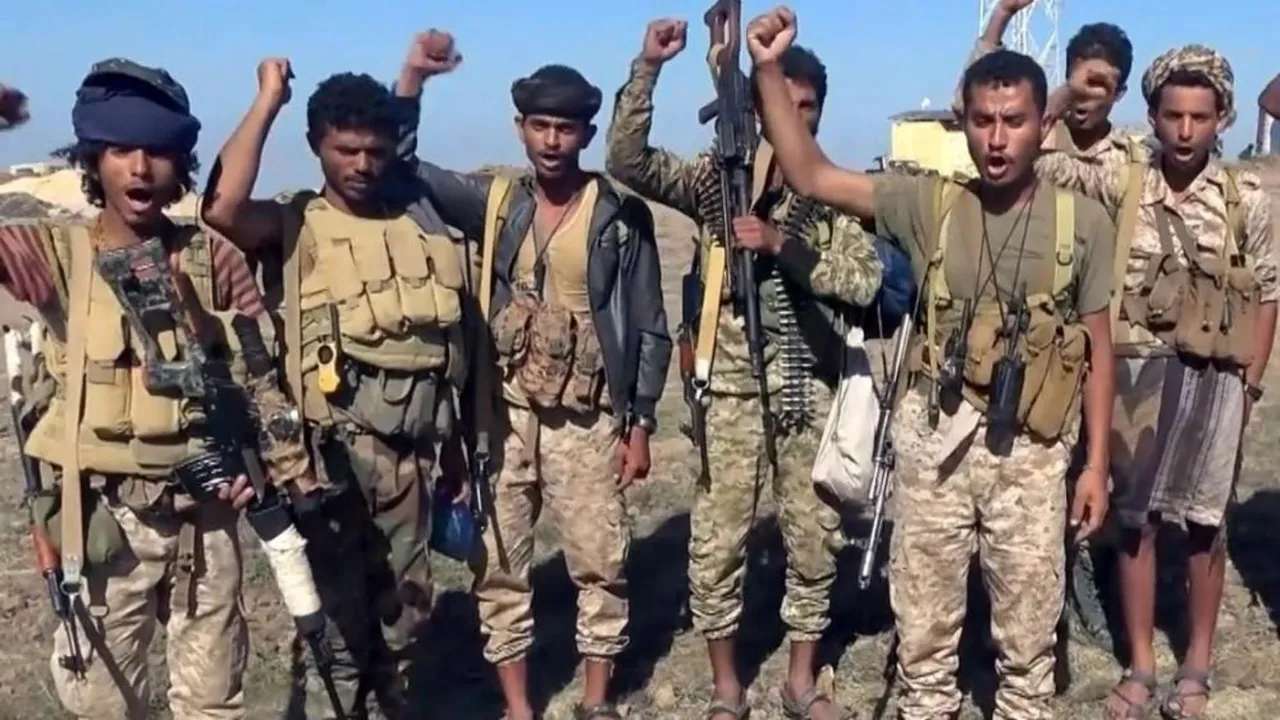
Three Saudi nationals have been killed and dozens wounded in a series of Houthi missile attacks on airports in Saudi Arabia, the country's civil aviation authority has confirmed.
Saudi Arabia's General Authority of Civil Aviation said two attacks struck King Khalid International Airport in Riyadh on Thursday. The first targeted the airport itself, while the second hit an aircraft belonging to state carrier Saudia. One of the airline's pilots was among those killed, Saudia said in a statement.
The attacks also caused "injuries to a number of Saudi citizens and residents of various nationalities," the civil aviation authority said. Air traffic subsequently returned to normal, it added.
Explosions were heard across the Saudi capital during the strikes, including a large blast at the airport.
Yemen's Houthi group said it had attacked Riyadh airport with two ballistic missiles. The Iran-aligned group also claimed to have targeted an airport in Najran city, near the Saudi border with Yemen, and the Khamis Mushait air base further north. Saudi Arabia has not confirmed those additional attacks.
The latest strikes follow a series of Houthi attacks on Saudi airports earlier in the week. Two people were killed and 28 wounded in an attack on Abha International Airport, the civil aviation authority said on Wednesday. A third person was killed at King Khalid airport. In total, authorities reported three people killed and 36 wounded in the strikes on Riyadh and Abha airports earlier this week.
In response, the Saudi-led coalition said it destroyed 82 Houthi military targets in retaliatory strikes.
The Houthi military spokesperson said the attacks on Saudi airports were carried out in "response to the Saudi aggression against our country," which the group said involved "60 airstrikes and missile attacks in the past 24 hours." The Houthis say they are targeting Saudi Arabia over its support for government forces in Yemen's ongoing civil war.
The attacks mark an escalation in renewed fighting between Yemen's Saudi-backed government forces and the Houthis, who control most of the country's north-west.
The conflict has intensified in recent weeks following a rapid Houthi offensive that seized strategically important stretches of the Red Sea coast, including the port of Mokha on the Bab al-Mandab Strait. The strait is the narrowest point of the Red Sea and a critical chokepoint for global shipping. Yemeni pro-government forces have since said they had "secured" the strait at the southern end of the Red Sea.
A Saudi-led coalition was formed in 2015 after Arab countries joined forces to prevent the Houthis from overthrowing Yemen's internationally recognised government. Years of air strikes and ground fighting resulted in hundreds of thousands of deaths and triggered one of the world's worst humanitarian crises.
A temporary ceasefire brokered in 2022 began to unravel in July. The Houthis subsequently announced a "maritime embargo" against Saudi Arabia and launched missile and drone attacks on Saudi airports, oil facilities, and tankers in the Red Sea. The group said it was retaliating for what it describes as a years-long Saudi blockade and for an air strike on Sanaa airport.