A Damascus court sentenced former Syrian President Bashar Assad and other senior members of his regime to death in absentia in mid-August, finding them guilty of premeditated murder, torture, and deprivation of liberty. The court classified the acts as war crimes and crimes against humanity.
Assad is currently living in Russia, where he fled after his government was overthrown in late 2024. Many other senior officials are also believed to be in Russia or hiding elsewhere.
Although Russia and Syria signed an extradition treaty in 2023, observers say it is unlikely Russia would hand Assad over to Syrian authorities. Under the treaty, the prospect of a death sentence could also serve as grounds to block extradition.
In August, Syria's Deputy Justice Minister Mustafa al-Qassem said the country had established a commission to cooperate with Interpol, adding that coordination with other countries on extraditing fugitive suspects would accelerate legal proceedings.
The verdict was widely covered in Syrian media. "The verdict had a lot of echoes by people, they were so happy," said Lina Chawaf, a Syrian journalist, media expert and researcher at Harvard University's Center for Middle Eastern Studies. "Many media celebrated the verdict on the statement day as a victory and consider it as part of transitional justice."
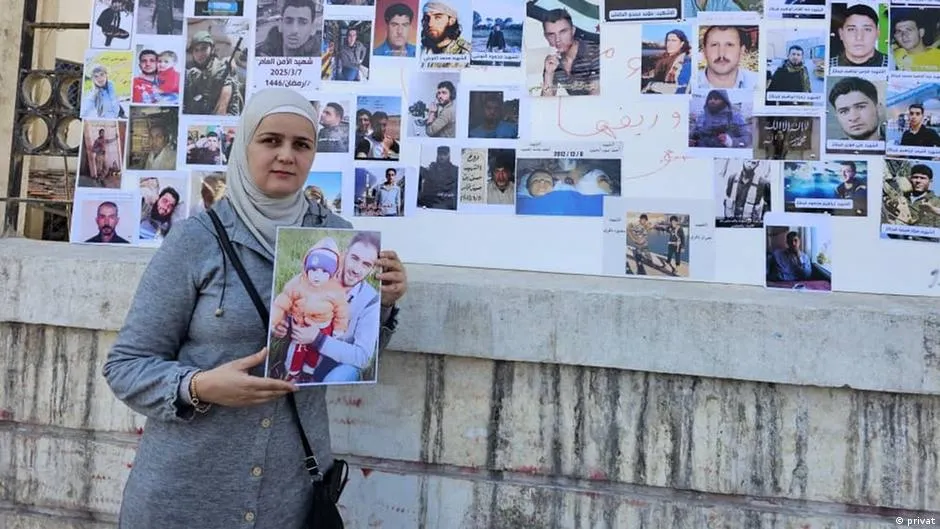
For many survivors, however, the ruling carries limited practical weight. Huda Khayti, a Syrian women's rights activist who survived a 2013 chemical weapons attack on the east Ghouta region, lost her brother to regime bombing. Her home and women's center were destroyed, and in 2018 she was forced to flee her hometown of Douma, a major city in Ghouta located roughly 10 kilometers northeast of Damascus, to the rebel stronghold of Idlib in northern Syria.
Since the fall of the Assad regime, Khayti has been traveling regularly between Idlib and Douma, where she is working to open a new women's center. She described the emotional weight of returning to a region still marked by destruction. "When I'm traveling through the country I see traces of war everywhere, so many houses and so much infrastructure destroyed. So much suffering. So much trauma."
On the conviction, she was measured. "Of course, this conviction of Assad is a good thing. Even if it's only on paper. Bashar Assad may have been convicted but he just continues to live his life in Russia — like so many other Syrian criminals who fled to Russia."
Rana Sheikh-Ali, founder of Daret Salam, an organization that uses technology to build peace and empower women, described the August trial as largely symbolic. While she opposes the death penalty on human rights grounds, she acknowledged that many Syrians viewed the death sentences as just.
Advocates stress that criminal prosecution of senior regime figures is only one element of a broader transitional justice process. Other components include searching for missing persons, investigating crimes, determining reparations, and implementing institutional reforms, with victims and survivors at the center of the process.
The scale of the task is significant. The Syrian Network for Human Rights reports that more than 234,805 civilians were killed during the civil war, at least 202,000 of them by the Assad regime and its allies. The network has also documented at least 181,312 cases of arbitrary arrest and enforced disappearance, 45,339 deaths resulting from torture, and 217 chemical weapons attacks attributed to the Assad regime. Actual figures are believed to be considerably higher.