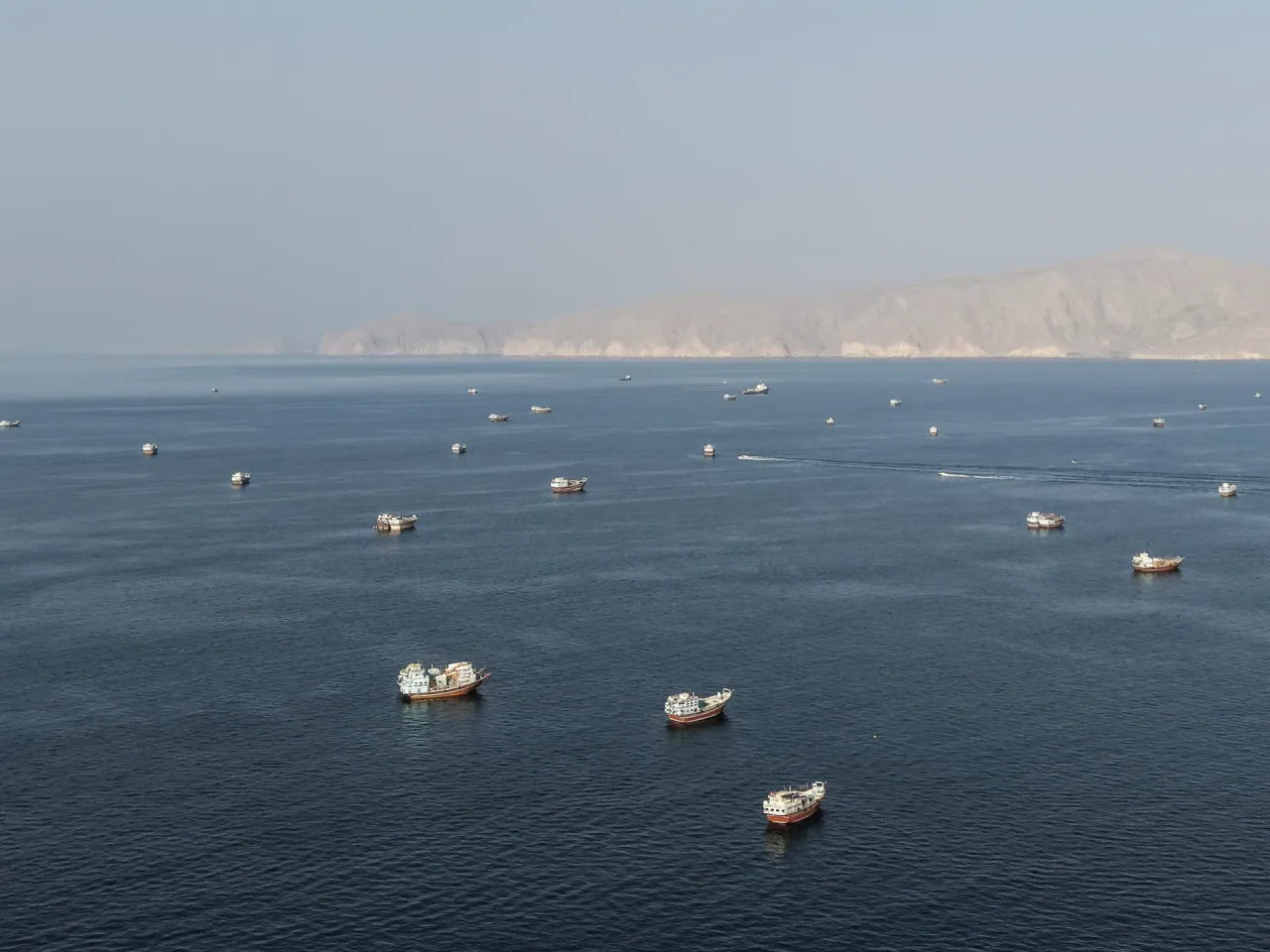
Crude oil exports from the Middle East have risen above pre-war levels on four of the seven days in the final week of September, according to provisional data from ship-tracking firm Kpler.
Kpler data showed crude exports from the region exceeded pre-war levels on September 24 and between September 27 and 29, reaching 19.5 to 22.5 million barrels per day (bpd). Before the US-Israel war on Iran began, exports averaged 18 million bpd between March 2025 and February 2026.
The overall tally for crude, oil products, chemicals and non-gas liquids averaged 22.4 million bpd in the seven days to September 30. On October 1, the seven-day moving average for crude exports stood at 18.5 million bpd, including transits via the Strait of Hormuz, the Red Sea, exports from terminals and ship-to-ship transfers in the Gulf of Oman.
The number of liquefied natural gas cargoes exiting the Strait of Hormuz also rose in September to its highest monthly level since February. The figures exclude any vessels that may have crossed the strait with their automatic identification system transponders switched off to avoid detection.
Despite the data, senior Islamic Revolutionary Guard Corps (IRGC) commander Ali Fadavi dismissed the volume of oil moving through the waterway. Speaking in a televised interview on Sunday, Fadavi said only three to four million bpd were now transiting the route supervised by the United States, calling the amount "negligible" compared with pre-war traffic.
Fadavi also stated that, for the first time, no US vessels were present in the Gulf, the Strait of Hormuz, the Sea of Oman or the northern Indian Ocean, and that US warships were "100 percent vulnerable" to IRGC attacks.
Around the same period, Iran claimed it had carried out successful strikes on ships near the Strait of Hormuz, including US Navy vessels, saying the attacks had forced Washington to reposition its warships further from the Iranian coast.
The United Kingdom Maritime Trade Operations agency reported at least one attack per day in the Strait of Hormuz or the Gulf of Aden since October 2.
On Sunday, Iran's top negotiator and parliament speaker, Mohammad Bagher Ghalibaf, said the Strait of Hormuz would remain closed until the United States accepts Tehran's seven-day plan to reopen the waterway.