Up to 500 schools across France are expected to be fully or partially closed on Monday as student protests over education conditions continue, French Education Minister Edouard Geffray announced on Sunday.
Lessons will be "totally or partly suspended" in some "400 to 500" high schools because security conditions "have not been fulfilled", Geffray said. He added that the number of schools affected on Monday would be comparable to Friday's figure, when at least 400 of France's 3,700 high schools were closed and 560 faced protests or disruptions.
The minister said 24 schools had been "burned or ransacked" since the start of the protests. At least 78 education staff members have been injured, which Geffray described as "something we have never seen before". At least 170 students have also been injured since demonstrations first erupted in the Paris region in mid-September.
The protests began on 17 September at a high school in a Paris suburb over a lack of teaching staff, overcrowded classrooms, excessive school-day hours and run-down buildings. They have since spread from Paris to cities including Montpellier, Nantes, Marseille and Lyon.
Student grievances include classes of up to 40 pupils in deteriorating buildings, poor teacher pay, staff absences and an opaque university application system. Protesters have cited conditions such as leaks, collapsed ceilings and decayed buildings, and have accused the state of disengaging from secondary education.
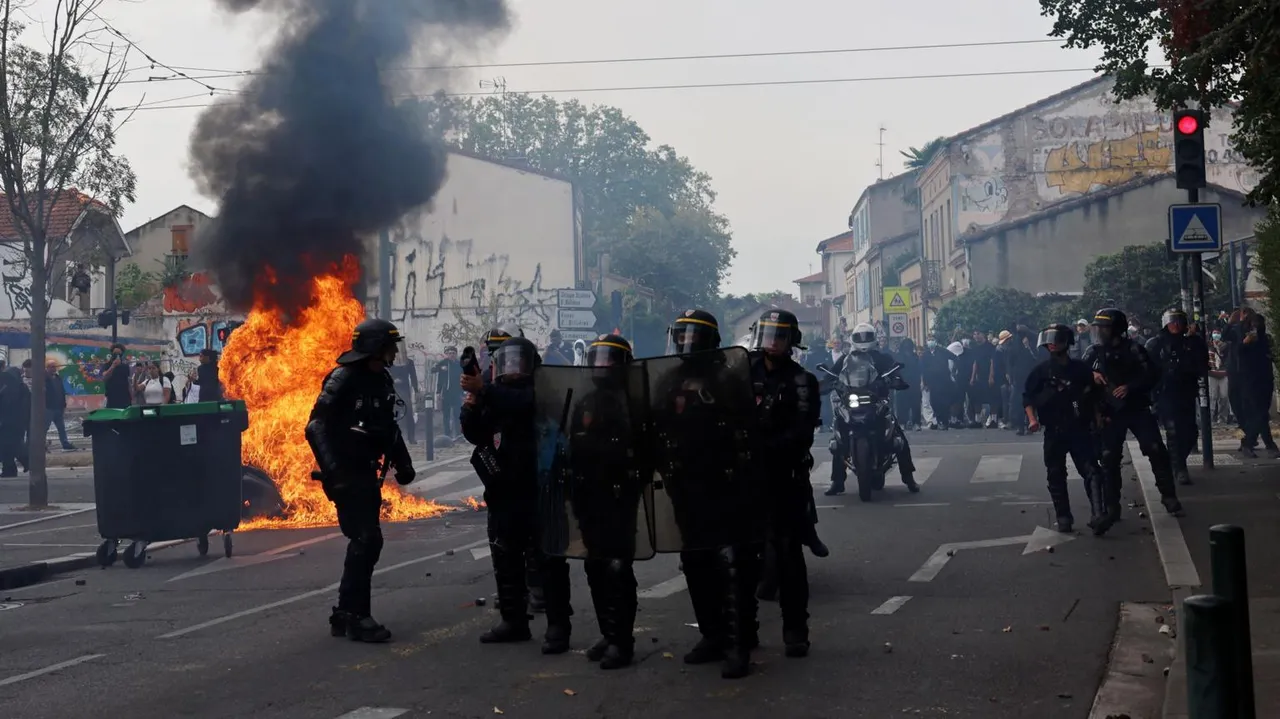
Clashes with riot police left hundreds of people injured and resulted in more than 5,000 arrests since the start of the movement, with around 85 percent of those detained being minors. On Friday alone, 1,747 people were arrested, according to the interior minister.
After a lull over the weekend, protest organisers called for a return to large-scale demonstrations on Tuesday, citing a lack of "concrete measures" from President Emmanuel Macron's government.
Geffray said the government envisaged a "partial, progressive return to lessons" but warned of continued security risks. In an interview on French public radio, he claimed outside agitators had exploited the movement.
"There are activists - particularly from the far-left - who have infiltrated the high school student movement, hijacked it from the students themselves, and engaged in extreme violence," Geffray said. "Clearly, this poses a risk to both our staff and our students."
On Sunday, police detained a 16-year-old in connection with an assault on a teacher in La Ciotat, a town on the southern coast between Marseille and Toulon. The teacher, aged 59, was doused with gasoline and struck during a protest on Friday.
Rights group Amnesty International said the student protesters "must be listened to, not repressed", as critics accused authorities of using disproportionate force in response to the demonstrations.
The protests have jolted Macron's centrist administration and confronted it with one of its worst crises in months. Images of burning barricades and police using tear gas and batons to disperse crowds have dominated television news.
The government is also facing pressure from trade unions, which called a day of strikes last week to push new Prime Minister Sebastien Lecornu to rethink budget cuts and consider a wealth tax on the super-rich. The CGT trade union called on workers to sustain pressure with further demonstrations this week.