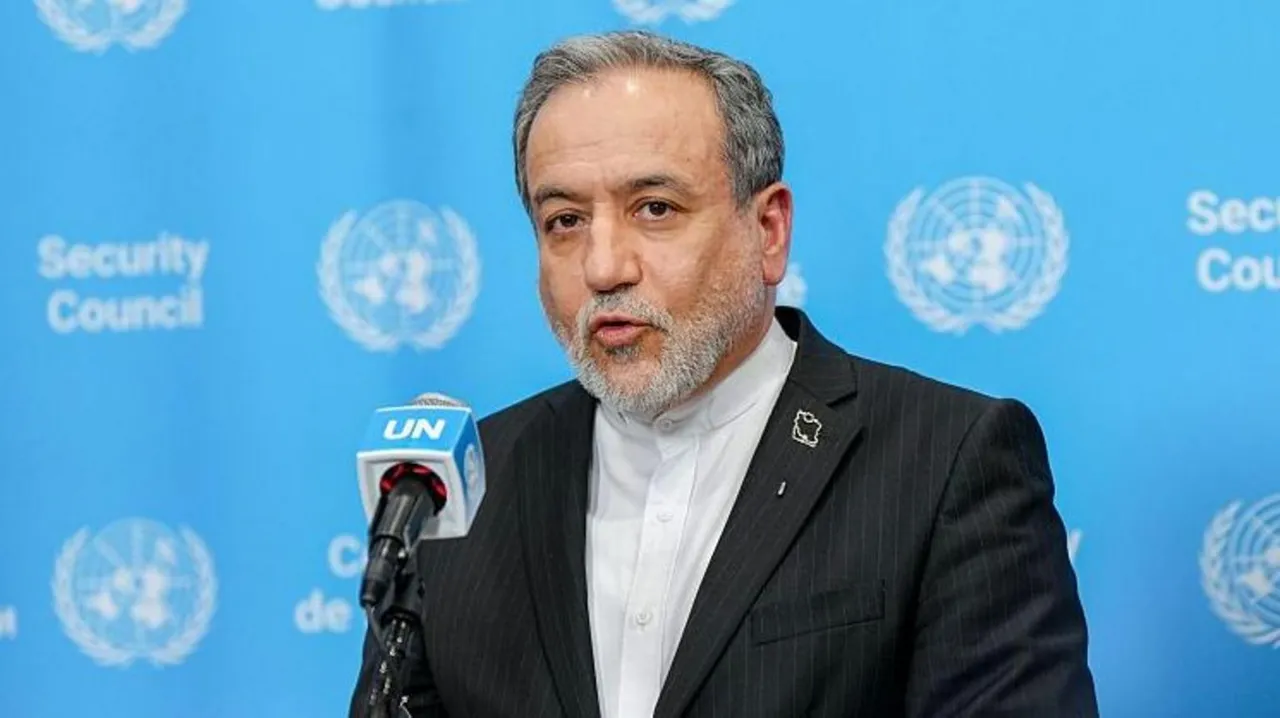
Iranian Foreign Minister Abbas Araghchi has proposed a deal to the United States that would see the Strait of Hormuz reopened within seven days, saying the choice now rests with Washington.
Araghchi made the announcement to reporters at the United Nations in New York, describing the plan as "concrete" and saying it could be implemented "if the necessary conditions are met." He said the proposal was delivered to the US via Qatar and that its terms were already contained within the memorandum of understanding signed in June.
"If the necessary conditions are met, the strait can be reopened, a normal maritime passage restored within seven days," Araghchi said. "I can tell you if there is seriousness in the US side to come to a deal and reopen the Strait of Hormuz, everything is now prepared."
He did not specify what steps Iran wanted the US to take, but added: "The actions that the United States should take are not new. They are all already in the MOU."
A US official said positive discussions were taking place through mediators, including on nuclear issues, but added that the US was "in a very strong position with control of the Strait of Hormuz, so we are not in a rush." The US has yet to deliver an official response to the proposal.
However, according to reports citing US officials, President Donald Trump has privately rejected the deal. Trump was said to be sceptical that Iran would meet his demands and had told staff he viewed a renewed bombing campaign as likely.
Iranian President Masoud Pezeshkian also addressed the situation in a television interview, saying the ceasefire process "will begin from the very day they accept it." He added: "We had previously reached an agreement based on the MOU that was signed in Pakistan... if the United States agrees to proceed in that way, everything will return to the way it was before."
Pezeshkian also said Iran would allow UN nuclear inspectors into the country. Rejecting claims that Iran is seeking to develop a nuclear weapon, he said: "If they wish to come in and have inspections, we can reach accords and agreements vis-à-vis that specific topic within the negotiations."
The conflict began when the US and Israel launched air strikes on Iran on 28 February. Iran responded by attacking Israel and US bases in the Gulf, striking Arab Gulf allies of the US, and blocking the Strait of Hormuz.
Before the war, approximately 20 percent of the world's oil and liquefied natural gas passed through the strait. Its closure has caused significant fluctuations in global energy prices and increased pressure on Trump to find a resolution, particularly ahead of US Congressional elections in November.
The MOU, signed on 18 June, was a 14-point agreement intended to bring about a ceasefire and at least partially reopen the strait. It stated that Iran would never develop a nuclear weapon and called for the US, Iran, and their allies to end military operations on all fronts. It also included provisions for ending a US naval blockade, sanctions relief, and arrangements for the safe passage of commercial vessels through the strait. The agreement collapsed shortly after signing when both sides resumed strikes.
Since then, Iran has attacked vessels it says attempted to cross the strait without authorisation, while the US has struck Iranian sites in the strait and Iranian tankers off the country's coast. The US has also maintained a blockade of Iranian ports, causing significant disruption to the Iranian economy.
Trump has claimed the US has successfully maintained oil flows through the strait. Shipping data shows a recent ten-day average of approximately 18 vessel transits per day, though daily figures have dropped as low as nine on certain days, according to a commodities data firm cited by sources.
The situation has been further complicated by Yemen's Houthi movement, allied to Iran, which has intensified attacks aimed at disrupting oil exports from Saudi Arabia via the Red Sea. The group has seized significant stretches of the Red Sea coast this month, including the port of Mokha, which overlooks the Bab al-Mandab Strait, another critical chokepoint for global shipping. Houthi attacks on Saudi oil installations have added to the pressure on regional energy supply routes.