Ukraine continued to reclaim territory on the eastern front this week, even as its relationship with the United States came under severe strain following reports of restricted access to American intelligence and satellite navigation services.
Ukrainian President Volodymyr Zelenskyy said partners failed to share intelligence warning that five ballistic missiles were heading toward Kyiv on October 13. Those missiles struck Thermal Power Plant Number 4, one of the capital's largest facilities, causing widespread power outages.
"It is a pity we are losing a strong partner," Zelenskyy told journalist Piers Morgan, referring to the United States. "It's painful when President Trump chooses one side, not our side. This is not the right side of history."
On October 14, Russia launched a massive strike on Ukraine's electricity infrastructure. Over a 24-hour period, Russian forces fired 850 drones and 39 missiles, hitting 30 energy targets across 19 regions of the country. The assault came despite US President Donald Trump having declared an energy ceasefire on October 11.
"This level of blatant disregard for the United States by Russia has not been seen before," Zelenskyy said.
Ukraine also reported that SpaceX's Starshield satellite navigation service had been restricted during the same period. Starshield is the military branch of the Starlink network and is used by Ukraine to guide aerial interceptors. The service was capped at 160 km/h, making it effectively impossible to track and intercept Russian jet-powered Geran-4 drones, which travel at speeds exceeding 500 km/h.
SpaceX owner Elon Musk addressed the restrictions directly. "Starshield systems are owned and controlled by the US government. Any limits on speed or usage are decided by the US military and ultimately POTUS," he wrote.
Zelenskyy said six in ten Russian drones are now jet-powered, underscoring the operational impact of the navigation cap. Ukraine's Unmanned Systems Forces reported that daily strike figures dropped from an average of 2,300 to 1,678 on October 14 and further to 1,053 on October 15.
Sources at Ukraine's Ministry of Defence said Starshield services had begun returning to normal on October 15.
The disruption was not without precedent. The US had previously halted intelligence sharing with Ukraine in March, a move that, according to reports, helped Russia reclaim the Kursk region, which Ukraine had counter-invaded.
Further complicating the bilateral relationship, Trump on October 9 invited Russia to sell 1.8 million tonnes of diesel to the global market by the end of the year, citing the need to reduce transport prices. The move effectively reversed the Lindsey Graham Act, which Trump had signed into law only days earlier. That legislation granted him authority to impose secondary sanctions on countries purchasing Russian oil.
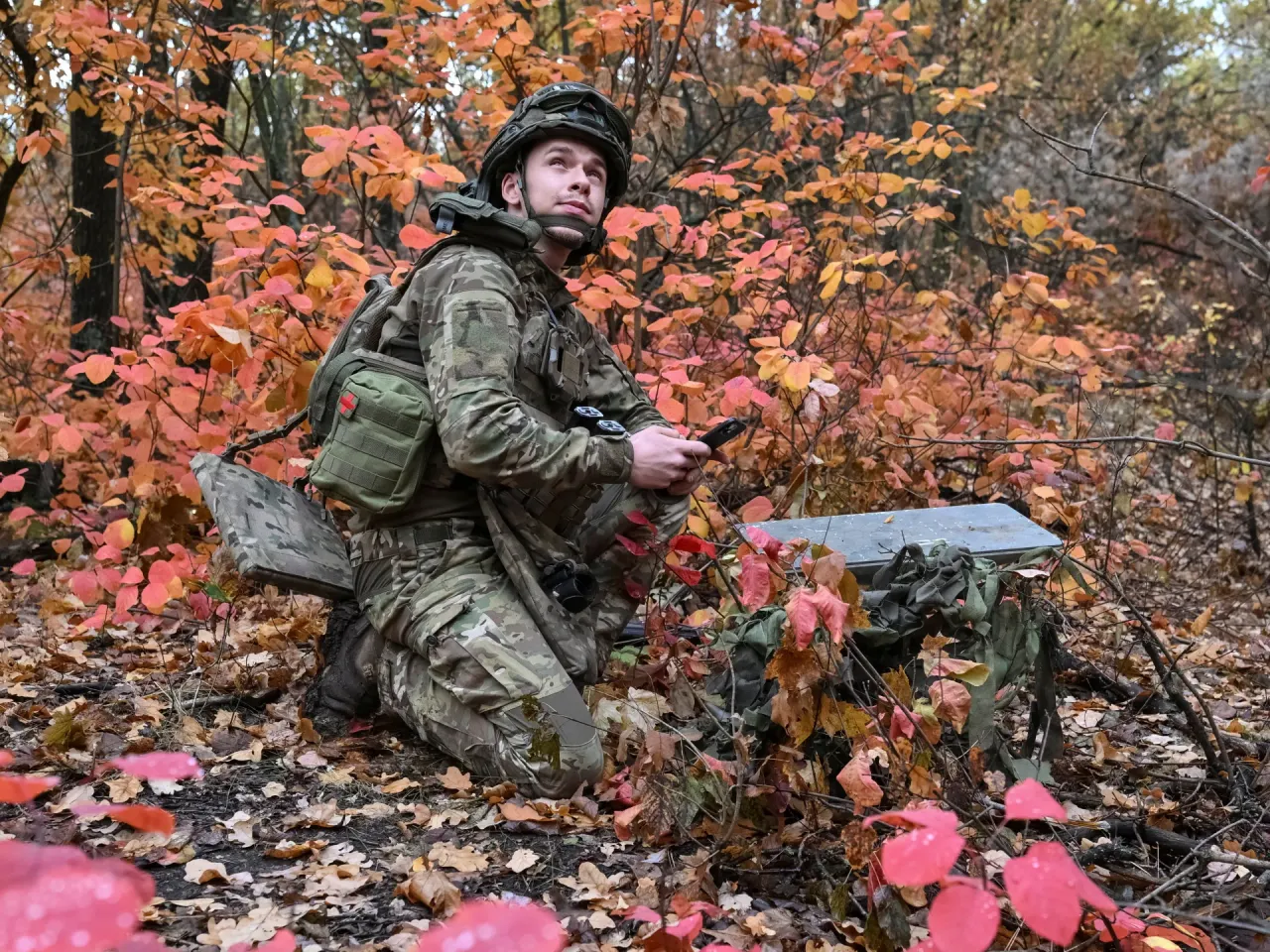
Despite the setbacks, Ukraine reported significant battlefield progress. The Third Army Corps concluded a fourth phase of Operation Vivaldi in the eastern Donetsk region, reclaiming an additional 100 square kilometres of territory. Corps commander Andrii Biletskyi said the operation had now recovered a total of 275 square kilometres and 16 settlements since August, bringing Russia's overall territorial gains for the year close to nil.
The operation was designed to counter a Russian push toward the town of Lyman. A separate counteroffensive further south pushed back against an attempted Russian advance on Dobropillya.
Ukrainian commanders described the two operations as a response to what they assessed as a Russian effort to encircle the cities of Sloviansk and Kramatorsk in a pincer movement. The counteroffensives have drawn Russian units away from positions directly facing those cities, effectively stalling that section of the front.
The scale of Ukraine's air defence effort reflects the intensity of the aerial campaign it faces. During September alone, Ukraine's air force intercepted more than 4,700 drones and missiles. The military also reported striking 40 command posts and 50 logistics facilities during the same month, disrupting Russian supply lines including fuel trucks, bridges, and ammunition warehouses.