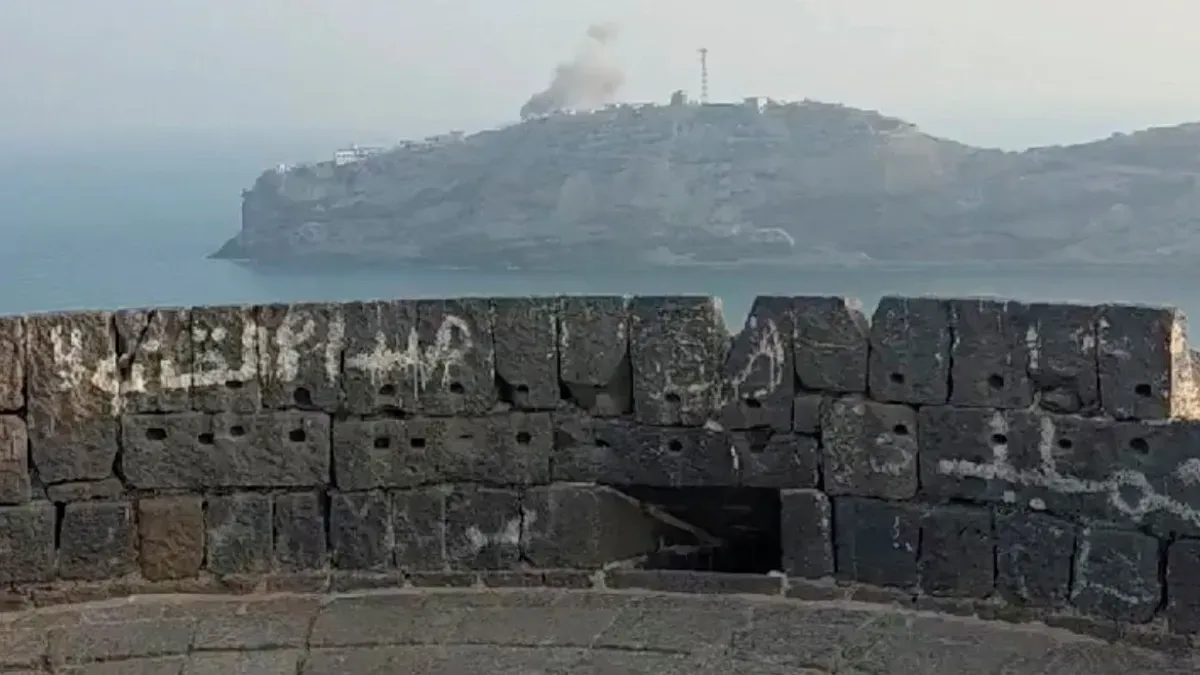
The Iran-backed Houthi movement, also known as Ansar Allah, has fired missiles at the presidential palace in the southern Yemeni city of Aden, killing five people and wounding 16.
Yemen's Information Minister Moammar al-Eryani said five missiles struck the Al-Maashiq Presidential Palace. Health Minister Qasem Buhaibeh confirmed that the dead and wounded included guards and civilian employees. The government said Prime Minister Shaya al-Zindani and other officials were safe, though two of his bodyguards were among those killed.
Houthi military spokesman Yahya Saree said the group had struck what he described as the "Saudi military operations headquarters" in Aden.
The following day, two missiles landed on the grounds of Aden International Airport. The Aden Security Department blamed the Houthis and said it was the second attack on the facility in less than a week. A Yemenia Airways flight bound for Cairo was preparing for takeoff at the time of the strike.
Al-Eryani said the missiles landed approximately 500 metres from the aircraft. No casualties were reported. He called the strike "a direct threat to the lives of passengers and aviation crews." The Houthi-run Saba news agency said the group had targeted a military headquarters and weapons depots inside Badr Camp, a military site adjacent to the airport.
Aden serves as the interim capital of Yemen's internationally recognised government, which relocated there after the Houthis seized the capital, Sanaa, by force in 2014 and later imposed their own administration. The Al-Maashiq Palace is the seat of that government's power.
The Houthis currently control much of the country's north and west. Fighting between the group and a Saudi-led coalition supporting the government had largely subsided following a 2022 ceasefire. However, in September the Houthis launched a rapid offensive along the Red Sea coast, seizing territory overlooking the strategic Bab al-Mandeb strait at the entrance to the Red Sea.
Nearly two weeks ago, government forces launched a counteroffensive dubbed "Operation Dawn of Yemen" with Saudi air support, but have so far failed to reverse those territorial gains.
Saree said the Houthi attacks on Aden were part of the group's declared policy of targeting "Saudi reinforcements wherever they were located."
Aden has been struck before. In December 2020, an attack on Aden airport as a new cabinet arrived from Saudi Arabia killed at least 22 people. A second attack that day hit the palace where ministers had been taken to safety. The coalition blamed the Houthis, who denied responsibility.
On Thursday, Saudi Arabia's deputy minister for public diplomacy, Rayed Krimly, blamed Iran for having "encouraged" the escalation. He said the Houthis had rejected an offer to meet for talks in Oman when the latest round of hostilities began.
Tehran denied the claim. "The Islamic Republic of Iran rejects any claim that Iran has played a role in Yemeni (Houthi) operations," Iranian Foreign Ministry spokesman Esmaeil Baghaei said. Baghaei added that Iran "has always been ready to use its good offices to help end the hostilities," offering again to mediate.
Canada's embassy in Saudi Arabia condemned the palace attack and called for "an immediate de-escalation of hostilities." "We stand in solidarity with the internationally recognised Government of Yemen and the Yemeni people," the embassy said.
The United Nations Security Council condemned escalating Houthi attacks on Saudi Arabia, including those affecting civil aviation and energy infrastructure. The governing council of the UN's International Civil Aviation Organization also condemned recent attacks on civilian airports and aircraft in Saudi Arabia.