German prosecutors are investigating a 105-year-old man on suspicion of being an accessory to multiple murders at a Nazi prisoner of war camp during World War Two.
The case is being handled by the public prosecutor's office in Dortmund. "The 105-year-old suspect is thought to have been a guard at the prisoner of war camp Stalag 326 VI K in the Senne region of western Germany," prosecutors said in a statement. The man is "accused of being an accessory to multiple murders owing to his activities there," they said.
A second investigation had been under way involving another former guard at the same camp, Dortmund public prosecutor Sonja Frodermann confirmed. That suspect died a few months ago at the age of 99.
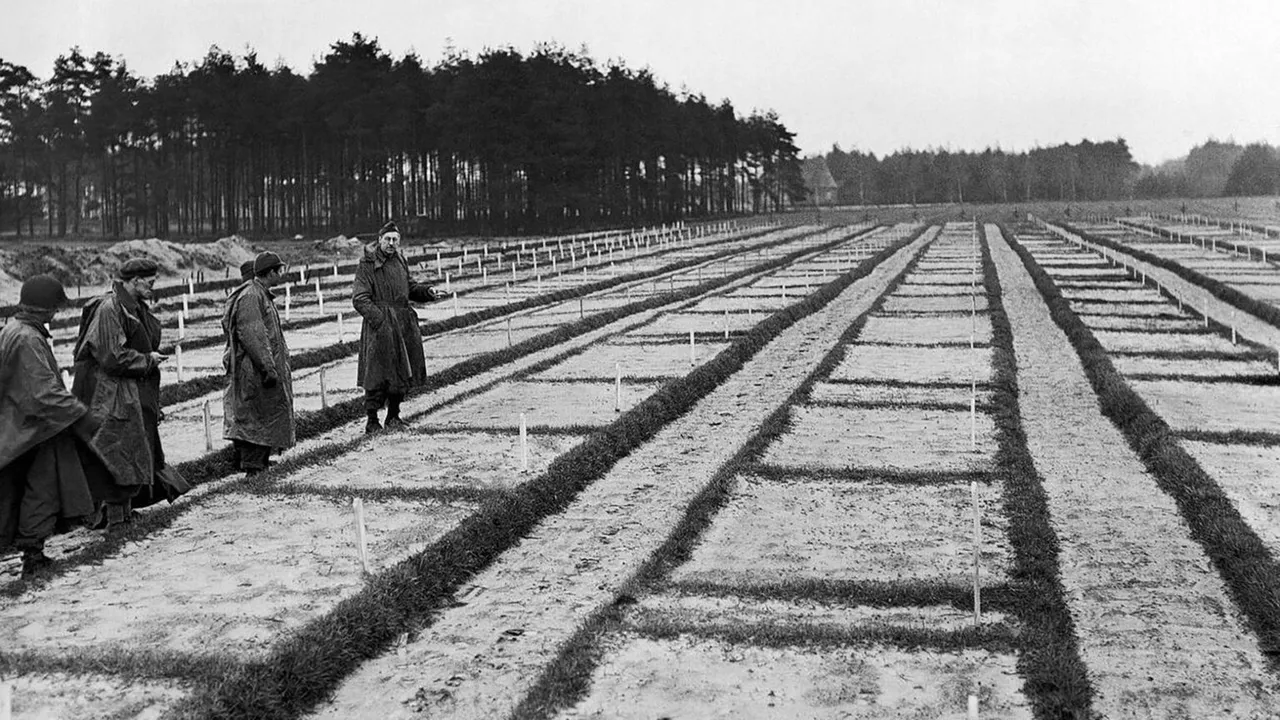
The Stalag 326 VI K camp held between 180,000 and 200,000 Soviet prisoners of war between 1941 and April 1945, when it was liberated by American troops. One in three Soviet prisoners of war entering Nazi Germany during that period passed through the Senne complex, according to the camp's memorial site. Prisoners of war from France, Poland, Serbia and Belgium were also held there.
Living conditions at the camp were described as horrific. Prisoners faced severe mistreatment and malnutrition. Many died, and tens of thousands are buried at the site.
Estimates of the total number of Soviet prisoners held in German captivity during the war vary between sources, ranging from 5.3 million to 5.7 million. More than half are believed to have died. Many of those who survived were treated as traitors upon returning home.
The new investigation was initiated by the Central Office for the Investigation of National Socialist Crimes in Ludwigsburg, which passed its preliminary findings to public prosecutors in Dortmund.
The case is part of a broader, urgent effort by the German judiciary to prosecute alleged participants in Nazi-era crimes before the remaining suspects die. Most are already dead. The push reflects a growing legal recognition that individuals previously considered to have played an insignificant role were in fact integral to the implementation of the regime's crimes.
A key judicial precedent was set by the case of John Demjanjuk, a former guard at the Sobibor death camp in occupied Poland. He was convicted in 2011 of being an accomplice to the murders of more than 28,000 Jews during his time at the camp, despite a lack of evidence that he had directly killed anyone. Demjanjuk died aged 91 in March 2012 while awaiting an appeal, and did not serve a prison sentence.
The Demjanjuk ruling lowered the legal bar for proof of complicity, paving the way for prosecutions of other elderly suspects in subsequent years.
Among the more prominent recent cases was that of Irmgard Furchner, who worked as a secretary to the commandant of the Stutthof concentration camp between 1943 and 1945. She received a two-year suspended sentence for her role as an accessory to murder. Her trial was filmed for historical purposes, an exception to normal court rules. Furchner made headlines after fleeing her retirement home on the scheduled opening day of proceedings.
Josef Schutz, a former guard at the Sachsenhausen concentration camp north of Berlin, was sentenced to five years in prison in June 2022 for being an accomplice to murder. He died the following year at the age of 102. In April last year, another alleged former guard at Sachsenhausen died before he could face trial on charges of complicity in the murder of more than 3,300 people.
A separate investigation was also opened last year into a 100-year-old former guard at a prisoner of war camp in Hemer, North Rhine-Westphalia, which also held mainly Soviet prisoners. He is suspected of participating in executions of prisoners between December 1943 and September 1944.
If the current case proceeds to trial, it is expected to draw survivors and historians as witnesses and to shed further light on the broader Stalag system and on the Senne camp in particular.