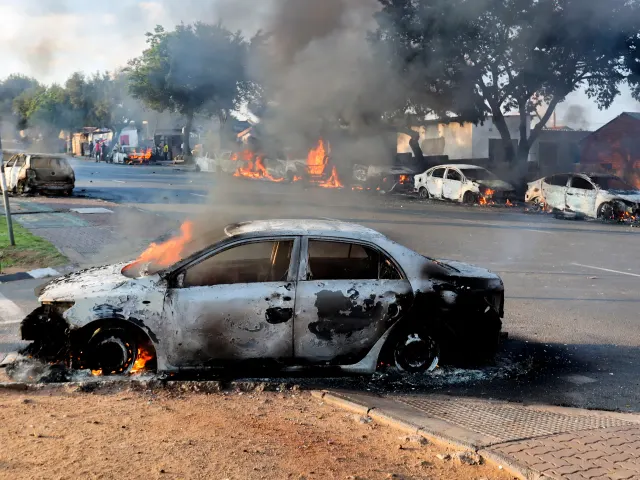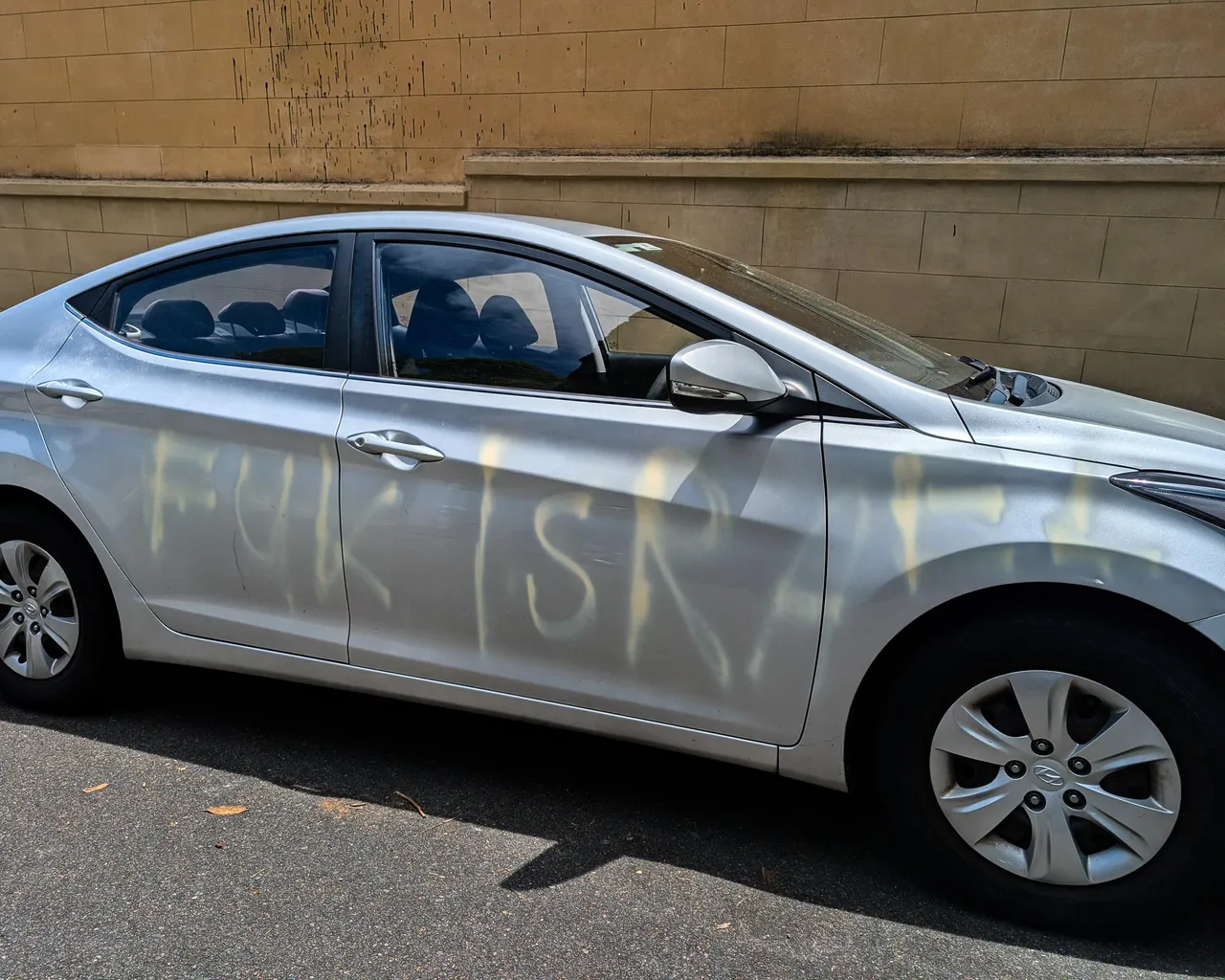
A Sydney man convicted of writing "Fuk Israel" on cars and setting another vehicle alight has had his release on parole rejected a second time, despite a Supreme Court judge stating the case appeared to be a "serious miscarriage of justice."
Mohommed Farhat, 22, was initially due to be released on parole in December after serving 10 months in prison following vandalism committed in Woollahra in November 2024.
He remained behind bars after a rare intervention by the commissioner for corrective services, who told the New South Wales parole authority at a hearing in March that Farhat's offending showed support for "extremist" behaviour.
Last week, Supreme Court Justice Desmond Fagan delivered a scathing ruling after the state sought a supervision order for Farhat upon his release from jail under the Terrorism Act.
Fagan found there was an "insignificant" risk that Farhat, who was of "limited intellect," would commit a serious terrorism offence. He ruled that police, lower courts, and various state agencies had all incorrectly labelled Farhat's actions antisemitic rather than "a curse against a foreign state."
Fagan determined that Farhat, who has a Hezbollah tattoo on his neck, was treated more harshly than he should have been after pleading guilty to 15 offences connected to property damage.
The judge accepted that Farhat was paid to carry out the vandalism and said the case appeared to be a "serious miscarriage of justice."
On Wednesday of last week, Fagan said he planned to write to the commissioner for the state's parole authority ahead of an expected decision on Farhat's potential release following the March hearing.
The parole authority handed down its decision on Monday, five months after the hearing. It did not consider Fagan's findings or evidence that counter-terrorism police had determined, three weeks after Farhat's arrest, that he was not ideologically motivated.
The authority's decision to keep the 22-year-old in prison stated: "In the authority's view, the offending was reflective of a deep-seated adherence on the part of the offender to an extremist ideology of an antisemitic character."
The authority rejected Farhat's explanation, accepted by Fagan, that he had been paid to carry out the vandalism.
"Further, the authority does not accept the offender's claimed ignorance of the meaning of the phrases which were used in the offending," the parole authority wrote.
On Monday, the commissioner for corrective services, Gary McMahon, was questioned about Farhat's case during budget estimates hearings. He was also asked about his rare intervention in December, when he successfully applied to have Farhat's parole order revoked without hearing from his lawyers, leading to a fresh hearing date being set for March.
People sentenced to fewer than three years in jail are typically released on parole when it falls due.
McMahon admitted he had not consulted with specialist police before making his arguments — which were accepted by the authority — that Farhat posed a terrorism risk and that his offending was antisemitic.
Fagan said in last week's decision it would be "unsound" for the commissioner not to consult specialist police, finding it would amount to "a serious failure of communication between agencies."
"The conclusions of the counter-terrorism officers and the resolution of Strike Force Pearl were directly against an assessment that the defendant had exhibited religious or political radicalisation by his index offending," Fagan said in his judgment.
McMahon acknowledged his intervention in Farhat's parole decision was "uncommon" but said "the material that was before me at the time when I gave that consideration was that he did pose a significant risk to the community."
A Greens MP said in a statement she was "astounded at the lengths the state has gone to keep such a troubled young Lebanese Australian man behind bars."
"Everyone from the NSW police, to the commissioner of corrective services, to the attorney general have circumvented the court process repeatedly to ensure someone with addiction, cognitive disability and ill mental health remains in custody," she said.
A government spokesperson said last week that the state attorney general was "seeking urgent advice about the prospects of an appeal" over Fagan's decision to reject the state's request for a one-year extended supervision order.
That application would have subjected Farhat to 55 conditions while living in the community upon release from prison. He is now due for release in October, when he completes his full sentence with no parole.
The parole authority, asked why its determination had been delayed since the March hearing, said: "The determination for Mohommed Farhat has been handed down with reasons. No further comment will be made."