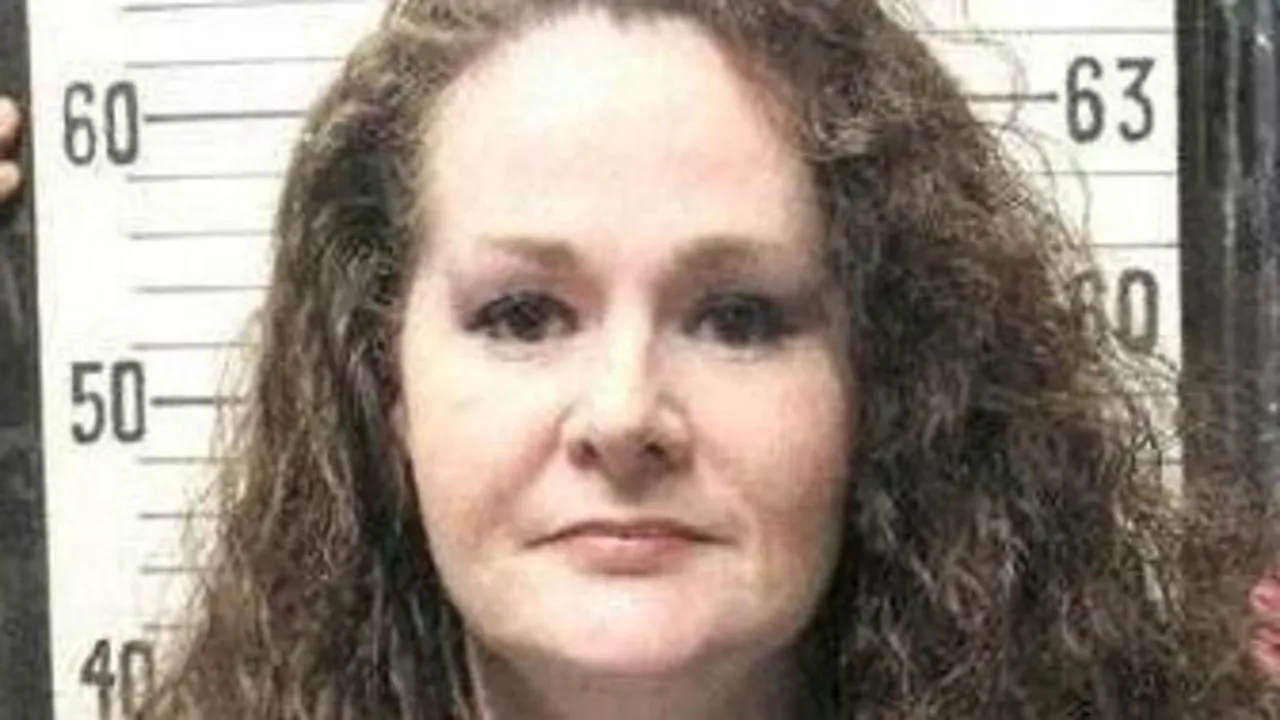
Christa Pike has begun walking and eating again at a hospital, one week after surviving Tennessee's attempt to execute her by lethal injection, her attorneys said Thursday.
Pike, 50, survived two doses of pentobarbital administered on September 30 as the state sought to carry out her death sentence for the 1995 beating and stabbing death of classmate Colleen Slemmer. The drug failed to kill her, and her arms were left burned and blistered, according to her lawyers.
For the first few days of her hospitalization, Pike was unconscious and on a ventilator. She regained consciousness on October 6 and was able to speak after awakening, her attorneys said.
Her first steps on Wednesday were described as "limited," and she required assistance while walking on Thursday. She is also regaining mobility in her arms and was able to eat for the first time.
Doctors say it is too early to assess the long-term impacts of what she endured. Her attorneys said Thursday that she continued to struggle with concentration and memory, and that she had initially been described as "confused" shortly after regaining consciousness.
"While her physical recovery has been remarkable, significant questions remain about the long-term effects of what she endured," her attorneys said in a statement. "Christa is dealing with the profound psychological trauma of having survived a failed execution, including the terror, pain and uncertainty of believing she was about to die."
It remains unclear whether Tennessee will attempt to execute Pike again. Her attorneys have said they will urge Republican Governor Bill Lee to commute her death sentence to life in prison without parole. "She should never be subjected to another execution attempt," they said.
Lee has since postponed the state's only other scheduled execution this year and ordered a comprehensive, third-party review of why the execution failed. The state's prison chief resigned following the attempt.
What went wrong during the procedure remains unclear. Medical and lethal injection experts have focused on whether a problem with the IV line caused the drug to pool in Pike's tissue rather than enter her bloodstream. Pike's attorneys wrote in a court filing that "apparently at no point did any member of the execution team realize that the IV lines were not correctly placed." State officials have offered no explanation of what occurred.
Witnesses present during the execution reported that Pike continued to breathe, snore, and lift parts of her body off the gurney even after the lethal injections were administered. As the process got underway, Pike was asked if she had a final statement and spoke of being at peace. About five minutes later, she raised her head and said her arm hurt. She later appeared to lose consciousness but could be heard breathing heavily until media witnesses were escorted from the witness room nearly 90 minutes into the execution. An ambulance then transported her to a hospital.
A judge has since ruled that the Tennessee Department of Corrections must preserve all evidence related to the failed execution.
The case has renewed scrutiny of how states carry out the death penalty. Experts say botched execution attempts, largely carried out through lethal injection, are a disturbingly common feature of capital punishment in the United States.
"This is an opportunity for everyone to stop and really carefully examine all of the ways in which this execution went wrong and to make good decisions about how to move forward, if we're going to move forward with this method of execution," said Robin Maher, executive director of the Death Penalty Information Center, a nonprofit research group based in Washington, D.C.
Lethal injection is by far the most common method of execution in the United States and also among the least reliable. States including Tennessee, Idaho, Alabama, Arizona, Texas, and Oklahoma have all recorded at least one botched execution via lethal injection since 2022. A survey of executions carried out between 1890 and 2010 found that lethal injections were botched at more than twice the rate of all other methods combined.
Researchers attribute the poor record of lethal injection to several factors, including the difficulty of carrying out what amounts to a medical procedure in a prison setting without access to qualified staff. Major medical organizations bar their members from assisting in executions on the grounds that it violates their mandate to do no harm, meaning prisons rely on staff with limited credentials to carry out the procedure.
"Lethal injection has all of the delicacies of a medical procedure: all of the error-prone qualities, all of the need for precision. But it has been warped to fit the needs of execution settings," said Corinna Barrett Lain, a professor at the University of Richmond School of Law and author of a book on lethal injection.
Pharmaceutical companies also restrict the use of their products in executions, leading some states to acquire drugs through compounding pharmacies, which produce medications not subject to the same level of scrutiny as commercially manufactured drugs. Some states have also sought to extend existing stockpiles of lethal injection drugs, which can become expired or faulty over time.