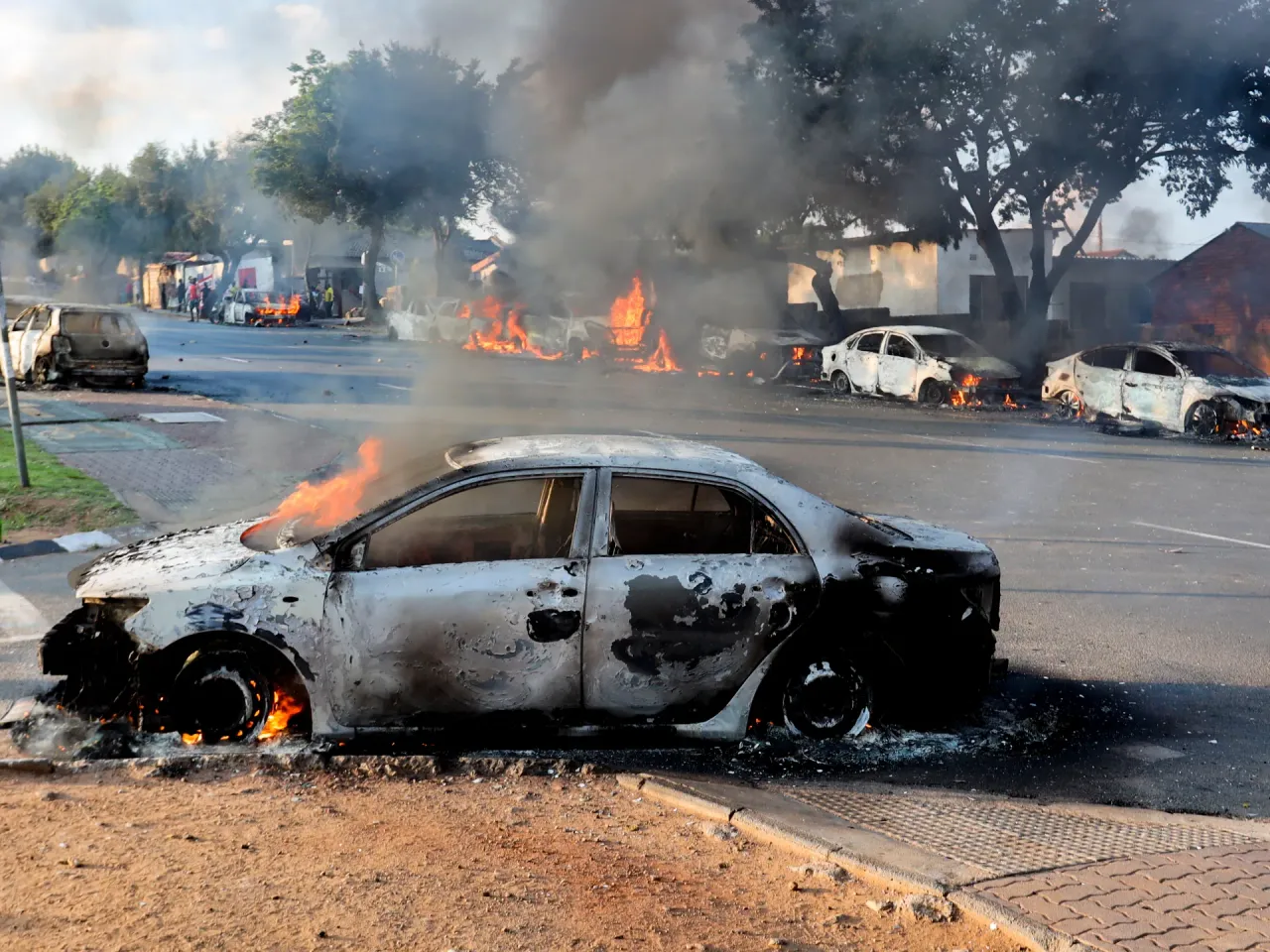
Anti-migrant protests in South Africa turned violent on Thursday, with cars torched and foreign-run businesses forced to close in two major cities, as the government blamed the unrest on deliberate misinformation about a recent court ruling.
Violence erupted in Johannesburg's Soweto township and the east coast port city of Durban. Acting National Police Commissioner Lieutenant General Puleng Dimpane said 10 vehicles were set ablaze in Johannesburg and 14 in Durban, where three people were arrested.
In Soweto, witnesses saw residents carrying groceries out of a shop said to be owned by a Somali national, who was chased away. Those residents fled when police arrived.
In Durban, cars were torched in the urban centre and foreign-owned shops were looted. Police opened fire with rubber bullets to disperse protesters who reportedly set alight a business run by foreigners.
The unrest followed demonstrations demanding that refugee centres stop processing asylum applications. Protesters are opposed to a July Constitutional Court ruling that removes procedural barriers to seeking asylum, including for people who entered South Africa irregularly, lacked asylum transit visas, or missed reporting deadlines.
On Thursday, the government's Inter-Ministerial Committee on Migration held an urgent briefing to address overcrowding at asylum offices following implementation of the ruling. A day earlier, the committee said all its offices were overwhelmed by the volume of incoming applications.
Government spokesperson William Baloyi said the violence was triggered by people spreading deliberately false information about the constitutional court ruling. He said the decision had been widely misrepresented and did not automatically grant refugee status, permanent residence, or other legal rights to undocumented migrants.
"We are deeply concerned by what is going on now," Baloyi added.
Months of protests by populist, anti-immigrant groups demanding that undocumented foreign nationals leave South Africa have led tens of thousands to flee, with some repatriated by their governments.
Three decades after the end of apartheid, South Africa remains deeply unequal, with approximately one third of the population out of work. Migrants are frequently blamed for taking jobs, fuelling crime, and straining public services, although such claims are not supported by evidence.