More than 1,270 people have been killed and over 4,700 remain missing following devastating flash floods that struck Nepal and Tibet on August 26, authorities confirmed.
The disaster was triggered by a glacial collapse near the Langtang Lirung mountain peak, which sent a torrent of rocks, mud and water cascading into valleys below. Scientists are still studying the exact cause of the event.
Nepal is considered one of the most climate-vulnerable countries in the world, despite being among the lowest emitters of greenhouse gases globally.
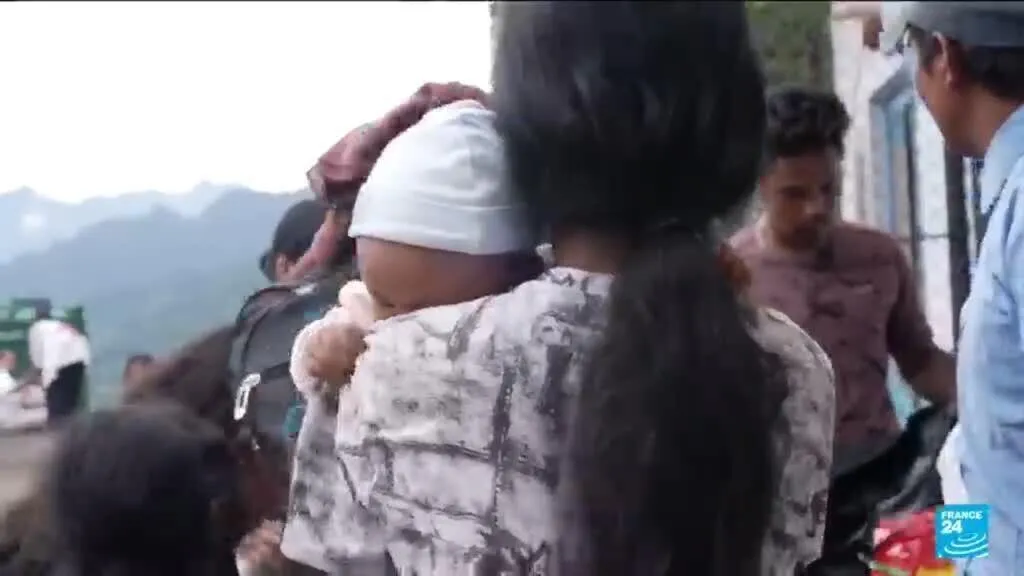
Thousands of survivors lost their homes, belongings and loved ones within minutes. Authorities, NGOs and volunteers have since been delivering aid, but living conditions in overcrowded temporary camps remain difficult. Correspondents visited one such camp set up inside a school in Rasuwa district, near the epicenter of the disaster, where many survivors face an uncertain future.
Authorities are working to clear debris and rubble that has buried villages and blocked roads, as rebuilding efforts begin across the affected areas.
On Friday morning, reports emerged that two workers had been rescued from tunnels at hydropower projects along the affected rivers. Hundreds of workers had been trapped in those tunnels since the floods struck.
With morgues overflowing, forensic experts are now working to identify the dead. Many bodies have been recovered in an advanced state of decomposition, making visual identification extremely difficult or impossible.
"Forensic teams on the ground told us that there are some things that can help with the identification process, such as tattoos and jewellery, but many bodies were found in such a state that it is very challenging to identify them," a reporter said, speaking from a DNA testing facility in Kathmandu.
Authorities are using DNA testing as the primary tool for identification. Police are urging first-degree relatives — fathers, mothers, sons or daughters — of missing persons to provide blood samples for DNA profiling. For missing foreign nationals, a first-degree relative abroad can undergo DNA profiling in their home country and email the results to Nepal Police for comparison.
Hundreds of DNA samples have already been collected. They are being sent to the Nepal Police Forensic Science Laboratory and the Nepal Academy of Science and Technology for analysis.
DNA profiles can be generated from blood, soft tissue, bone and teeth. According to Kerstin Montelius, a molecular biologist at Sweden's National Board of Forensic Medicine, DNA material can still be extracted from bone even after most surrounding tissue has decomposed.
"Visual identification might be impossible at an early stage of the process, with confusion as a result," Montelius said. She cautioned, however, that "DNA degrades, too, and circumstances set the decisions."
The globally recognised framework for managing and identifying disaster victims is Interpol's Disaster Victim Identification protocol. Under this system, human remains are inspected by specialists to detect as much biometric data as possible.
"There are three primary methods of identification that have shown to stand by themselves with a high score of probability in the identification process: DNA comparison, fingerprints and teeth comparison," Montelius said, adding that the method chosen depends on the circumstances of each case.
When a direct DNA sample from the missing person is available — taken, for example, from a personal item such as a toothbrush or hairbrush — it is compared against the DNA profile extracted from unidentified remains. Where no such sample exists, DNA profiles are collected from next of kin, as is currently being done in Nepal through blood samples.
Once collected, the data from relatives and from recovered remains is compared and reconciled by a team of specialists using dedicated computer systems to confirm identification.