A federal judge in Washington has launched a formal ethics inquiry into whether Trump administration lawyers misled the court over plans to redevelop a historic public golf course in the US capital.
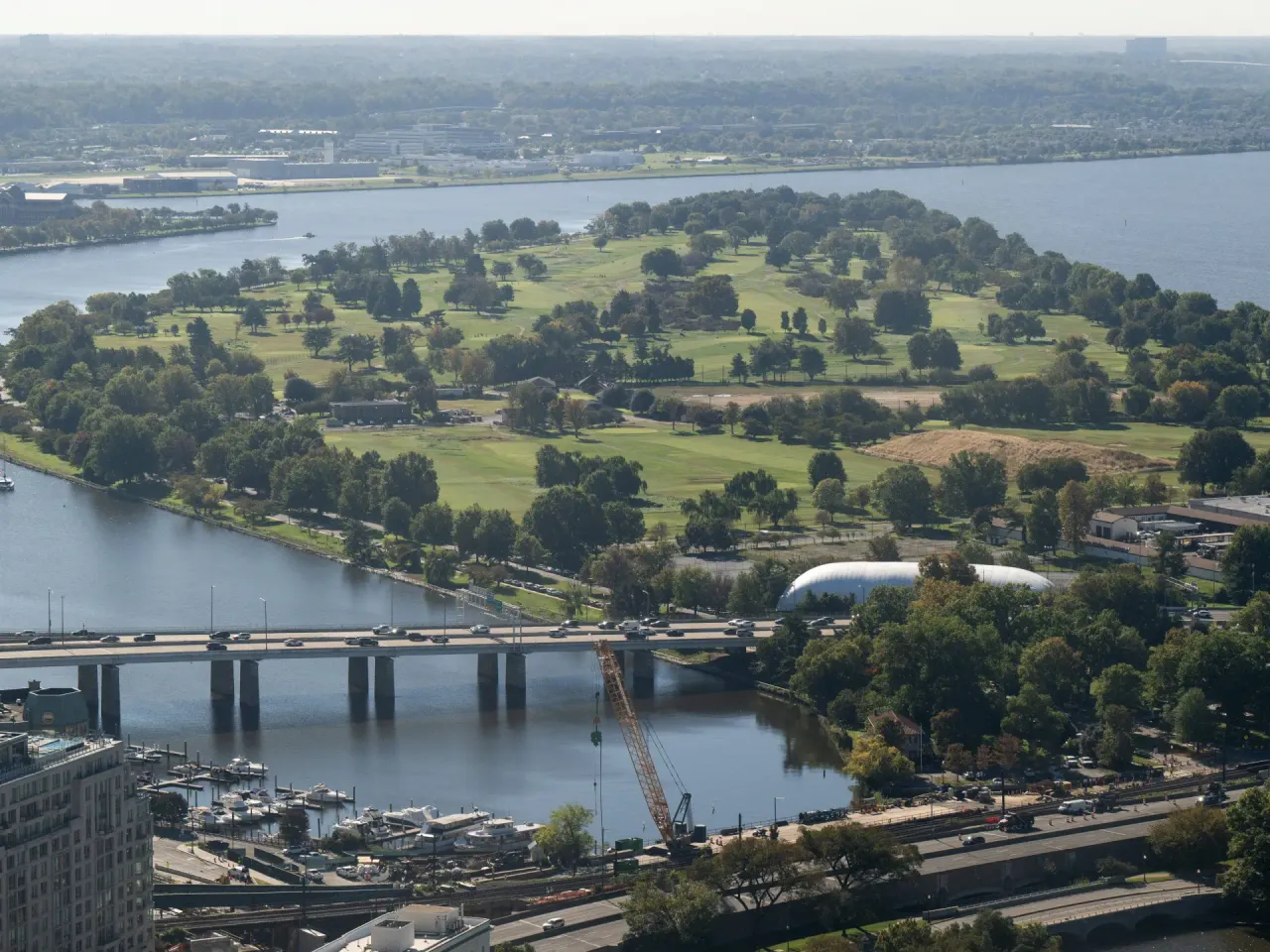
District Judge Ana Reyes of the US District Court for the District of Columbia announced Friday she would appoint a special master to investigate whether government officials withheld information or made misrepresentations to the court concerning East Potomac Golf Links, a municipal golf course and public park along the Potomac River.
The inquiry will not determine whether misconduct occurred, but will examine whether the conduct of government lawyers breached professional or ethical obligations.
Reyes opened Friday's hearing by citing the DC Bar Rule of Professional Conduct 3.3, which prohibits lawyers from knowingly making or failing to correct false statements to the court. It was the third hearing in as many weeks on the matter.
She questioned Associate Attorney General Stanley Woodward Jr., the third-highest ranking official at the Justice Department and the government's lead lawyer in the case, for several hours. Reports put the duration of questioning at between two and four hours.
Reyes repeatedly compared Woodward's testimony with statements President Donald Trump had made on his Truth Social social media account, where he announced plans to close the course for 15 months beginning November 15 and commissioned golf course architect Tom Fazio "to build a World Class Championship Golf Course" on the site.
At the heart of the dispute is a sharp contradiction between Trump's public announcements and the positions taken by government lawyers in court. For months, attorneys representing the Interior Department and the National Park Service maintained in filings and hearings that no final plan existed for the golf course.
That position changed abruptly on Wednesday, when the Justice Department informed the court in writing that the National Park Service would submit a design from Fazio to the National Capital Planning Commission. Officials also acknowledged for the first time that the park would close next month, both for golf course renovations and to address a crumbling seawall on the man-made peninsula.
Under questioning, Woodward told the judge that the submission to the planning commission had been in the works for several weeks. Reyes responded with disbelief, noting that no government representative had mentioned this during previous hearings, one of which lasted seven hours.
"Am I to understand that for weeks someone has been putting pen to paper on a submission to design the golf course while this litigation was ongoing, while Department of Justice employees were representing to me that there was no plan?" she said.
Reyes also asked Woodward whether a National Park Service official had been instructed to omit details from a court declaration.
When asked at the start of the hearing whether there was anything he wished to correct in the record, Woodward replied: "Not to my knowledge," adding that he had not read every transcript in the case. "We have lots of binders," he said. Reyes replied: "I bet you do."
The judge announced at the close of the hearing that she would "open a formal inquiry into whether agency officials and employees, including agency attorneys and [Justice Department] attorneys, have made misrepresentations to the court and otherwise violated applicable ethical rules."
Reyes described the potential special master as a judicial officer with "full investigatory powers," and said that if the government rejects the appointment, she will conduct the inquiry herself. She also ordered government officials to preserve all relevant documents.
The legal dispute began in February, when the DC Preservation League filed suit alongside local historic preservation advocates and golfers. The group has argued the redevelopment could violate environmental protections and damage a historically significant public space.
The case escalated sharply earlier this month when the Trump administration removed more than 400 trees from the site with less than a day's notice. Officials denied the tree-clearing was part of a broader renovation plan, but Reyes called it a pretext for beginning work without proper approvals. She subsequently extended an injunction barring the government from making further irreversible changes to the site. The government promptly appealed that order.
The golf course case is one of two legal battles over Trump's plans for Washington unfolding simultaneously. A separate lawsuit challenges the White House's proposed construction of a 75-metre memorial arch near Arlington National Cemetery.
David Super, a professor at Georgetown University Law Center, said the cases reflect a shift in how the administration approaches legal constraints on executive power.
"There was always the assumption that you would try to do things that were legal," Super said. "What we're seeing here now is that if you think the federal courts can't stop you, you can break the law."