A United Nations special rapporteur has concluded there are "reasonable grounds to believe" that US military strikes on vessels allegedly carrying drugs in the Caribbean and Pacific constituted crimes against humanity.
The report, authored by Special Rapporteur Ben Saul and released as a briefing note to the UN Human Rights Council, examined at least 68 US strikes carried out since September 2025 outside US territorial waters. The attacks killed 223 people, according to the report's figures. Tallies by other organizations put the death toll at 234 people across 66 attacks.
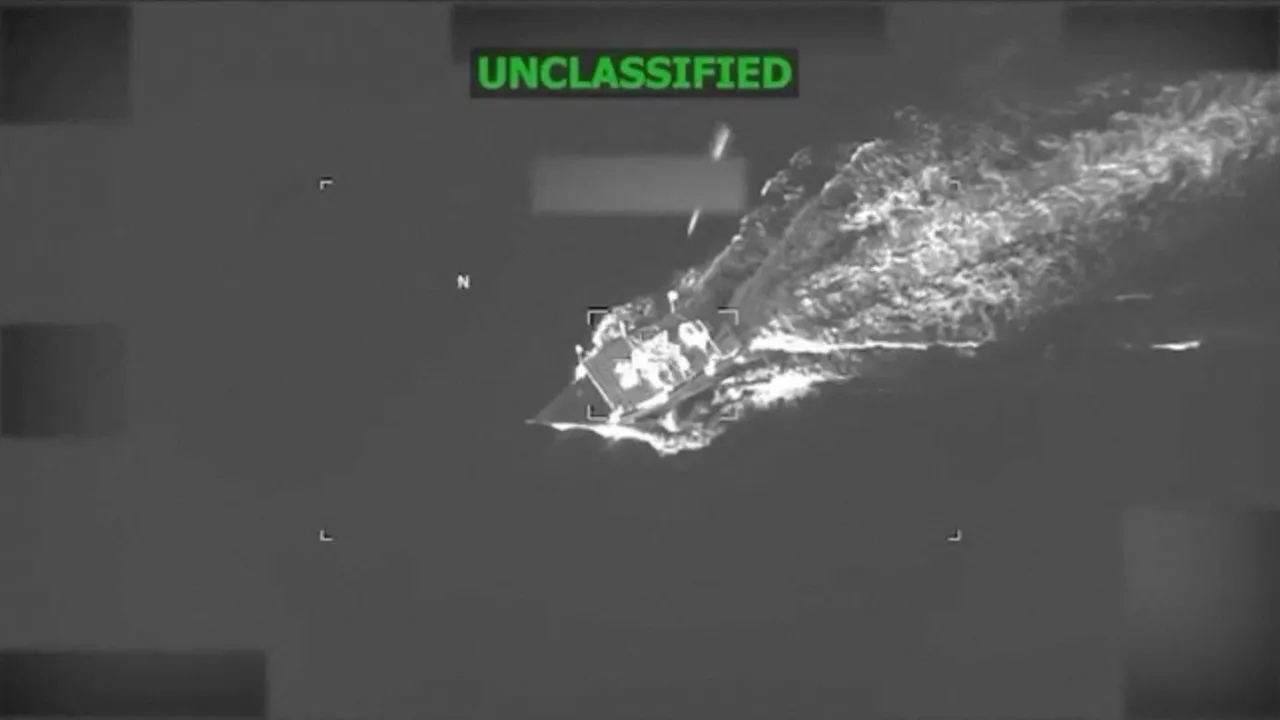
The latest strike took place on Saturday, when US Southern Command announced it had "executed a lethal, kinetic strike on a go-fast vessel operating along established narco-trafficking routes in the Caribbean." The command stated that "confirmed intelligence revealed the vessel's active involvement in narco-trafficking" and that "the operation killed four narco-terrorists," accompanied by a grainy video.
As has become standard in such announcements, the US did not identify the victims or provide details about the intelligence cited to confirm their alleged involvement in drug trafficking.
Saul's briefing note stated that the attacks "amount to serial extrajudicial killings in violation of the right to life, being unjustified in national or personal self-defence or under international humanitarian law, the international law of the sea, narcotics suppression conventions, or international counter-terrorism law."
"There are reasonable grounds to believe that the reported 68 attacks that killed 223 people constituted crimes against humanity of murder under customary international law," Saul concluded.
The report directly rejects the claim made by Donald Trump before Congress that the strikes amounted to "self-defence" against "designated terrorist organizations." Saul wrote that the crews were not "militarily armed and possessed the intent and capacity to launch military attacks" against the US.
"Even assuming that the vessels and crew attacked were members of the criminal groups listed as terrorist, such organizations have not mounted any 'armed attack' on the United States so as to trigger a right of self-defence," he added.
The US military launched the operation, known as "Southern Spear," in early September 2025. Defence Secretary Pete Hegseth has previously described it as aimed at removing "narco-terrorists from our hemisphere" and securing the US from "the drugs that are killing our people."
Trump has claimed the strikes stopped 97% of all illegal drugs entering the US by sea. However, according to available data, the attacks have had no measurable impact on the volume of cocaine entering the country.
Officials have not offered definitive evidence that all vessels targeted were involved in trafficking. Journalists and human rights groups have identified some victims as innocent, and others as low-ranked participants in trafficking networks at most.
The UN, along with several human rights organizations, lawyers, and international law experts, had previously described the strikes as extrajudicial killings. Saul's report goes further by invoking the threshold of crimes against humanity.
The operation initially drew strong criticism from Latin American leaders whose citizens were among those killed. Two prominent critics have since left office. Venezuelan leader Nicolas Maduro was seized by US forces in a raid on Caracas earlier this year. Colombian President Gustavo Petro stood down in August after a Trump-backed candidate won the country's June presidential election.
The US Department of State had not responded to requests for comment at the time of publication.