US President Donald Trump and Vice President JD Vance launched their closing campaign efforts ahead of the November 3 midterm elections, with Republican and Democratic candidates fanning out across the country for a final day of campaigning.
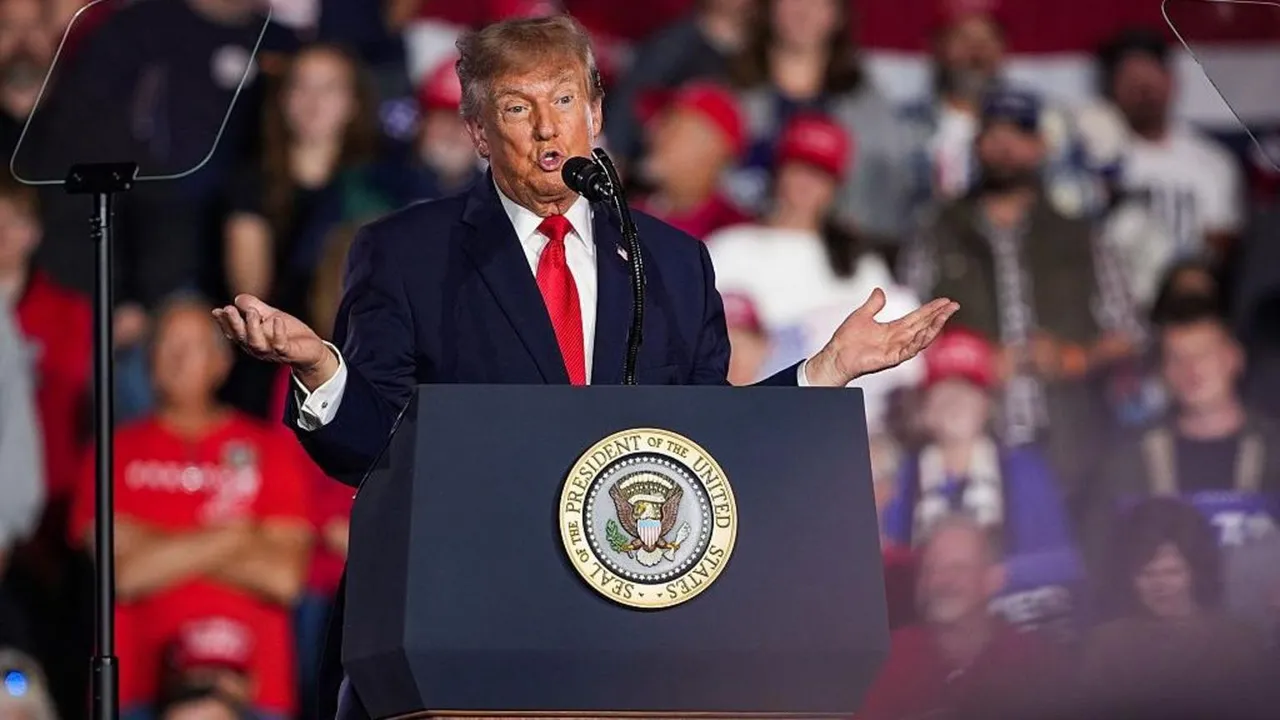
Trump is scheduled to deliver his closing campaign message at the Lincoln Memorial Reflecting Pool in Washington, DC, at 2pm ET on Monday. The choice of venue marks a departure from his recent strategy of holding rallies in largely conservative areas. Trump staged more than 25 rallies in October alone, mostly in red states where Republicans are facing serious political headwinds.
On Sunday, Trump held rallies in Kansas, Florida and Iowa, and conducted tele-rallies for candidates in Michigan, Ohio and Pennsylvania. He described the Kansas event as the "last stop" of his 2026 midterm campaign tour.
In previous cycles, Florida, Iowa and Kansas were considered reliably Republican states. Trump's visits there in the final days of the campaign highlighted how competitive those states have become in determining control of Congress.
At rallies in Florida and Iowa, Trump told supporters he had transformed the country, saying Democrats had left the United States in a "dark age" but that under his leadership, "we quickly turned it into the golden age of America." He warned that if Democrats were given power, they would "open the border", "bankrupt your family", "take away your guns" and "mutilate your children."
Trump is facing a backlash over the cost of living. Prices have risen, particularly for fuel, groceries and healthcare, since the war in Iran began over eight months ago. Affordability remains a top issue heading into election day.
In an interview on a podcast, Trump said that if he is forced to work with a Democratic-controlled Congress, he will become "Mr. Veto." "It wouldn't be the first time [we] have a president and he doesn't have the Senate. They set stuff up, you veto it. After a month or two of getting things vetoed, they come over, and you make a deal," he said.
Trump also campaigned in South Carolina, where he held a rally to boost two Senate candidates he personally selected: Darline Graham in South Carolina and Michael Whatley in North Carolina. Both have struggled to generate enthusiasm among Republican voters.
At a rally in Greenville, North Carolina, Trump urged supporters: "Please pretend I'm on the ballot cause in a way I am on the ballot, because they want to do away with all of the tremendous things we've done. The tax cuts, the border."
Vance was scheduled to travel to Rome, New York, early Monday to rally support for Republican House candidates Anthony Constantino and Kailee Buller. Constantino is running to succeed longtime Republican Representative Elise Stefanik, who is not seeking re-election. A Siena Research Institute poll indicated the race could be close despite a Republican voter registration advantage of approximately 80,000.
In Michigan, Democratic Senate candidate Abdul El-Sayed held a get-out-the-vote rally at Eastern Michigan University in Ypsilanti before a series of campaign stops in Flint, Royal Oak and Detroit.
In Texas, Democratic candidates James Talarico and Gina Hinojosa held a joint rally in Austin. Talarico is running for Senate against Republican Ken Paxton, while Hinojosa is challenging incumbent Governor Greg Abbott. Polls show Talarico narrowly ahead of Paxton, while Abbott's lead over Hinojosa has narrowed.
A federal judge in Washington was also due to hear a lawsuit Monday over whether immigration agents may be present at polling places. Common Cause, UnidosUS, the League of United Latin American Citizens and the city and county of Denver are challenging the administration's position that armed agents from Immigration and Customs Enforcement may enter polling locations for enforcement purposes.
In Alaska, a judge on Sunday dismissed an attempt by the Trump administration to delay certifying election results in a Senate race where two candidates share the name Dan Sullivan appear on the ballot.
In the lead-up to the election, Trump and his administration have repeatedly cast doubt on the credibility and security of the vote, despite evidence showing voter fraud is rare. The Justice Department has launched investigations or demanded votes be set aside in multiple states.
Republicans currently hold slim majorities in both the House of Representatives and the Senate. Losing seats would limit their ability to pass legislation and shape policy. Democrats, if they gain a majority, would be able to challenge Trump's agenda and exercise investigative powers over his administration.