The administration of President Donald Trump has asked the Supreme Court to stop California from counting mail-in ballots from more than 20,000 voters it claims are not US citizens.
The emergency request was filed on Monday, one day before the midterm elections, and is the latest development in a legal battle between the administration and California, a Democratic stronghold and the most populous US state.
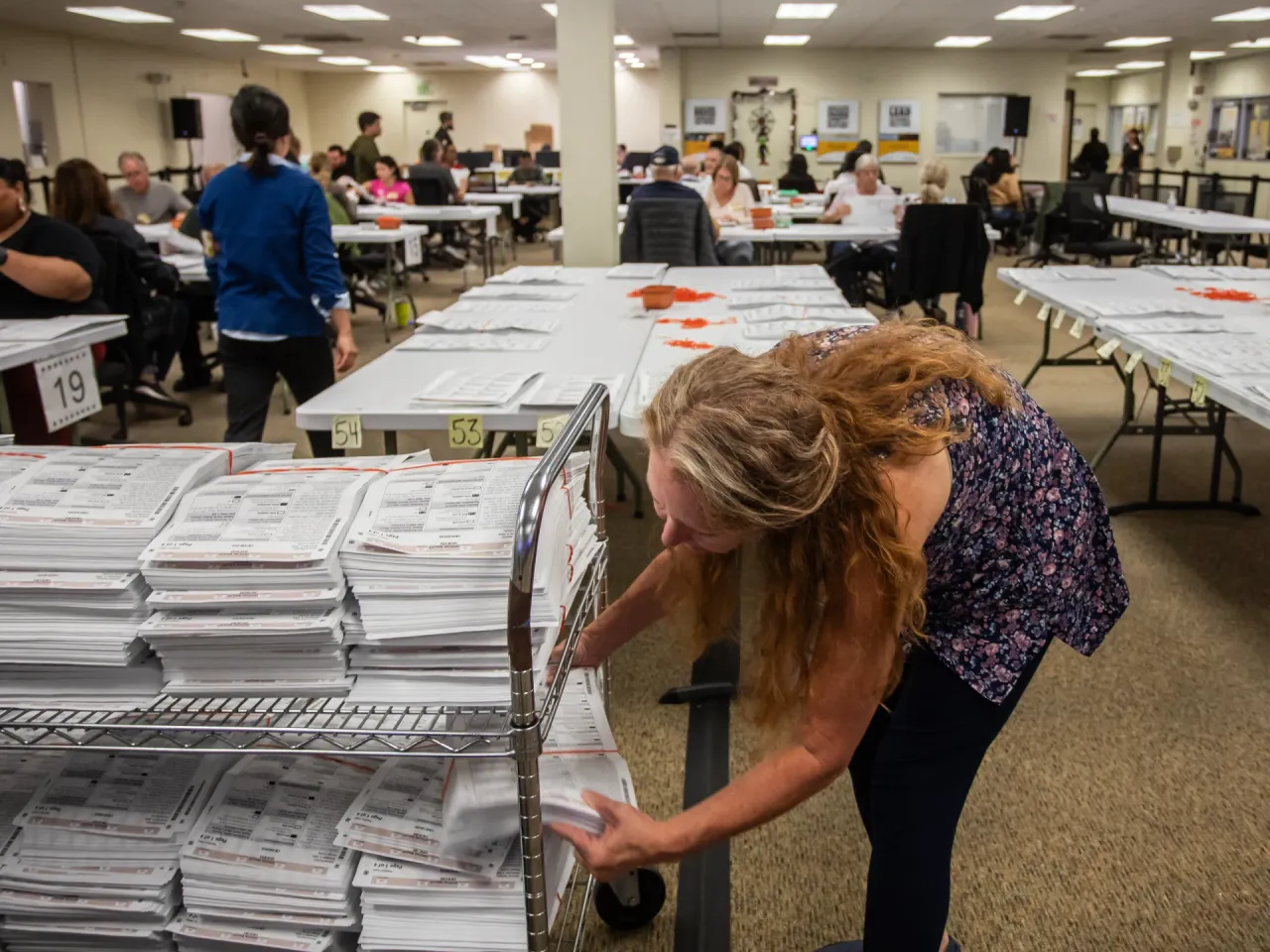
The Department of Justice says it has identified 20,000 "likely" noncitizens on California's voter roll whose ballots should not be counted until their citizenship can be verified. However, the actual number of ballots in dispute is likely much smaller, as county election officials have found that many people on the list did not have active voter registrations and were not mailed ballots.
Over the weekend, data scientists at the University of California Los Angeles' Voting Rights Project were granted access to the DOJ's list through a court order and found that 42% of the names on the list do not appear on California's current voter roll. The analysis also found naturalized citizens included on the list.
California argues the list is unreliable and could include thousands of eligible US citizens. State officials also say that, with voting having been under way since early October, it would be nearly impossible to separate the ballots in question.
Last week, a federal judge rejected the administration's request, raising concerns about the reliability of the data. "If the executive can discount votes and threaten an ongoing election due to unproven allegations, then our democracy is in danger," Judge David Carter wrote.
A divided panel of the 9th Circuit Court of Appeals also rejected the DOJ's emergency request on Friday. Two judges on the panel cited longstanding legal precedent known as the Purcell principle, which holds that election rules should not be altered on the eve of an election, as well as the Constitution's grant of authority to states to run their own elections. The panel also cited the National Voter Registration Act, which bars states from systematically removing ineligible voters within 90 days of a federal election.
"[T]here is a material risk that granting the United States its requested relief would result in disenfranchisement and could jeopardize the County's entire election," wrote 9th Circuit Judges Mark Bennett, a Trump appointee, and Gabriel Sanchez, a Biden appointee, in their Friday decision. The panel's third judge, Patrick Bumatay, also a Trump appointee, dissented.
The DOJ filed a notice on Monday that it is seeking injunctive relief from the Supreme Court. It remains to be seen whether the court will agree to intervene and, if so, whether it would do so before Tuesday's Election Day.
The appeal comes as the Justice Department has been escalating its dispute with California election officials. In recent weeks, the DOJ sent subpoenas to election officials in the state and reminded them that they could face criminal prosecution for allowing ineligible voters to cast ballots.
A federal judge in San Francisco issued a temporary restraining order late Friday barring the Trump administration from threatening, intimidating, or coercing election officials to demand they stop processing the ballots of registered voters the federal government alleges are ineligible. The federal government has appealed that order.
The federal judge who initially rejected the DOJ's request described the administration's actions as "a broad, ongoing pattern of attempted election interference by federal officials."
The dispute comes as Republicans fight to retain control of Congress in Tuesday's elections. Studies and state audits have shown that ineligible voting, including by noncitizens, is rare.