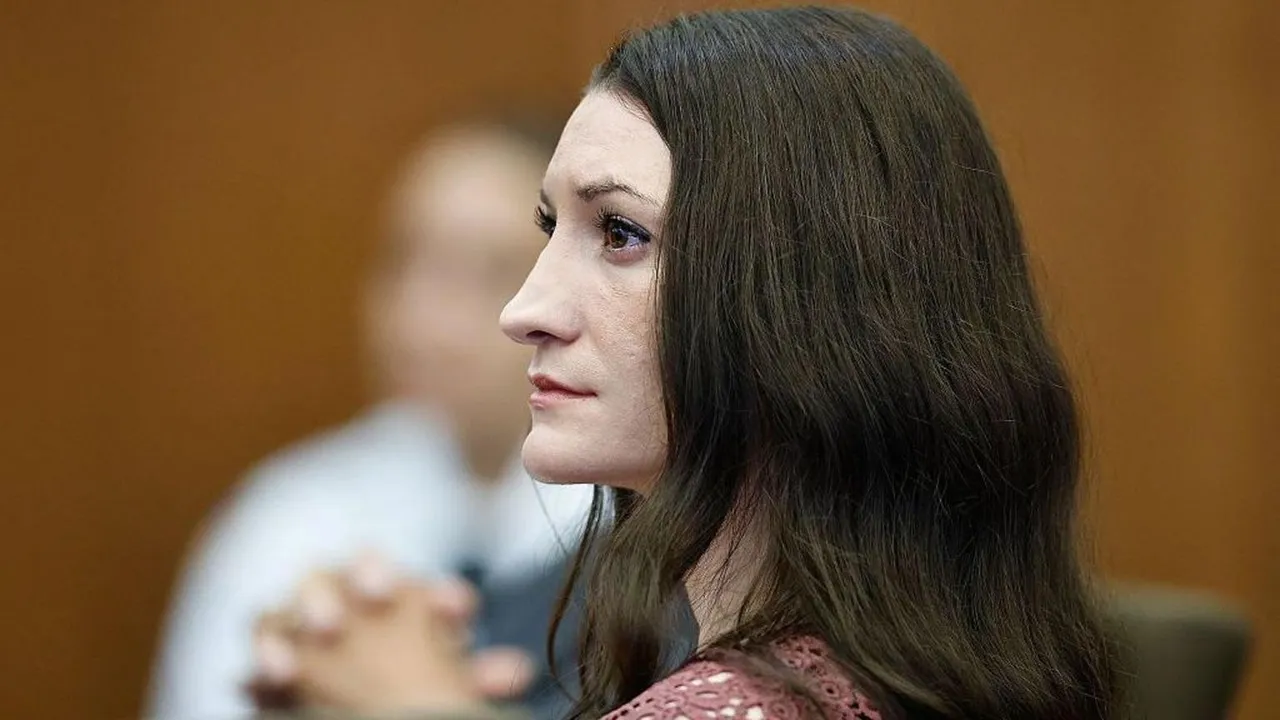
Lindsay Clancy, the Massachusetts mother accused of killing her three young children, returned to court on Monday as her defence lawyers urged a judge to dismiss first-degree murder charges against her, arguing that a retrial would violate her constitutional rights.
Clancy has never disputed strangling her three children with exercise bands in 2023 at her home in Duxbury, a suburb of Boston. She then attempted to take her own life, cutting herself with a knife and suffering paralysis after jumping from a second-floor window. She is now 36 years old.
Her defence has argued that she suffered from postpartum psychosis at the time of the killings and was unable to control her behaviour. Prosecutors have acknowledged she had mental health problems but maintain she acted deliberately and understood her actions were wrong.
Monday's hearing was her second court appearance since September, when jurors were unable to reach a verdict. Judge William Sullivan declared a mistrial after the jury deadlocked.
Defence lawyer Martin G. Weinberg argued that Judge Sullivan should have investigated further after the jury foreperson sent two notes indicating that a juror was not following the rules. Weinberg said additional questioning could have revealed grounds to remove that juror, identified as Michael Desronvil, and allowed deliberations to continue.
After receiving the notes, Sullivan had spoken individually with each juror, reminding them of their duties and explaining the standard of reasonable doubt. All jurors confirmed they could apply the law to the case.
Weinberg argued that was insufficient. A juror who said he could follow the law could have been lying, he said, and the situation warranted separate questioning of the foreperson to learn more about what was occurring during deliberations.
Assistant District Attorney Jennifer Sprague countered that there was no indication the holdout juror's disagreement stemmed from personal bias or an inability to deliberate, rather than a differing assessment of the evidence.
"It is clear from the record this juror did not refuse to deliberate," Sprague said. "He refused to agree."
Sprague argued that Judge Sullivan had handled the jury impasse appropriately, and that the fact one juror held firm did not justify risking interference with deliberations by questioning him directly.
Defence lawyer Kevin Reddington separately accused the holdout juror of using a mobile phone to research terms related to the case and questioned whether the juror had been truthful during jury selection.
Reddington's broader legal strategy has centred on seeking dismissal of the charges. In September, he asked the court to find Clancy not guilty under Rule 25, a Massachusetts provision allowing such a finding when prosecutors have not presented sufficient evidence at trial. That request was denied.
Legal experts have said the defence may also argue that a retrial would violate Clancy's constitutional protection against double jeopardy, the legal principle that a person cannot be tried for the same crime twice. However, experts consider that outcome unlikely.
A New York Law School professor and mental health law expert told sources that the key question before the court is whether the mistrial resulted from a genuinely deadlocked jury or was improperly terminated.
"The public attention that's been put on this trial and the need to have some conclusion in the near future, I think that the judge is going to say that this mistrial was appropriate, was legally accurate, and that they need to now look to set a date for a retrial," the expert said.
A criminal defence lawyer told sources that the three murder charges remain active until the district attorney announces otherwise.
"The three charges of first-degree murder are still pending; they are still hanging over Lindsay Clancy's head unless and until the DA announces otherwise," the lawyer said.
Prosecutors said they intend to retry Clancy if the case moves forward but have not yet decided whether she would face the same first-degree murder charges.
Judge Sullivan did not rule immediately on the motion to dismiss. He scheduled a further hearing for November 16 and suggested a retrial could begin in March.
Also expected to be addressed is a request by the state of Massachusetts for a gag order that would bar lawyers and their supporters from making public statements to the media that could materially prejudice the criminal proceedings.