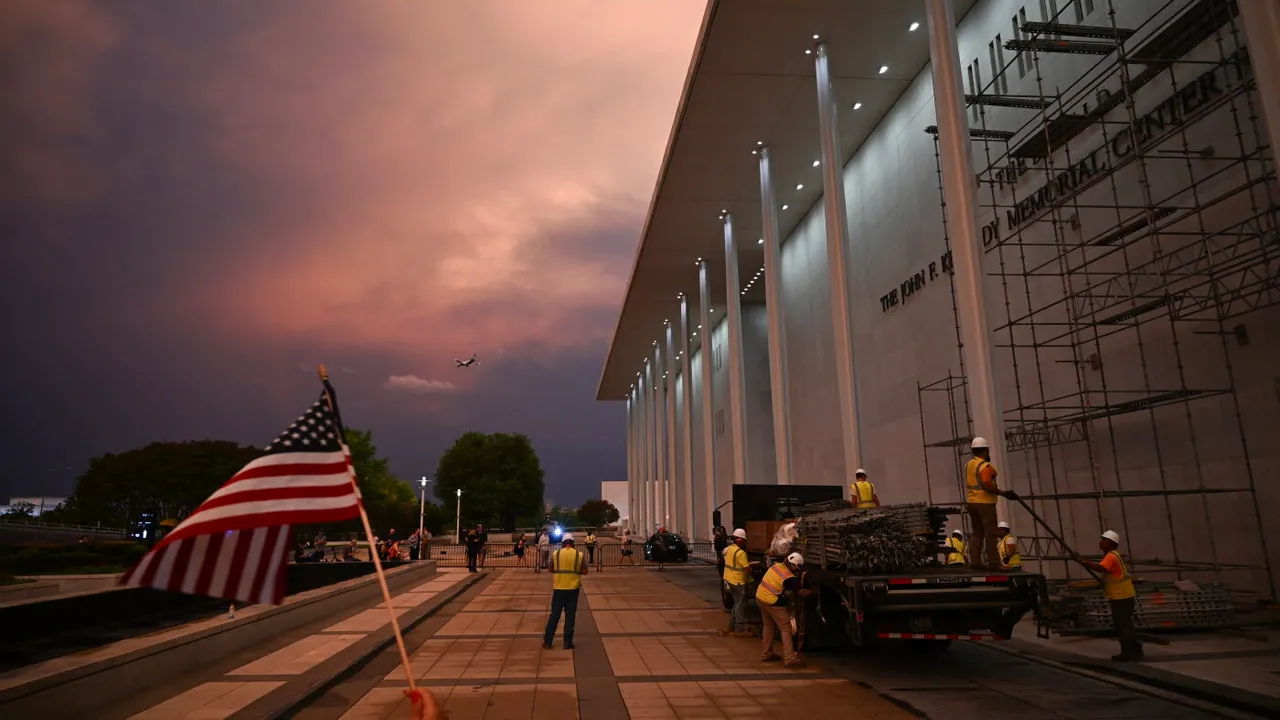
The John F. Kennedy Center for the Performing Arts in Washington, D.C., is on the brink of bankruptcy and could be forced to close as early as Tuesday, according to reports citing an internal document presented to the institution's board.
The assessment was laid out in a 57-page report prepared ahead of a special board meeting scheduled for Tuesday. The board, of which President Donald Trump serves as chairman, is expected to address two major issues at that meeting: a deepening financial crisis and the physical deterioration of the building.
The report warns that the Kennedy Center will not be able to meet payroll obligations or routine maintenance contracts within a matter of weeks. The center was projected to collect approximately $124 million of a budgeted $220 million in revenue, leaving a deficit of roughly $23 million even after substantial spending cuts, according to reports.
Board members are also recommending that the main building be closed immediately, citing safety concerns. On September 5, the center's administration reported that a portion of the ceiling in the grand foyer of the main building had collapsed due to rain damage.
Tuesday is also the date of a status hearing before Judge Christopher Cooper, who is overseeing a federal lawsuit brought by Representative Joyce Beatty, a Democrat from Ohio and ex-officio member of the Kennedy Center board. Beatty filed suit to block the renaming of the center in honor of Trump, which his hand-picked board approved last December. Critics of the current administration noted that the timing of the bankruptcy report may not be coincidental.
On Monday, Beatty filed two board resolutions with the court. One resolution states that the center is planning to shut down the main building immediately, describing it as unsafe for continued occupancy. In an accompanying document, however, Beatty claims that construction consultants brought in by the board have never made such an assessment.
The board's argument is that Trump is the only person capable of fundraising at the scale required and of overseeing an extensive renovation project, and that he therefore deserves to have his name on the building. Commerce Secretary Howard Lutnick made that case last month outside a court hearing in the Beatty lawsuit. "Basically, it would cost four or $500 million if you do it over time or it'll cost $257 million if President Trump is the construction manager. He has the power and he has the expertise to get this done. He is the greatest builder in the world. And he will get it done on time and on budget," Lutnick said.
A spokesperson for the center blamed the institution's financial problems on "financial mismanagement by previous leadership" and said Trump's name had attracted new donors.
The Kennedy Center's current president and CEO, Matt Floca, was elevated from his position as head of facilities. He has no background in artistic direction, fundraising, or arts administration. Most of the center's staff have either been fired or departed over the past year, with those who remain largely aligned with the Trump administration.
Both artists and audiences have distanced themselves from the Kennedy Center since Trump installed himself as chairman early in his second term, with many citing concerns over politicization. Ticket sales have fallen to their lowest levels since the COVID-19 pandemic, and donations have dried up significantly. The center's live event calendar is now a small fraction of what it once was.
Trump's board voted in December to rename the institution the "Trump-Kennedy Center," a move that was subsequently blocked in court. The Kennedy Center was originally named in honor of President John F. Kennedy, who championed civil rights before his assassination in 1963.
The Kennedy Center did not respond to requests for comment.