Democratic congresswoman Haley Stevens has endorsed Republican Mike Rogers in Michigan's closely watched US Senate race, stunning party officials just two days before Election Day.
Stevens, who lost the Democratic Senate primary to left-wing candidate Abdul El-Sayed, made a surprise appearance alongside Rogers at a church in Detroit on Sunday before posting a video to social media announcing her decision.
"As you may have seen, our Democratic nominee for U.S. Senate, Abdul, said I was no longer welcome in his campaign and that I should stay away, and he's right," Stevens said. "And that's why I am endorsing Mike Rogers for the U.S. Senate today."
The announcement came after weeks of escalating tension between Stevens and El-Sayed, rooted largely in their opposing positions on Israel and US military aid to the country.
The latest flashpoint was an advertisement released by Rebellion PAC, an independent group backing El-Sayed, which linked US military aid to Israel to Americans' struggles with the cost of living. The ad showed a couple shopping for groceries who decide to put back a carton of eggs because they need to save that money "for killing Palestinians."
Stevens called the ad anti-Semitic and demanded that El-Sayed condemn it. El-Sayed said the ad was not produced by his campaign and that he disagreed with its message, adding that Stevens was trying to relitigate their primary rather than focus on defeating Rogers.
Stevens and El-Sayed had been scheduled to attend a church event together on Sunday in a show of Democratic unity. Stevens said she was told she was no longer welcome. Democratic Congresswoman Debbie Dingell, who helped organise the event, said it was she who asked Stevens not to attend, telling reporters that "it had become way too distracting."
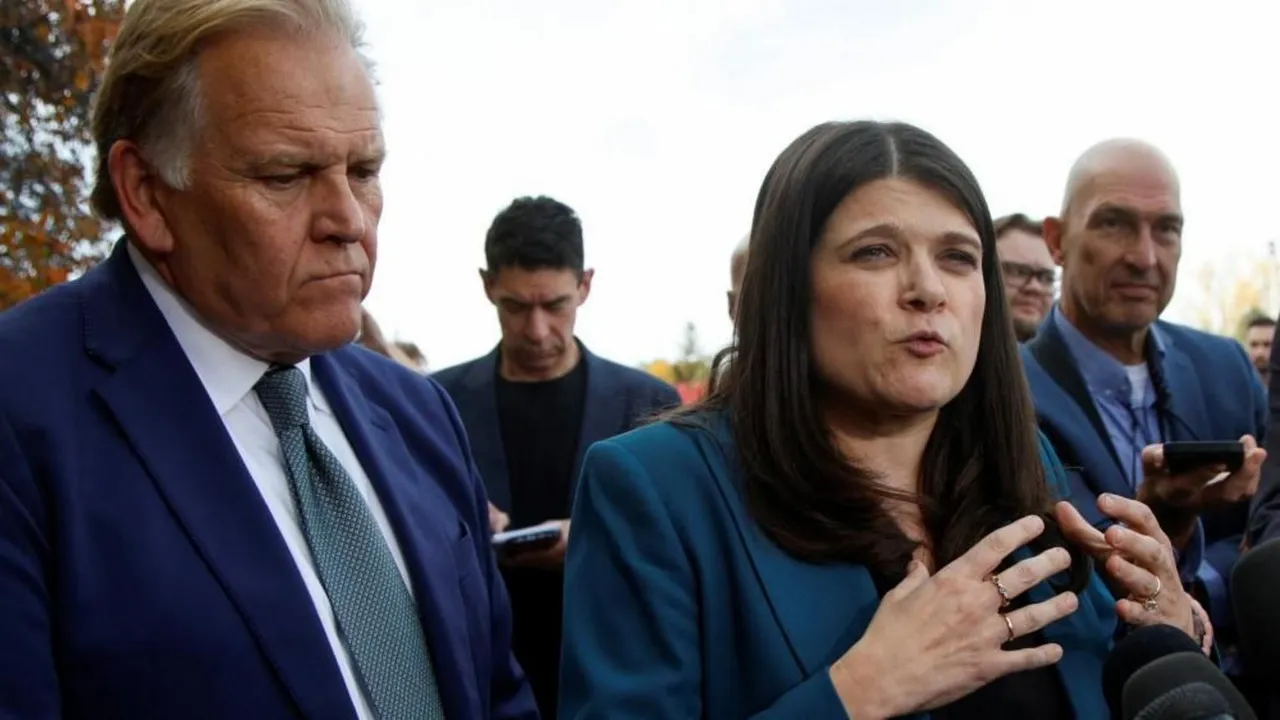
Stevens chose instead to attend a separate church service with Rogers. Standing alongside the Republican candidate outside the church, she told reporters: "This is a very close election, we all know that, but Abdul made clear that I was not welcome in his campaign, that he didn't need me there, that he didn't want me there."
Stevens also criticised El-Sayed's association with political streamer Hasan Piker, whose uncle, Cenk Uygur, founded the PAC that released the ad. "We can't stand with hate. We can't stand with Hasan Piker," she said.
She insisted she remained a Democrat and planned to vote for Democratic candidates in 90 percent of the races on her ballot, but said her Senate vote would go to Rogers.
Tensions between the two had been building for some time. Stevens' fiance, Jason Turkish, a Jewish Democrat and civil rights attorney, had previously announced he would vote for Rogers, accusing El-Sayed of anti-Semitism and saying his rhetoric about Israel and the war in Gaza had made Jewish voters feel unsafe. Stevens had maintained as recently as Wednesday that she still wanted El-Sayed to win.
El-Sayed, speaking at a "Souls to the Polls" campaign event in Detroit on Sunday, said he was focused on the concerns of Michigan voters rather than on Stevens.
"At the end of the day, I don't think about Haley Stevens," he said. "None of this matters."
He added: "There are families who are preparing to send their kids to schools tomorrow that look like they did 50 years ago. They're worried about what they're going to feed their kids for lunch. They're worried that if one of their kids gets sick, they're not going to be able to pay the bills."
The reaction from senior Democrats was swift and sharp. Senate Democratic leader Chuck Schumer called the endorsement a "despicable betrayal," saying Senate Democrats remained united behind El-Sayed.
Michigan Democratic Party Chair Curtis Hertel also condemned the move. "Haley Stevens' decision to campaign with Rogers — a man who has repeatedly sold out Michigan's working class, wants to pass a national abortion ban, and has pledged to be a loyal vote for Trump's agenda — shows that she has abandoned everything she claims to care about," Hertel said in a statement.
Stevens' communications director set an out-of-office reply on Sunday stating he was no longer working for her office. Several former campaign staffers also publicly criticised her decision on social media.
El-Sayed, a former public health official and the son of Egyptian immigrants, could become the first Muslim elected to the US Senate if he wins the race. He defeated Stevens in the Democratic primary after channelling grassroots frustration with Washington politics and US ties to Israel.
Stevens, a centrist, had the backing of prominent party figures including Michigan Governor Gretchen Whitmer during the primary. A super PAC affiliated with the American Israel Public Affairs Committee spent tens of millions of dollars supporting her campaign.
The clash between the two Democrats has underscored a broader rift within the party over Israel, one that analysts say is likely to extend well beyond Election Day and shape the Democratic Party's direction ahead of the 2028 presidential election.