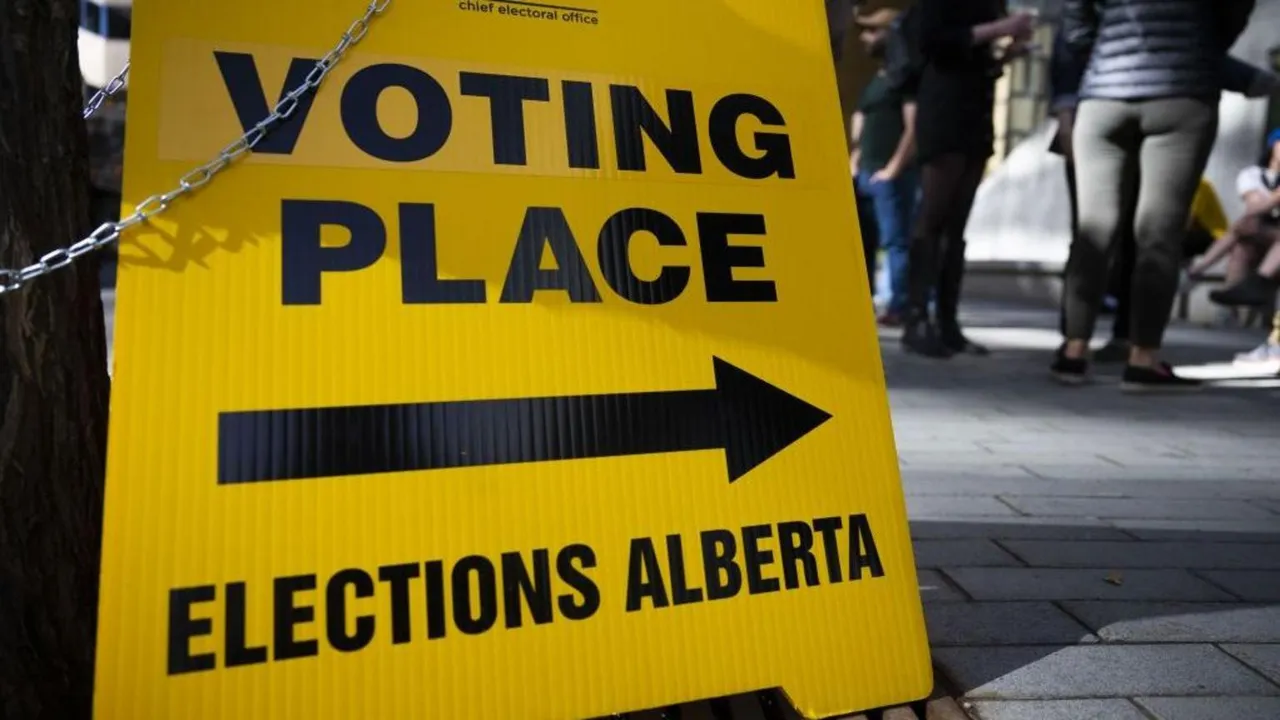
Residents of the Canadian province of Alberta voted on Monday on whether to begin a legal process that could ultimately lead to a binding referendum on separation from Canada.
The vote was triggered after a grassroots group, the Alberta Prosperity Project, gathered approximately 300,000 signatures on a petition calling for a binding independence referendum. A separate petition opposing separation collected more than 400,000 signatures.
Alberta has a population of around five million people, nearly half of whom live in its two main cities, Edmonton and Calgary. The province is almost double the size of Germany in land mass but is sparsely populated. It holds the world's fourth-largest proven oil reserves.
The ballot presented voters with two options: to remain part of Canada, or to begin the legal process required under the Canadian Constitution to hold a future binding referendum on separation. A vote in favour of the second option would not make Alberta immediately independent. Any secession attempt would require complex negotiations with the federal government, other provinces, and Indigenous peoples living in and around Alberta.
Opinion polls suggested the pro-independence side had little chance of winning, with around four in five Albertans saying they want to remain part of Canada. However, as many as one in three voters were expected to support the proposal, according to some estimates.
Polls opened at 9 a.m. local time in Edmonton and were scheduled to close at 8 p.m., with results to be published as they came in.
Alberta's provincial premier, Danielle Smith of the United Conservative Party, authorised the vote despite a court ruling that had blocked the original pro-separation petition, on the grounds that it failed to consult Indigenous First Nations whose land would be affected by any separation. First Nations groups subsequently branded Smith's decision to allow the voting process to proceed as "undemocratic" and "authoritarian."
Smith herself opposes separation but said the process gives residents a chance to have their say. If Albertans voted in favour of moving ahead, a binding referendum could take place as early as 2027, she said.
The separatist movement is led in part by Mitch Sylvestre, a gun shop owner from Bonnyville, and Jeffrey Rath, a Calgary-based lawyer, both members of the Alberta Prosperity Project. Cory Morgan, founder of a separate pro-separation organisation called Pathway to Independence, has spent more than 25 years advocating for Alberta's independence.
Separatists argue that the province contributes disproportionately to the national public purse while receiving little in return, and that successive federal governments have stifled Alberta's oil and gas industry through environmental regulations, including a national carbon tax and emissions limits introduced under former Prime Minister Justin Trudeau. The resentment, Morgan said, stretches back to the 1980s and the National Energy Program introduced under Pierre Trudeau, which has since become a central symbol of what is known as "Western alienation."
"Canada has an imbalanced system which feeds the central population and government at the expense of the outlying producing provinces such as Alberta," Morgan said.
Research from Viewpoint Alberta, a University of Alberta-based initiative, suggested that two-thirds of voters supporting the referendum were doing so for strategic reasons — to send a message to Ottawa rather than to pursue outright independence. Political science professor Jared Wesley described these as people who want Ottawa to pay attention rather than those seeking a full break.
Pro-separation organiser Chris Scott said the campaign had already achieved some of its goals regardless of the outcome. "The key is the conversation has started and it needs to continue," he said. "What's started can't be stopped now."
Prime Minister Mark Carney, who grew up in Alberta, campaigned actively for the "stay" side in the days before the vote, urging supporters to deliver as decisive a result as possible. He warned voters against treating the ballot as a protest tool.
"Don't be fooled by the idea you can 'send a message' with your vote," Carney said at a pro-Canada rally in Calgary on Thursday. "This is not poker. A vote against Canada is a dangerous bluff that will lead to years of deep division and great uncertainty."
At a separate rally, Carney warned of broader external pressures on Canadian unity. "The world has become more dangerous and divided. Some outside our borders are working to break us so they can own us," he said.
Opponents of separation warned that an independent Alberta would inherit billions of dollars in debt and face an exodus of jobs and investment, drawing comparisons to the uncertainty that followed the United Kingdom's 2016 vote to leave the European Union.
Monday's vote marked the first referendum of this kind held in a Canadian province other than Quebec, which has a longer-established separatist movement rooted in language and cultural identity.