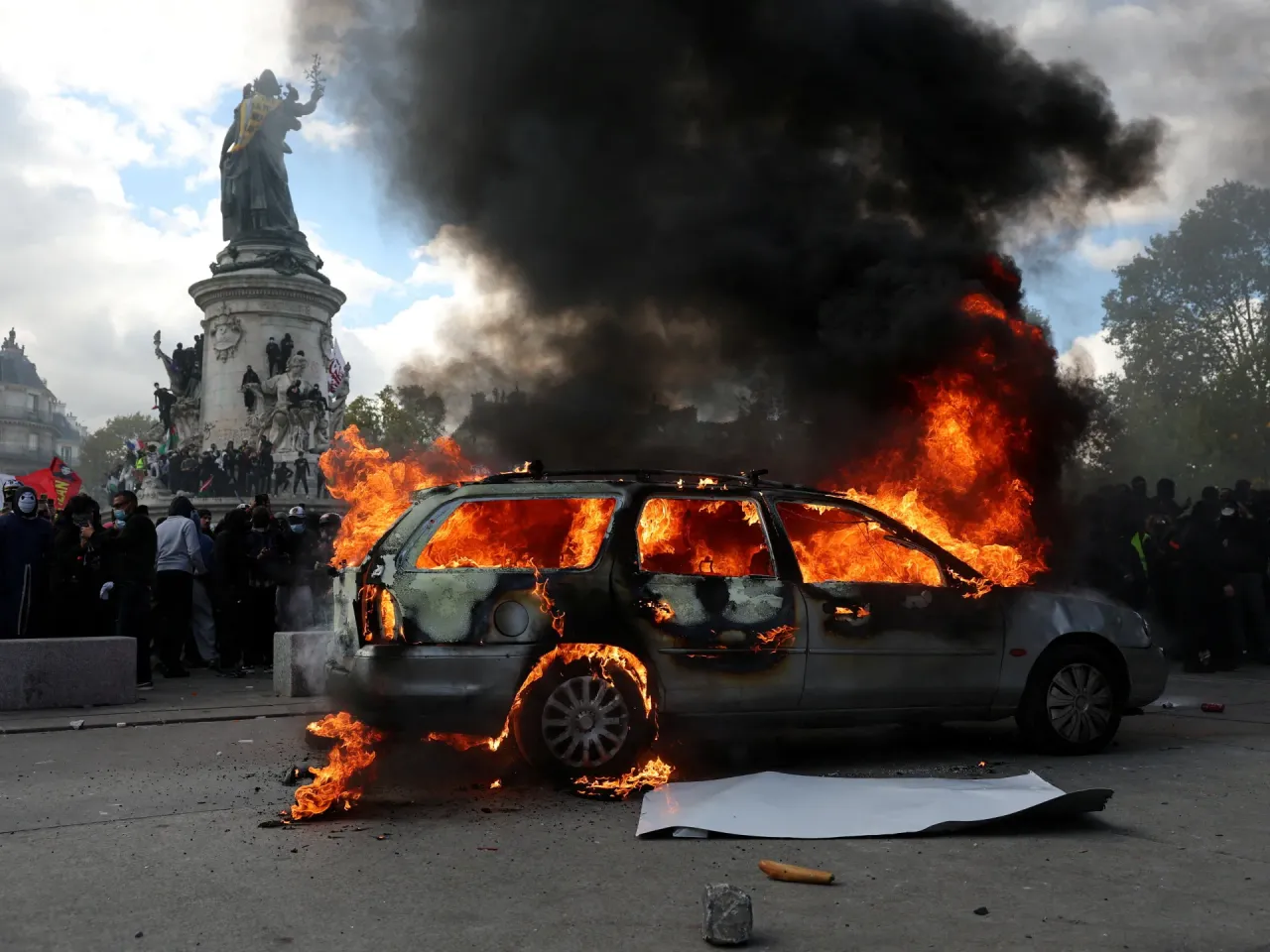
France woke on Sunday to streets scarred by burned cars, smashed shopfronts and looted businesses after cost-of-living protests spiralled into some of the worst unrest in years.
What began as largely peaceful marches on Saturday over soaring prices and falling living standards quickly escalated, with masked youths torching vehicles, ransacking shops and attacking public buildings in cities including Paris, Marseille, Nice, Bordeaux, Lille and Strasbourg.
Authorities reported approximately 1,200 arrests and 150 injured police officers. Prime Minister Sebastien Lecornu said it was "a miracle the toll isn't higher."
Paris Deputy Mayor Emmanuel Gregoire said "whole streets have been devastated" as police deployed tear gas and water cannon against protesters who hurled projectiles and set off fireworks.
In Paris, officers fired tear gas and water cannon to push back crowds wearing hoods and masks who were throwing fireworks, paving stones and other objects at police in Republic Square, northeast of the city centre. Many metro stations were closed at the request of police, including those around the Champs-Elysees and near the presidential palace, parliament and government offices.
Town halls in Limoges, Marseille and Lille were targeted, while a police compound in Bordeaux and a tourist office in Lyon were vandalised. In Saint-Etienne, a 17-year-old lost his right hand after being struck by a crowd-control grenade.
Interior Minister Laurent Nunez said 110 marches drew approximately 550,000 people across the country. Organisers, including the CGT labour union and student organisations, put the figure at around 800,000.
Nunez described those responsible for the violence as "extremely violent, radical far-left groups" seeking confrontations with police and targeting public buildings, joined by offenders willing to loot shops. He said most of those arrested were adults.
The protests were called in response to rising living costs and poor conditions in schools, following weeks of student demonstrations demanding greater investment in education. Protesters across France also responded to calls on social media to revive the "yellow vest" movement, which first emerged in 2018 against planned fuel tax hikes. The movement had called for Saturday's "yellow and youth" demonstrations.
During and after the marches, gangs of youths roamed city streets, sporadically confronting police while setting fires and breaking into shuttered stores.
President Emmanuel Macron promised that those responsible for looting and attacks on public buildings "will be prosecuted and punished." Far-right and left-wing political contenders traded blame over the violence.
A massive clean-up operation was under way across France on Monday, from Lille in the north to Marseille in the south and from Strasbourg in the east to Bordeaux in the southwest.
The unrest comes six months before the presidential election, setting up a potentially fraught period ahead for the government.