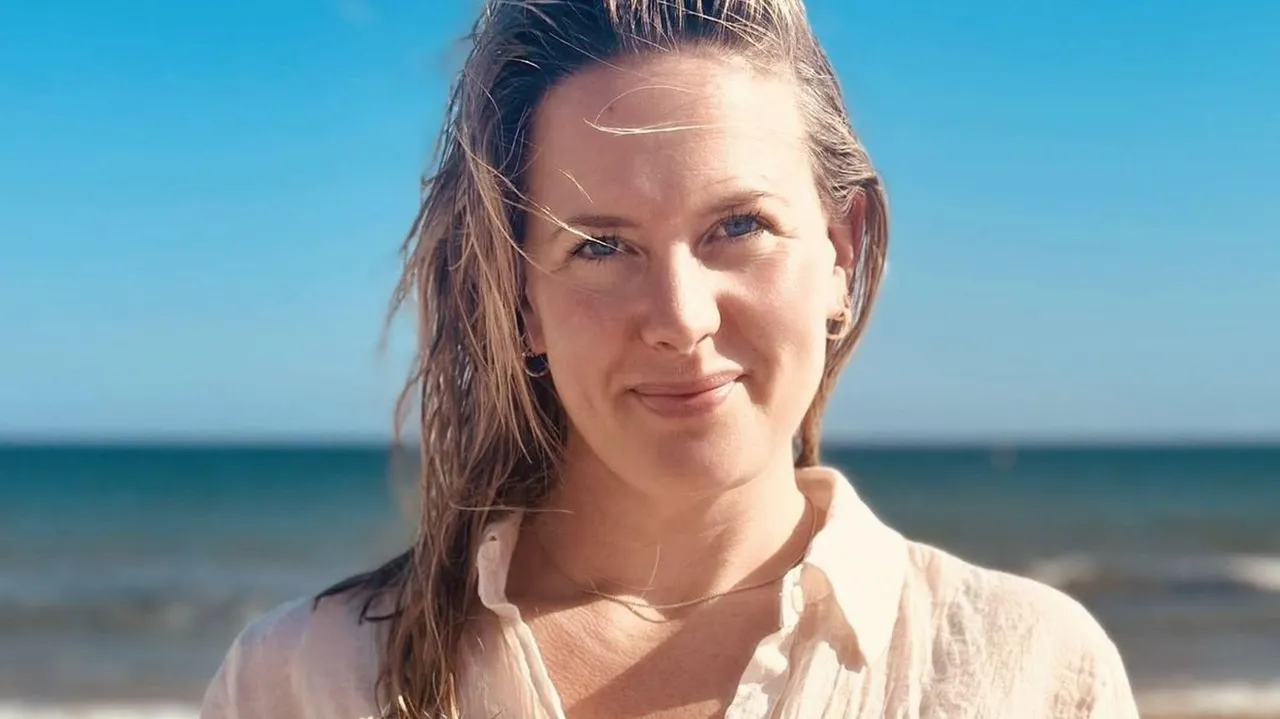
Laura Sides was in her early twenties when a doctor told her she had a 50/50 chance of developing the same rare form of early-onset Alzheimer's disease that had been diagnosed in her father when he was in his 40s.
Her father, a GP she describes as "the most amazing doting father," began showing severe symptoms while Laura was at university. She dropped out to care for him.
"We did have a really lovely time," she recalls, remembering trips to a lighthouse and collecting coasters. "I'd run him baths and just play music and pour jugs of hot water over his head and he loved it."
It was during a hospital appointment with her father that a doctor first raised the possibility she could inherit the condition, known as the "London variant" of early-onset Alzheimer's.
"All I could think was, that's a toss of a coin," she says. "I was still so involved with what was going on with him. I just pushed it really, really deep down."
Laura's father died in 2009, just a year after her mother had also died. Overwhelmed, she booked a solo around-the-world trip and eventually settled in Melbourne, Australia.
It was there that thoughts of the condition "started creeping in." In 2013, she consulted a specialist who told her a genetic test could determine with 99.999% certainty whether she would inherit early-onset dementia. If she carried the gene, her expected age of cognitive decline would be between 46 and 48.
"I just thought, I'm not there yet. I don't want to do that," she says.
As she entered her 30s, Laura found herself thinking about the test more frequently and eventually decided she wanted to know. Before taking it, she was required to undergo six months of genetic counselling.
"There's not many realms in life where you find out your fate and it can be very difficult information to process," she says.
After a six-week wait, the results arrived. Laura attended the appointment alone, having arranged to meet a friend for lunch afterwards.
"I said, 'Let's cut straight to it.' They said, 'We're really sorry, it's not good news, and you have inherited the gene.'"
She remembers "almost a white blurry noise of just sitting there."
"I came out of that room and my friend burst into hysterical tears." Laura, however, did not react immediately. "We went for our lunch and it was lovely. I don't know if it'd sunk in."
The reality set in later. "I was angry. I felt it was so unjust. I was just too confused at how I was meant to live now. How do you live with that knowledge?"
Laura eventually felt drawn back to the United Kingdom, particularly after learning her sister was pregnant. "It doesn't make sense... to live on the other side of the world when she's going to have a baby."
She continued to travel, however, taking part in medical trials in multiple countries both before and after her diagnosis. "It felt like such a positive to be involved in something out of such a negative situation."
Laura is now 43 — three years away from the age at which doctors predicted she will begin to notice symptoms.
"I keep waiting for something to sort of hit home. I guess one day I'll start declining but that doesn't keep me up at night."
She describes herself as "grateful and so lucky for the people in her life," though she says meeting new people remains difficult. "Do I tell them? Do I not tell them? At what point do I tell them? And more often than not, when I have told them, it ends."
Yet she says she has been "proven wrong." "I have been shown I can be loved despite this. It fills my heart with reassurance and joy."
Laura, who is now a chef and co-owns a cafe, restaurant and catering business, also shared that she had always assumed she would become a mother — a prospect the diagnosis has complicated in ways she continues to navigate.
She shared her story with a podcast focused on life-changing experiences and decisions.


