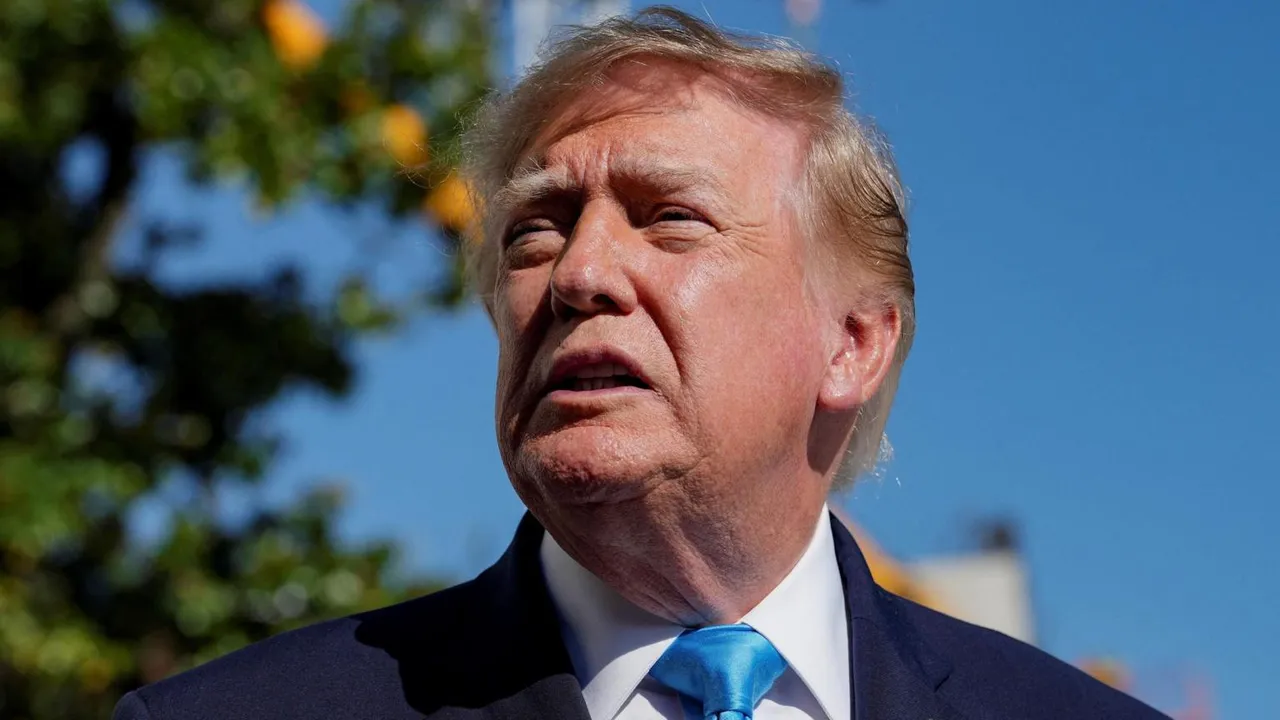
US President Donald Trump has confirmed that a specific threat prompted the withdrawal of American bombers from RAF Fairford in Gloucestershire, England, following a security incident at the base on 27 September.
Speaking to reporters outside the White House, Trump was asked whether a specific threat had led to the decision. "Yeah I think we can say that. They didn't fly out by accident," he said. "There were some threats. And rather than tempting the enemy, we'll capture the enemy and beat the enemy. But why should we leave them there? So we moved them around a little bit. Not very far."
Trump added that Washington "actually knows the people that made the threat" but did not confirm who they were.
The exact nature of the threat remains unclear. Sources in Washington speculated it may have involved sabotage attempts or plans to strike the aircraft in the event of resumed hostilities with Iran. One source close to the White House pointed to Ukraine's Operation Spiderweb — a covert drone attack on five Russian bases in June last year — as an example of what an adversary could achieve even at a distance. "Whatever they thought it was, it was taken extremely seriously," the source said.
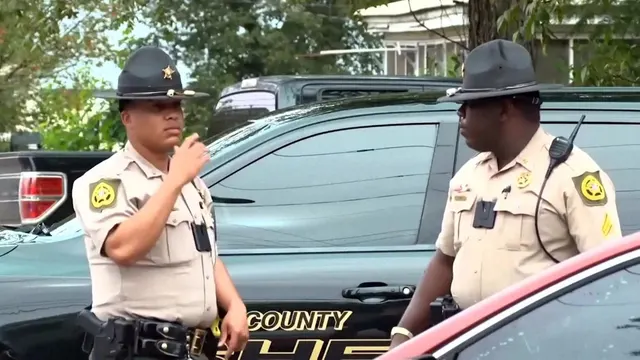
The security incident on 27 September saw police alerted to three suspicious vehicles near the airbase. A bomb disposal robot was deployed in the area and approximately 85 homes were evacuated. Five men were arrested on suspicion of terror offences and subsequently released on bail. A sixth man, a UK-Iranian national, was later arrested and also released on bail. No charges have been filed.
Trump criticised the decision to release the five men. US officials suggested Iran could have been involved in the incident. Whitehall sources have not disputed that Washington's decision to remove the bombers was a direct response to the events at the base.
Vice-President JD Vance said the bombers had been moved out of an "abundance of caution", adding that Washington believed Iran was doing what it had "done for 49 years... which is engage in acts of terrorism against the US and against a lot of other people."
Prime Minister Andy Burnham said there were "strong indications" that Iran had played a part in the incident, without providing further details. Secretary of State Marco Rubio said the incident had "clearly involve[d] the hands of a foreign actor" but also declined to elaborate.
Tehran has strongly denied any involvement. In July, Iran stated that "any base used for aggression against Iranian territory constitutes a legitimate target for our forces."
Rubio struck a notably more cautious tone than Trump and Vance, declining to directly link the security incident to the withdrawal decision. "It's not unusual to see movement of assets to different parts of the world based on exercises, redeployments, people changing out and new people coming in, new planes coming in and old planes going out," he said. Rubio added that the US retained full confidence in the security of its bases and that British authorities had been cooperative.
RAF Fairford has served as a forward operating location for the US Air Force for decades. In recent months, the US flew B-1 and B-52 bombers from the base for operations in the Middle East, following UK approval for their use in defensive strikes on Iran. Approximately a dozen B-1 bombers had been stationed there.
Analysts say the withdrawal reduces Washington's ability to rapidly generate and sustain bombing missions against Iran, though it does not eliminate that capability entirely. "The United States has lost a convenient launchpad, not its underlying strike capability," said Dania Thafer, executive director of the Gulf International Forum and a lecturer at Georgetown University.
Analyst Christoph Bergs of the Royal United Services Institute said the bombers at Fairford were officially stationed there for defensive strikes and likely had a modest targeting list. "Their withdrawal reduces the capacity to quickly surge sorties against Iran, reducing the threat level somewhat," he said.
Researcher Arun Dawson of King's College London noted that the B-1's principal advantage is its conventional weapons payload — the largest of any aircraft in the US military, carrying at least 34 tonnes of ordnance. With the B-1s gone, the US may need to rely more heavily on longer-range missions from more distant bases, increasing flight times, crew fatigue and the need for aerial refuelling.
Former Pentagon official David Des Roches said the security incident "exposed a vulnerability", noting the aircraft were positioned only about 300 yards from where the public could observe them. "So they were very vulnerable to, say, drone attacks or other kind[s] of mortar attacks," he said. "Just a small drone or any kind of a drone with explosives on board could conceivably cause significant damage."