A major legal challenge to the banning of Palestine Action opened at the UK Supreme Court on Wednesday, with lawyers arguing the group's proscription under terrorism legislation has triggered a "crisis in confidence" in anti-terror laws and sparked unprecedented civil disobedience.
Lawyers for co-founder Huda Ammori told five justices that no other protest organisation had been treated in the same way, and that the court had never before been asked to consider whether banning a group under terrorism legislation was compatible with freedom of speech and the right to protest.
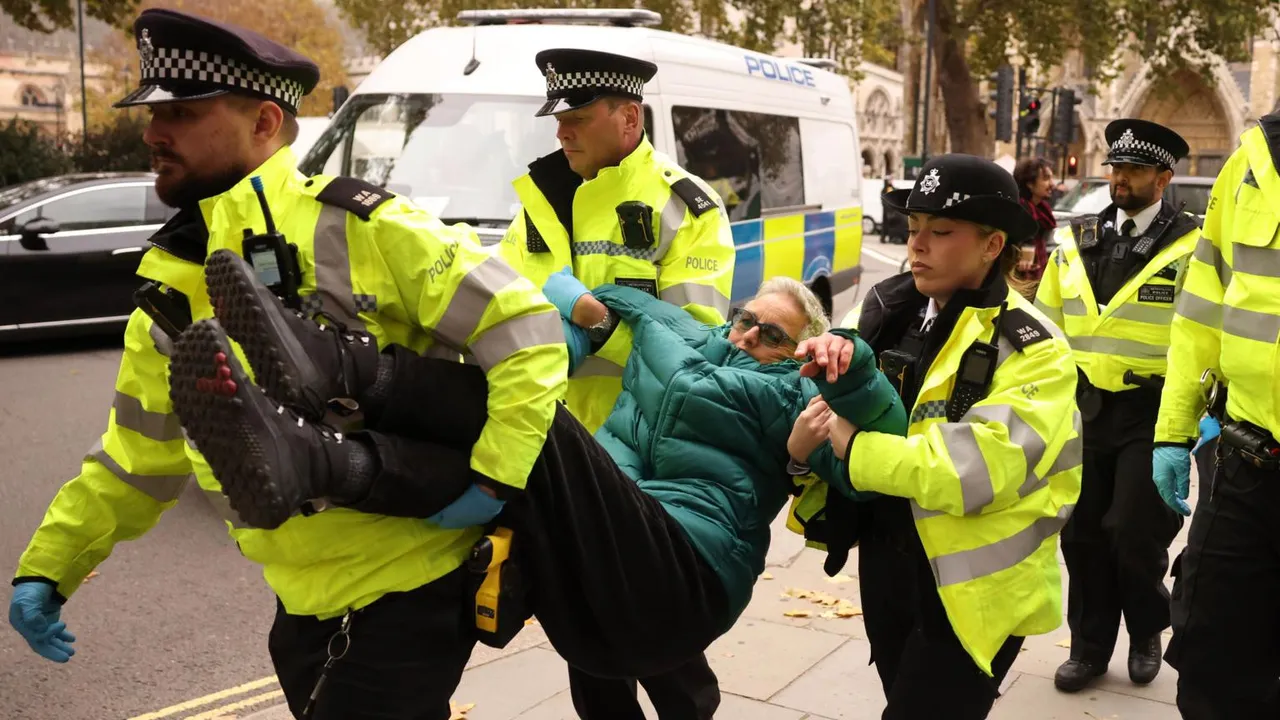
Twenty-five to twenty-seven protesters were arrested outside the Supreme Court as the hearing took place, according to reports. The Metropolitan Police confirmed the arrests.
Home Office figures indicate that more than 4,000 arrests have been made at protests where people held up signs supportive of Palestine Action since its proscription. In practice, many demonstrators have been arrested more than once. Prosecutors have authorised 1,200 charges to date, with those trials in limbo pending the outcome of this case.
Henry Blaxland KC told the court that proscription had not deprived Palestine Action of publicity or discredited it. "All it's done is to pour fuel on to a fire of one of the most publicly-contested issues of our time," he said. "It was disproportionate to do that and in my submission completely unnecessary."
Ammori's legal team accepted that Palestine Action could not be described as an ordinary and peaceful protest group. They said members had carried out "direct action" by occupying or vandalising firms linked to Israel's military. However, they noted that only three of 385 incidents assessed by the Home Secretary were found to constitute an offence under the Terrorism Act.
Raza Husain KC, also representing Ammori, argued the court must set aside questions of criminality and focus on whether the Home Secretary's decision to label the group as terrorists had been disproportionate.
"Palestine Action was proscribed on the basis of less than one per cent of its actions over five years assessed as falling within the outer limits of a definition of terrorism," he said. "The Home Secretary's own experts confirmed the vast majority of its direct action would not constitute an act of terrorism on the basis that any damage to property is typically more minor. Common tactics include graffiti, petty vandalism, occupation, and lock-ons."
The court was told that one Palestine Action member had been convicted and jailed for fracturing a police officer's back with a sledgehammer, but that the group had never advocated such violence.
Palestine Action was proscribed by the UK government in July last year. Its designation places it on the same list as armed groups such as al-Qaeda and ISIL. Those found guilty of belonging to or supporting the group could face up to 14 years in prison.
The Supreme Court received submissions from free speech campaigners arguing the ban interferes with the right to protest. Rights groups including Amnesty International and Liberty have also denounced the proscription.
A coalition of Jewish groups submitted opposing arguments, describing Palestine Action as a "sinister" organisation. Adam Wagner KC, representing those groups, said in written submissions that the Court of Appeal "rightly concluded that PA is a violent organisation concerned in terrorism with a wide range of targets." He added that the group's activities were "often undertaken covertly with no suggestion of restraint or proportionality."
Wagner argued that Palestine Action's focus had expanded from targeting Elbit, a defence firm with an Israeli parent company, to "figures or institutions deemed by PA to be 'Zionist'". He said that because most British Jews and Jewish institutions have a connection with Israel, such a campaign "is, in practice, a campaign that threatens the mainstream Jewish community."
In a statement issued after the first day of the hearing, Ammori said that evidence submitted to the court by United Nations experts, Amnesty International, Liberty and the former director of MI6 showed that the proscription had criminalised legitimate protest as "terrorism" for the "first time in British history."
Tom Southerden, Amnesty International's UK Law and Human Rights Director, said Wednesday's arrests illustrated what he called a "grave misuse of terrorism powers." He called on the government to lift the ban regardless of the court's eventual ruling.
The hearing is scheduled to continue on Thursday, with a judgment expected at a later date.