King Charles III has begun a nine-day tour of the Caribbean, acknowledging the "great suffering of the past" as he faced calls for slavery reparations from protesters gathered near his first public engagement.
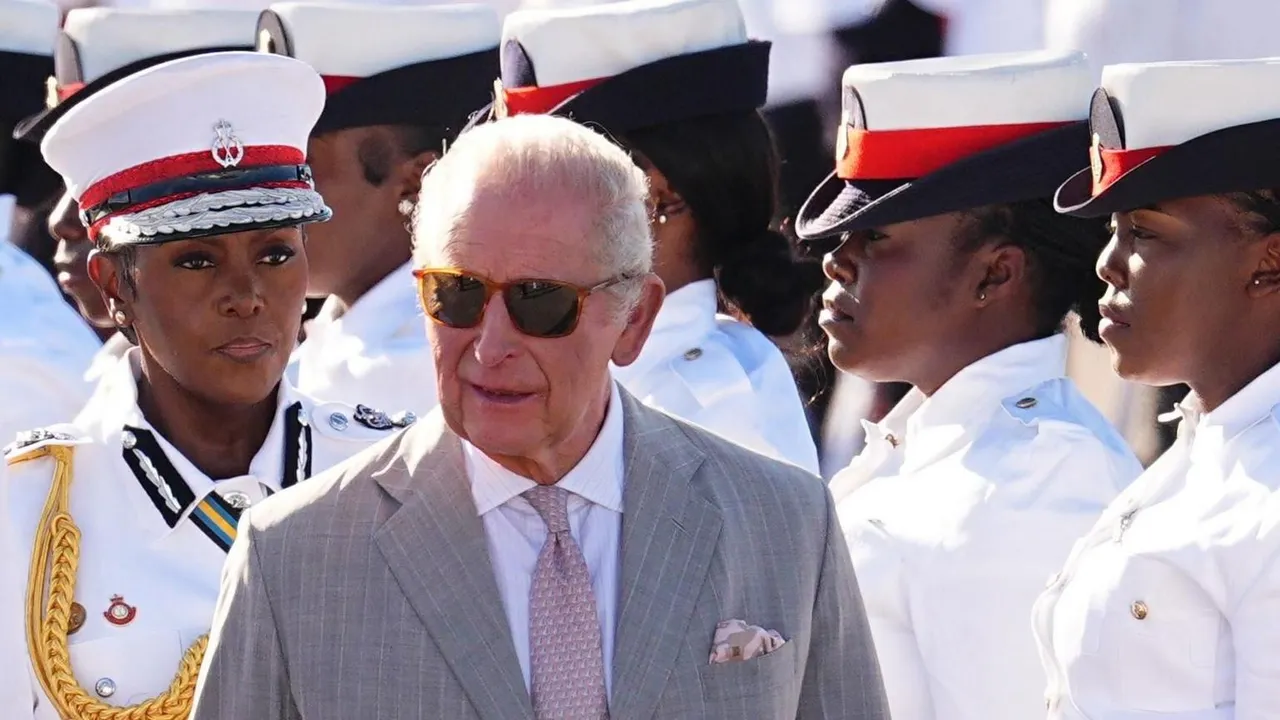
The King arrived in the Bahamas on Tuesday, where he met Governor General Dame Cynthia A. Pratt and Prime Minister Philip Edward Davis before inspecting a guard of honour with members of the Royal Bahamas Defence Force.
Wearing sunglasses and a grey suit, he was met with cheers upon arriving at a youth rally at Clifford Park in Nassau — the same venue where he attended the Bahamas' independence celebrations as Prince of Wales in 1973.
Speaking at the rally, the King said the country's culture was "born out of darkness" and that it was "only right" to acknowledge historic injustices. He called on young people to "take up the sacred task to play your part", adding that "in years to come, this will be surely be the measure of every person - how they answered the call to care for planet earth - the source of our life, our prosperity and our security".
He also acknowledged his 50-year commitment to fighting climate change, saying "our world cries out for healing" and highlighting the particular vulnerability of low-lying Caribbean islands.
Students had been given time off school to attend the rally. "It's my first time seeing him in person out of TikTok so he's out there, it's cool," one student said.
A group of around a dozen protesters gathered close to the venue, chanting "pay us what you owe us" and "return artefacts you've stolen." They were kept outside the main event as they called on the King to help shift the UK government's position on apologies and reparations.
"He's a man of influence. The Crown still has influence. And if they do not do it then we will become a republic and we will turn our backs on England if you do not show respect to the former colonies," said protester Sharon Purcer-Cooper.
The visit, his first to the region as monarch, comes amid renewed calls from Caribbean nations for Britain to apologise for its role in the transatlantic slave trade.
Prior to the trip, Buckingham Palace said the King would not shy away from the "colonial legacy" and the impact of the slave trade. However, in line with the UK government's position, he will not apologise for Britain's role in slavery or offer reparations.
A palace spokesperson said the King's programme "will primarily focus on shining a light on the many modern partnerships and opportunities for the future", specifically those "having a transformative effect on the region."
The spokesperson added that the tour is "both a new journey but also the continuance of a lifelong one, in which he has sought to engage, understand and educate about the most shameful aspects of our past."
Visits to memorials and places of reflection and remembrance have been built into the schedule, Buckingham Palace confirmed.
On Wednesday, the King will continue his engagements in the Bahamas, where he will receive briefings on the islands' climate vulnerability and learn about Junkanoo, a traditional Bahamian cultural festival and street parade.
He will then travel to Guyana, where engagements will focus on the environment and biodiversity, before moving on to Antigua and Barbuda. Queen Camilla will join him there for the Commonwealth Heads of Government Meeting (CHOGM), where the King will deliver his keynote address as head of the Commonwealth.
The King has confirmed that leaders at CHOGM will discuss the region's legacy of slavery. The biennial summit brings together leaders of 56 Commonwealth countries to address shared challenges and advance cooperation.
The tour has been planned in coordination with the governments of the Bahamas, Guyana, and Antigua and Barbuda, with an emphasis on honouring the past while looking toward future generations.