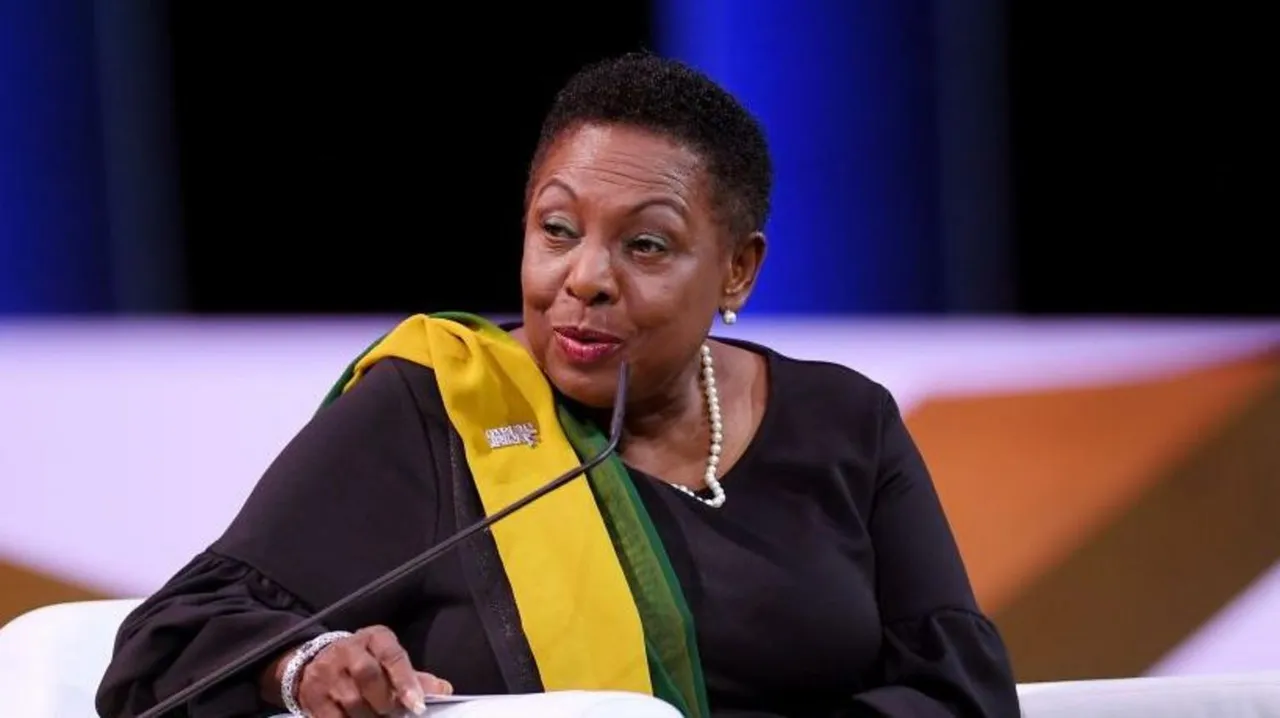
A Jamaican government delegation has arrived in London to present a formal petition to King Charles over slavery reparations, in what officials are calling a landmark step toward legal and historical accountability.
Jamaica's culture minister, Olivia Grange, arrived in London at the weekend alongside members of Jamaica's National Council on Reparations. The petition was lodged with Charles on Monday in his capacity as Jamaica's head of state.
The petition asks the King to refer three questions to the Judicial Committee of the Privy Council, the country's highest court of appeal. The questions are: whether the enslavement of Africans in Jamaica was legal under English law; whether it constituted a crime against humanity or broke international law; and whether Britain now has a legal obligation to provide redress or restitution to Jamaica.
Grange said the petition was not a demand for payment but a mechanism to obtain legal clarity. "Once we get the answers, or once we get a response to those questions, then the next steps will be determined," she said.
King Charles has no personal discretion in deciding whether to make a referral. Buckingham Palace has been working closely with the Governor General of Jamaica to ensure the petition is correctly lodged.
A Palace spokesperson said: "His Majesty has on many occasions expressed his personal and wholehearted commitment to promoting greater understanding around the issue of slavery and finding ways to address historic wrongs for the benefit of communities today."
Grange said the petition was critical to progressing Jamaica's reparations claims and addressing the enduring economic disadvantages caused by slavery. "We have inherited systems that continue to deprive our country and our people. The legacy in education, even in health, the way we eat, our diet because of what we were fed, our ancestors were fed," she said.
She added that Jamaica had been the first Caribbean nation to establish a national reparations mechanism, doing so in 2009.
Grange also pointed to the financial legacy of abolition. When slavery was abolished across most of the British Empire in 1833, the British government paid £20 million in compensation to slave owners. The loans taken out to fund that payment were not fully repaid until 2015.
"Up to 2015, Britain was paying the slave masters, because we were being considered property," Grange said. "The question really should be: if in modern times we're still paying back the slave masters for the property that was our people, our ancestors, then why shouldn't we be pursuing some remedy at this time?"
Grange said the visit could pave the way for a "long outstanding settlement for the hundreds of years of the most horrific abuse that our African ancestors endured."
Ralph Gonsalves, a former prime minister of St Vincent and the Grenadines and an adviser to the Repair Campaign, a social movement for reparatory justice, described Jamaica's petition as a critical milestone. "The present is very much the past, because what we are dealing with is the legacies of underdevelopment which you can source, and we do source, to native genocide and enslavement of African bodies," he said. "People must remember this: that European nations were enriched because of the enslavement of African bodies."
Gonsalves said the petition was one of several upcoming events in a broader international push for reparations, including a Caribbean reparations conference in Barbados later this month, planned advocacy at the UN General Assembly in late September, and the Commonwealth Heads of Government Meeting in Antigua in November, which King Charles is scheduled to attend.
The petition comes amid growing global momentum on the issue. In March, 123 nations voted for a UN resolution describing chattel slavery as the gravest crime against humanity. The UK was among several European countries that abstained. In June, the Caribbean launched a manifesto outlining what it called the moral, ethical, and legal case for reparations. Last month, a UN committee on the elimination of racial discrimination said countries were legally obliged to consider reparations for the transatlantic slave trade.
Between the 15th and 19th centuries, more than 12.5 million Africans were kidnapped, forcibly transported to the Americas, and sold into slavery.
In 2015, then-Prime Minister David Cameron ruled out making reparations for Britain's role in the slave trade during a visit to Jamaica. Speaking to MPs in Jamaica's parliament, Cameron said slavery was "abhorrent in all its forms" and expressed hope that they could "move on from this painful legacy and continue to build for the future."
Grange is also scheduled to meet with British Museum officials to advance discussions on the repatriation of artefacts taken from Jamaica during the colonial era. "They are priceless, they are significant to the story of Jamaica and we are working to bring them home," she said.