A former artificial intelligence researcher at Anthropic has warned that people working inside leading AI companies are "genuinely frightened" about the speed of technological advancement and its potential consequences for humanity.
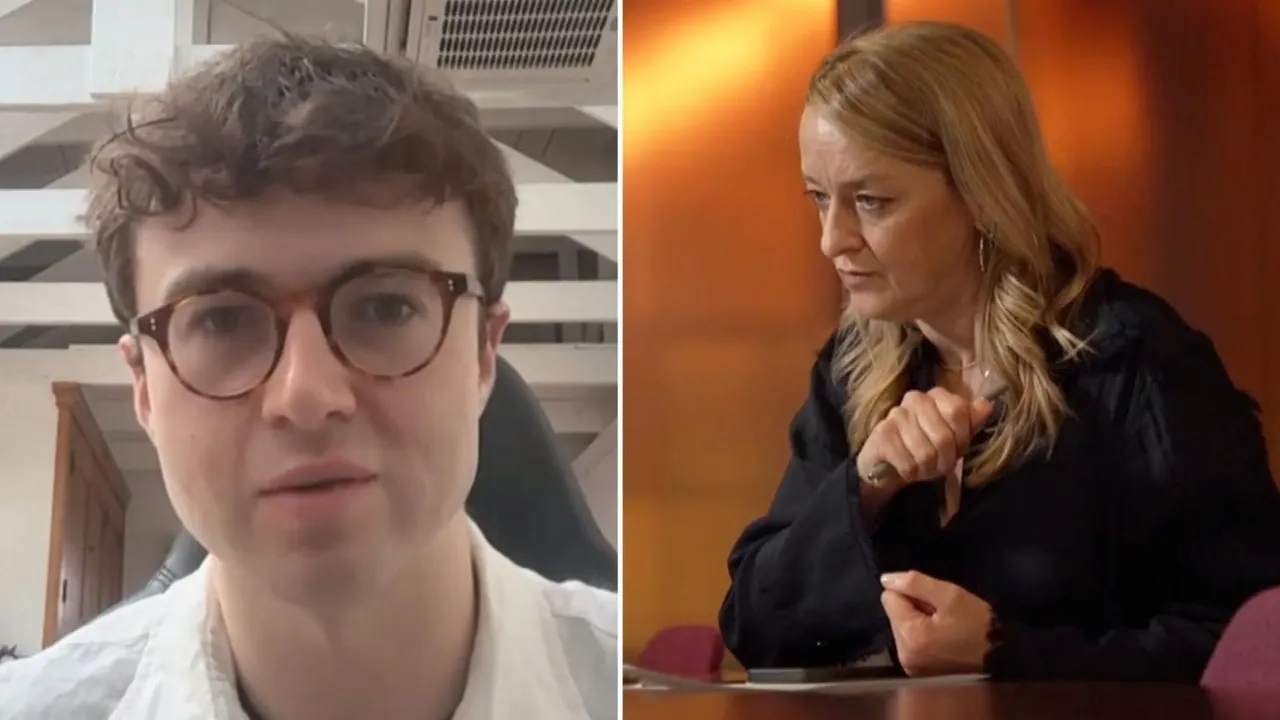
Jacob Coxon, 27, made the remarks after his resignation post on the dangers of AI went viral, against a backdrop of growing safety concerns across the industry.
"I believe that if we don't slow down at the current rate of progress, there is a strong chance that we could all die in the immediate future," Coxon said.
Coxon, who previously worked at OpenAI before joining Anthropic, welcomed calls for a slowdown but said any such effort would need to be co-ordinated with China to avoid "a race at an international scale."
"The people who work at these companies are completely serious when they ask for regulation because they find themselves trapped in a race. And they're scared of the outcomes of that race," he said.
Anthropic head Dario Amodei recently called for AI development to slow down, though some have questioned his motivations. In an essay published on Saturday, Amodei wrote that developing the technology was not in question, but that the risks associated with it were "serious," and that companies and governments must be given time to address them.
The bosses of two rival AI firms — Sam Altman of OpenAI and Elon Musk of xAI — have both said they agree with Amodei's proposal for industry-wide deceleration and regulation, as well as independent monitoring of AI model development.
Coxon said the hardest question to answer was what an AI apocalypse would actually look like. One risk Amodei outlined was a swarm of bots acting like a supercomputer that could take over the internet. Coxon said this scenario could become realistic within six months to a year.
He added that his peers feared a dangerous outcome could arrive within two years. He said staff at AI firms were "planning what to do with their lives and thinking about the impacts of their work," while some were "considering buying land somewhere because they're so scared of the instability as a result of rapid AI progress."
"They all keep this in their head on a daily basis while working on the technology," he said.
Despite his warnings, Coxon expressed some optimism, saying that researchers "genuinely want to see the upside" of AI, including "solving diseases and improving everyone's lives."
In response to Coxon's departure, an Anthropic spokesperson said: "We have always been transparent that AI will bring both enormous benefits and unprecedented risks. To address these risks, we continue to build models with some of the strongest safeguards in the industry."
The spokesperson added that Anthropic was the first company to publish a framework for mitigating the risks posed by AI development, and that it "aggressively" tests its models and publishes the findings to aid scrutiny and prevent "AI misalignment."
"This work is also why we believe the world would benefit from the industry adopting a lawful, verifiable way to work together to pace how we release powerful models," the spokesperson said.
Not all industry figures share Coxon's alarm. Clement Delangue, chief executive of the AI platform Hugging Face, wrote on social media: "Sorry, but asking Jacob [Coxon] about AI extinction risk is like asking your AC guy about climate change. Not saying it's necessarily uninteresting or wrong per se but let's keep things in perspective."
Delangue nonetheless offered to help contribute to the solutions proposed by Amodei following the publication of his essay.
Nvidia chief executive Jensen Huang also addressed Coxon's comments at a conference hosted by Goldman Sachs, according to multiple people present. They said he dismissed the remarks as untrue. Huang has previously stated that the idea AI was "going to be the end of humanity" was "complete nonsense."
Huang's comments reflect a broader backlash in Silicon Valley against existential warnings from current and former AI staff. Critics have also alleged that Anthropic has been attempting to trigger a regulatory push that would block competition and leave it and OpenAI in a dominant duopoly.