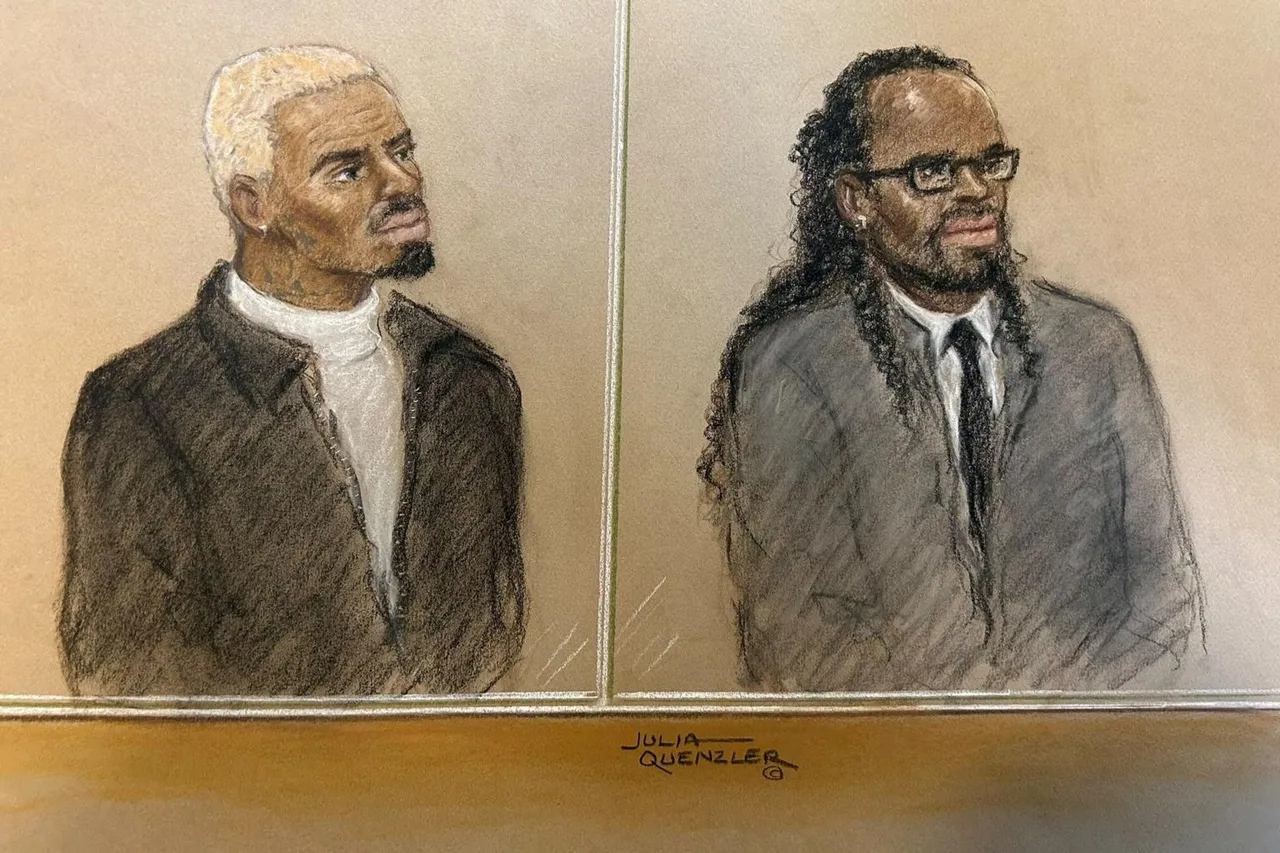
US R&B singer Chris Brown has avoided imprisonment after being handed an eight-month prison sentence, suspended for 12 months, for attacking a man with a glass tequila bottle at a London nightclub.
The incident took place in the early hours of 19 February 2023 at Tape, a private members' club in Mayfair. The victim, music producer Abraham 'Abe' Diaw, required hospital treatment for his injuries.
Brown's vocal coach, rapper Omololu Akinlolu, who also took part in the attack, received a four-month prison sentence, suspended for 12 months. Both men pleaded guilty to affray at Southwark Crown Court and were each ordered to pay £1,500 in costs.
CCTV footage shown in court captured Brown striking Diaw four times with the bottle during an attack lasting no more than 20 seconds. The bottle connected with Diaw's head twice and also struck his shoulder. Prosecutor Heidi Stonecliffe KC described the weapon as a "heavy square-shaped tequila bottle" and said Brown approached Diaw on the dance floor at around 03:00.
The Crown Prosecution Service said that after Brown struck Diaw over the head, Akinlolu punched the victim in the head. "They continued their assault whilst the victim attempted to flee through the club," the CPS stated. "The victim was kicked while he was seated defenceless on the floor."
Judge Tony Baumgartner said Brown's use of the bottle was "plainly dangerous" and described the violence as "intense". He noted that Brown had to be "physically pulled away" from the attack.
"The repeated use of a glass bottle in that way, especially aimed at the head, was plainly dangerous, it carried the risk of delivering a more serious injury than was ultimately sustained," the judge said.
Sentencing Brown, Judge Baumgartner said: "This was not planned violence. It was nevertheless serious violence by two people in a crowded nightclub."
The judge also warned that such behaviour endangered bystanders. "Violence of this kind in a crowded nightclub is serious, it creates an obvious risk, not only to the person against whom it is directed, but also to others nearby," he said.
Judge Baumgartner told Brown that his fame and commercial success offered no protection from the law. "The law applies equally to everyone," he said, adding that Brown's professional standing did "not entitle you to special treatment."
Despite concluding that both men had crossed the threshold for immediate custody, the judge said recent changes to sentencing laws required him to suspend the sentences unless exceptional circumstances existed.
"I have considered whether the seriousness of the offending, taken together with the need for punishment and deterrence, amounts to exceptional circumstances requiring immediate imprisonment. I have concluded, in relation to each of you, that it does not," he said.
"These were serious offences deserving of custodial sentences, but the circumstances do not justify displacing the [new legal] requirement that those sentences be suspended."
In mitigation, the judge noted Brown's guilty plea, his compliance with bail conditions, and the potential impact of a custodial sentence on his four children. He assessed the singer's "risk of further offending is low."
Brown's defence described him as "a dedicated and a loving father of four children" who is "positive and present." The defence also said Brown had lived "a good and law-abiding life" since his last conviction in 2013, and characterised the nightclub incident as "a short and deeply regretted incident." His lawyer told the court that Brown apologises to all those present at the club on the night of the attack.
Brown had originally been due to stand trial on more serious charges, including assault, attempting to cause grievous bodily harm, and possession of an offensive weapon. He denied those charges, which were subsequently dropped following his guilty plea to affray.
The suspended sentence means Brown will face imprisonment only if he commits a further offence within the 12-month suspension period.